The catastrophic effects of climate change might not be reversible by 2030, but we still have some time. Marianella Lopez speaks to two avid nature enthusiasts about what we can do to save the earth.
“Nature is like a swiss watch – it needs all of its pieces to work”
In a zoom call from London to Ayacucho, the Quechuan biology professor Floro Ortiz speaks about how indigenous cosmologies can help us resolve the climate crisis.
“For people who speak Quechua, our language was formulated in harmony with nature: we see nature as a companion, someone we love and respect”
I was born in a small indigenous community in Ayacucho, so my first language is Quechua. That’s why I have a different cosmology than most westerners. Languages are created within contexts, so for people who speak Quechua, our language was formulated in harmony with nature: we see nature as a companion, someone we love and respect. I think that building a relationship with the earth is like building a relationship with your mother – you must be thoughtful and help sustain her. That’s why, as a symbol of respect, I normally give the earth, the Pachamama, the first sip of any of my drinks, as spiritual deference; as well as making bigger practical efforts like reducing my human footprint however I can. I believe that the coronavirus has uncovered many flaws in our economic system, it has proven that we need to change the way we view life, the way we desire money, in order to save the Pachamama.
“In the West, people believe that researchers are the only scientists, but they’re wrong: a farmer is a scientist, too”
We need to stop taking for the sake of taking and find a way to reconnect with nature. For example, I think that an allotment is a basic need for everyone in our times. Since we can’t currently make money, we can at least make the food to sustain us. I’ve started saying to my students that this is nothing but the first global pandemic, we need to understand that nature must be our ally if we don’t want to go extinct. If we talk about saving ourselves, what we need is to give tools to the administrators of the forest so that they can elaborate a plan. In the West, people believe that researchers are the only scientists, but they’re wrong: a farmer is a scientist, too. The pandemic has also shown how globalisation can be detrimental – if borders close and we depend on other nations, we run out of supplies. That’s why I think it’s so important to consume locally too.
I always tell my students that I’m not asking them to change the world, I’m asking them to change themselves, to be the example for their friends and their families. If that change then inspires any of them, they can rest in peace. Their job is done
“Growing your own vegetables is a no-brainer”
In an online interview, South East to West London, Sam Smith, founder of Pot Gang – a gardening subscription program in London – recounts how his company has helped him reconnect with nature.
Before I founded PotGang I noticed that I was getting into growing my own veg – like a lot of people during the lockdown. I also realised that there was a need to make it easy for people who didn’t quite know how to grow their own food but were looking to become more sustainable, so I decided to set up PotGang to solve that problem. The whole point about PotGang is that it’s not for people who are really into gardening, it’s for everyone, normal people who want to eat better food and help the environment. Growing your own food is a small step to being more environmentally friendly in that, first of all, say you’re growing some spinach: when you go to eat it, you pick what you need – no more than that – and it doesn’t have the plastic wrapped around the plant that you would then throw away; but it also doesn’t have any food miles behind it, it’s literally the walk to your garden.
“Growing your own food is a small step to being more environmentally friendly”
Obviously, it’s quite a small thing for an individual to do, but if more people start doing it, the whole thing becomes important. Imagine, in the summer you might be able to get everything you need from your garden and won’t have to go to the supermarket as much. If more people start doing the same, the more significant the impact this will have. It’s a very enriching experience, too. When I first started growing stuff I felt like they were almost like my babies: you plant the seeds, you see them popping up and you feel like they’re your children. That’s why I thought it would be nice to turn them into humanised characters for PotGang so that you can go: “ oh, look at Polly down there, isn’t he doing well?”. I think that it makes it more fun, and also it builds a better connection between you and what you’re growing.
“The main thing for me is that as soon as you start growing your own food, you realise the downsides of how you’ve previously lived”
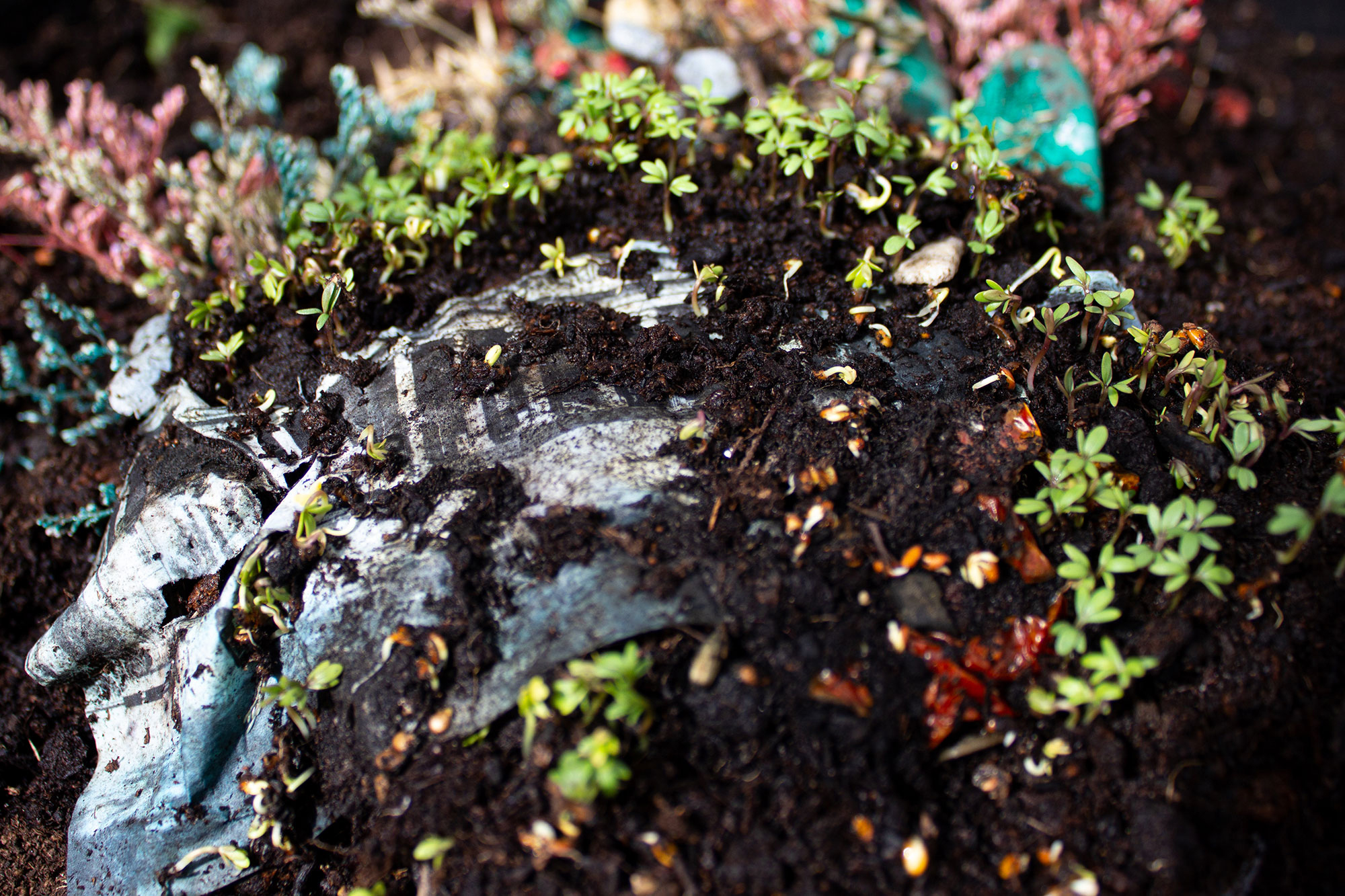
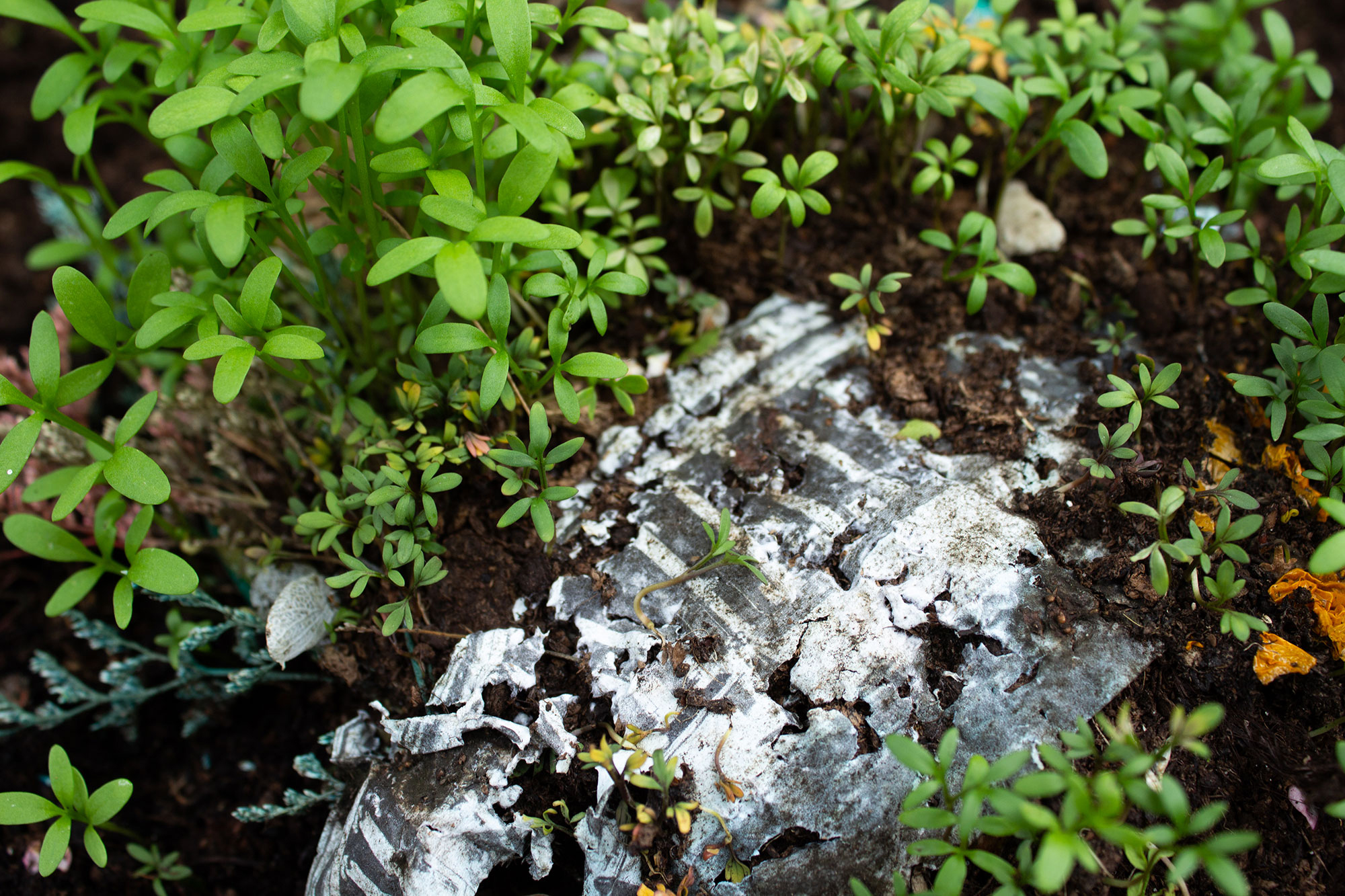
The main thing for me is that as soon as you start growing your own food, you realise the downsides of how you’ve previously lived. Immediately, on a basic level, the taste is so much fresher, richer and interesting, but you also realise how much stuff goes to waste in the way you lived before. Now you only pick what you need. I’ve never thrown anything away that I’ve grown myself, there’s no plastic around it and there’s much less pollution because it doesn’t need to be transported. Growing your own spinach is not hard work but you get a lot out of it on a personal level: the joy of seeing it grow, the taste; and you also feel fulfilled on an environmental level. To me, it’s become a no-brainer.