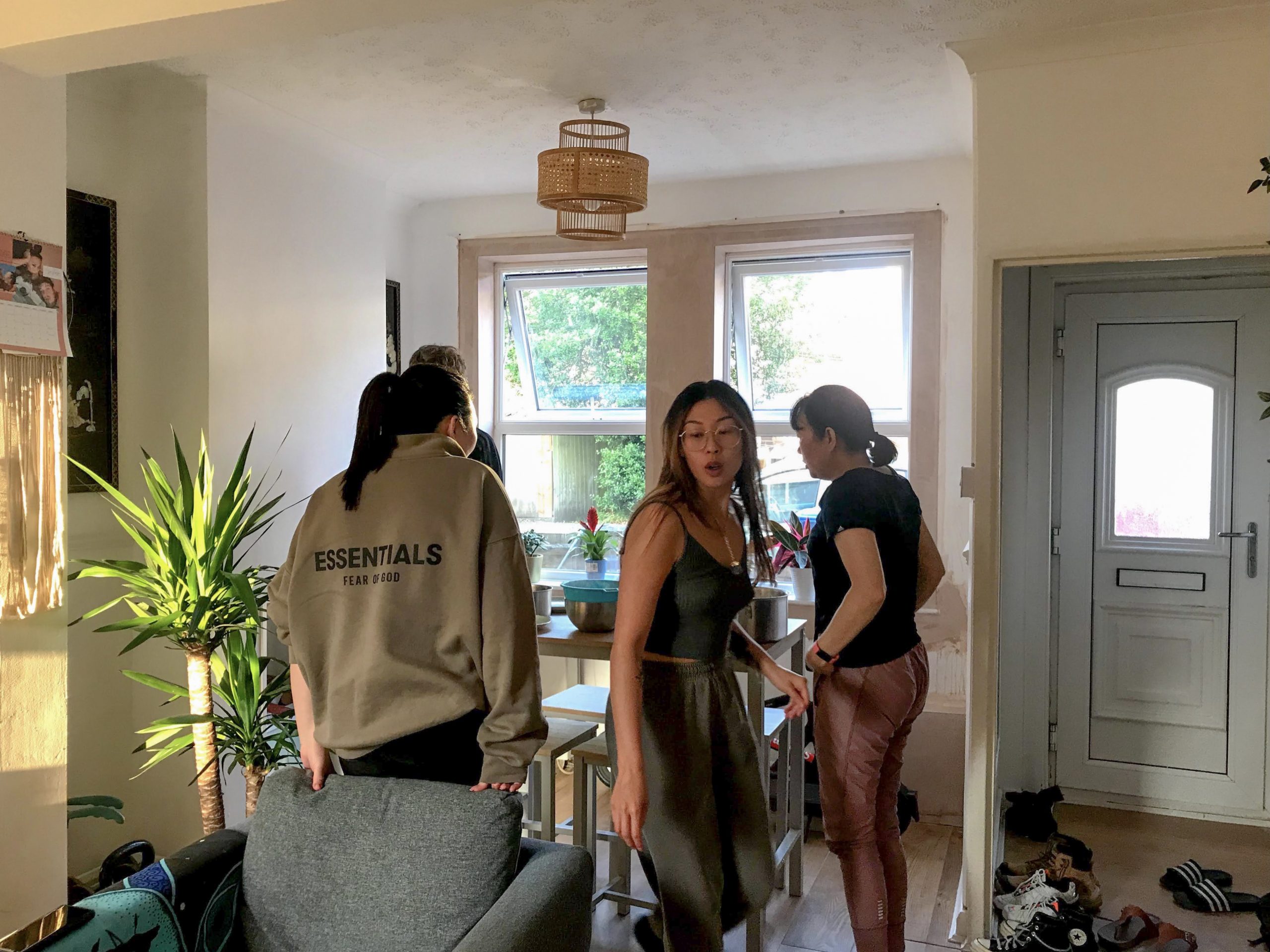
Dishonouring the family been a concept that has riddled my sisters and I, a ragtag bunch of culturally confused second-generation Chinese immigrants, with immense anxiety. We’d place our elders on the tallest pedestal to fulfil long-decreased Confucius’ ideas of filial piety. But on the other, screaming in our excoriating British accents “mum, dad, I’m fifteen, I’m an adult now! I do what I want!”
I hated being Chinese. There was a period of my life when I desired nothing more than to be a White-British girl. I would laugh along with the racist jeering of my classmates when they sneered at how all Chinese people had slit eyes. I would exclusively speak to my family in English knowing full well that my mum couldn’t understand a thing I was saying. I harboured such intense internalised racism that I rebuked my roots and neglected my family.
“It’s important to make your home life your core”
It was my dad who pulled me out of that self-loathing pit. He allowed me to see the beauty and uniqueness of embracing both the British and Chinese halves of myself. He exhibited such pride and confidence in his diasporic identity because of his unconditional love for his family. He was the beacon of light for my sisters and I to emulate his dual patriotism and family-orientated nature. My sisters and I are fiercely trying to keep his fire lit even though he is no longer with us.
Annabel – the oldest – is a solicitor who has her work phone glued to her since dad’s passing. Rebecca – the middle child – is the spiritual one. She’s practicing Buddhism to remain connected to our Asian heritage. I – the youngest – am a stressed-out university student who mainly researches Chinese history and experience to cope with my own cultural confusion. Our defining characteristics have been intensified as a way of grieving.
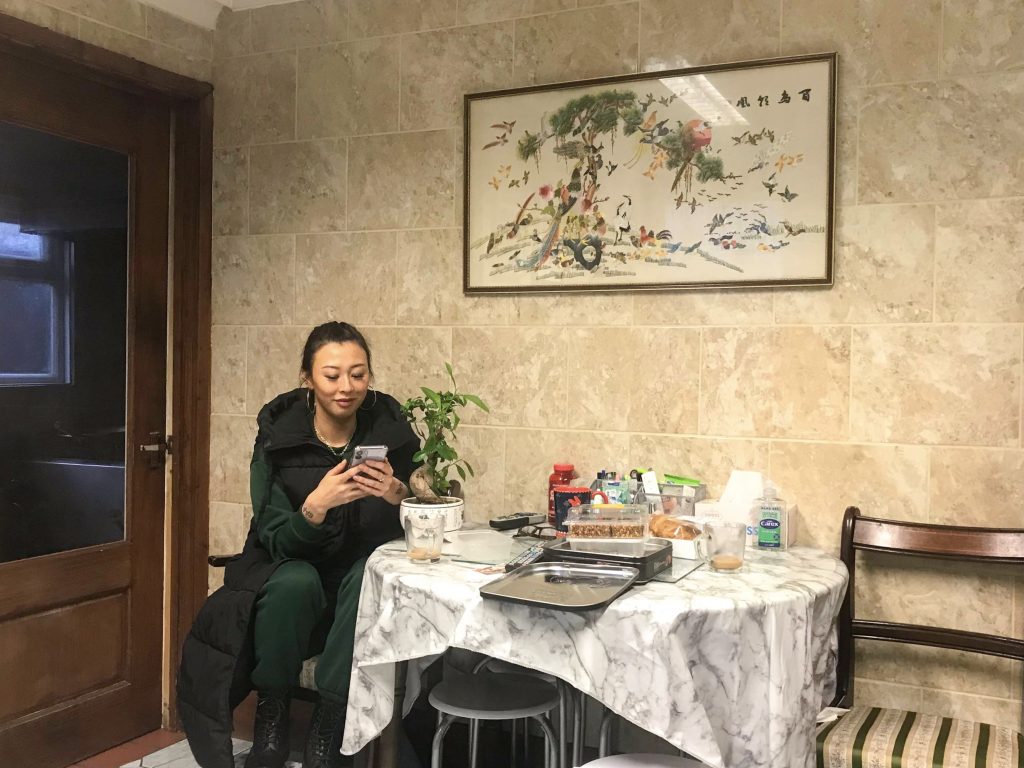
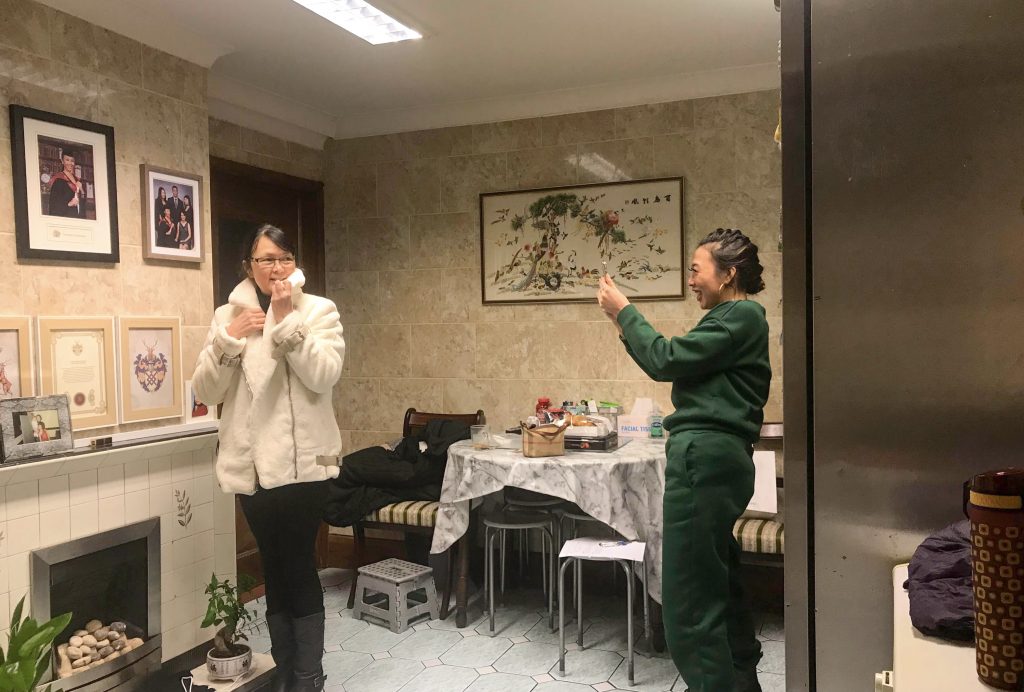
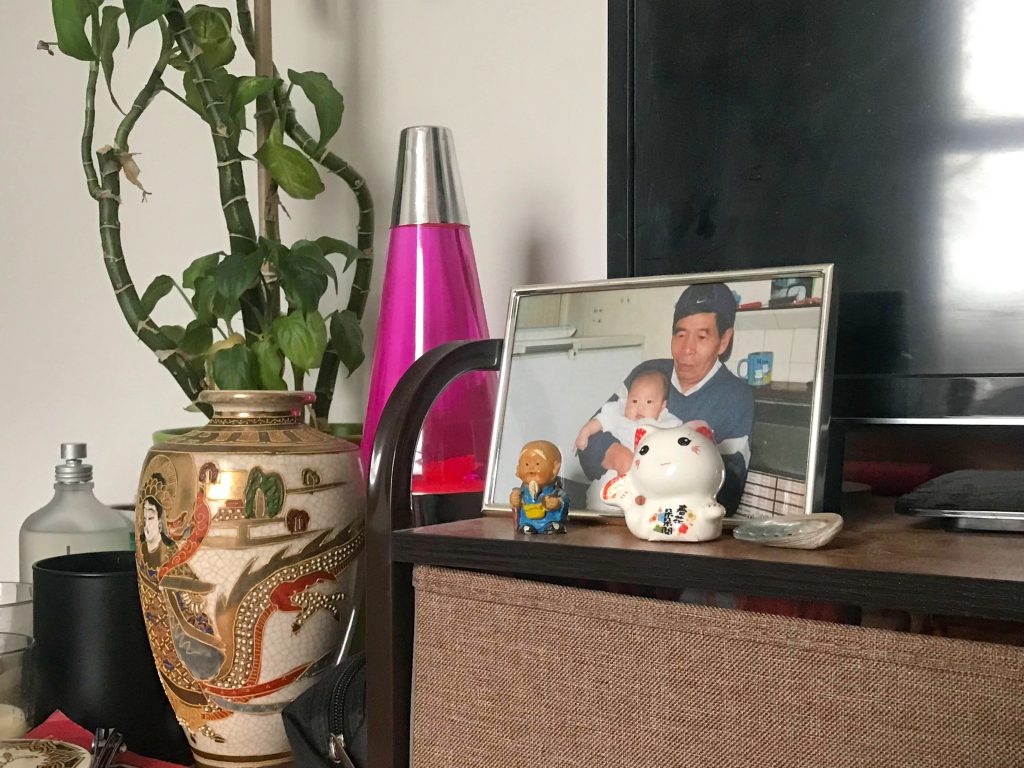
The three of us are sat in the family living room where the sepia-coloured walls once radiated warmth fuelled by his stupid dad jokes and child-like fascination for toy figurines. Now that illusion has faded and all that surrounds us are tiles, whilst the figurines are placed by his framed portrait on the mantle.
I ask my older sisters if how they feel about their cultural identities. A considerable amount of silence rings around us.
“That’s a difficult question,” Annabel begins
“It’s hard to escape British culture,” Rebecca chimes in. “We have to try to emphasise our Chinese culture and stick to our roots.”
“I think it’s important to make your home life your core,” Annabel suggests. We all nod in unison as our bodies lean towards the centre of the table. We all understand that the home is a haven and family is our main priority. Their eyes, however, are fixated on different corners of the room, their brows furrow. We’ve all felt the conflict at one time in our adolescence and now we’re looking for a resolution though we remain confused.
Though my parents migrated to the UK – my dad in 1970 and my mum in 1989 – we are still subjects to the demands of Chinese filial piety. The emphasis of putting your elders before yourself (elders also include your parents) has permeated throughout Chinese socio-political environments, as Confucius stated, “the strength of a nation derives from the integrity of the home.” Everything Confucius articulates sounds like a sweet melody, the requirements of this statement, however, involve immense pressure and oppression of individuality for the sake of saving face for the family.
Chinese families have both historically and contemporarily been subjects to the patriarchy and patrilineage; my dad was the eldest son and the only man in my immediate family, resulting in him having the immense responsibility as a son, a husband, and father. When the husband passes, these duties are usually given to the son, however, I don’t have a brother, so Annabel has been designated this role. This was inevitably going to happen when we started families of our own so mum and dad could retire and have their adolescent freedom towards the end of their lives. We didn’t expect this to happen when Annabel was 30, Rebecca was 27, and I was 20.
“I wouldn’t say it’s pressure, it’s a duty”
I ask both her and Rebecca if they feel any pressure to look after mum. “Yes,” they both say without taking a breath.
“I’m happy to look after her,” they both continue.
“I wouldn’t say it’s pressure, it’s a duty,” they both conclude.
That’s the beauty of being a part of the diaspora. We can alter the dominant, oppressive connotations of these philosophies because they don’t entirely apply to us living within British society. We are subjects to Confucius’ outdated philosophy, but we’ve learnt to embrace it and turn it into something that connects us closer to our roots and heritage. It’s difficult though. We don’t necessarily have a choice in the matter. But we do it as way to stay grounded. It’s a paradox; it’s restricting but do I want to look after my mum? Of course, I do.
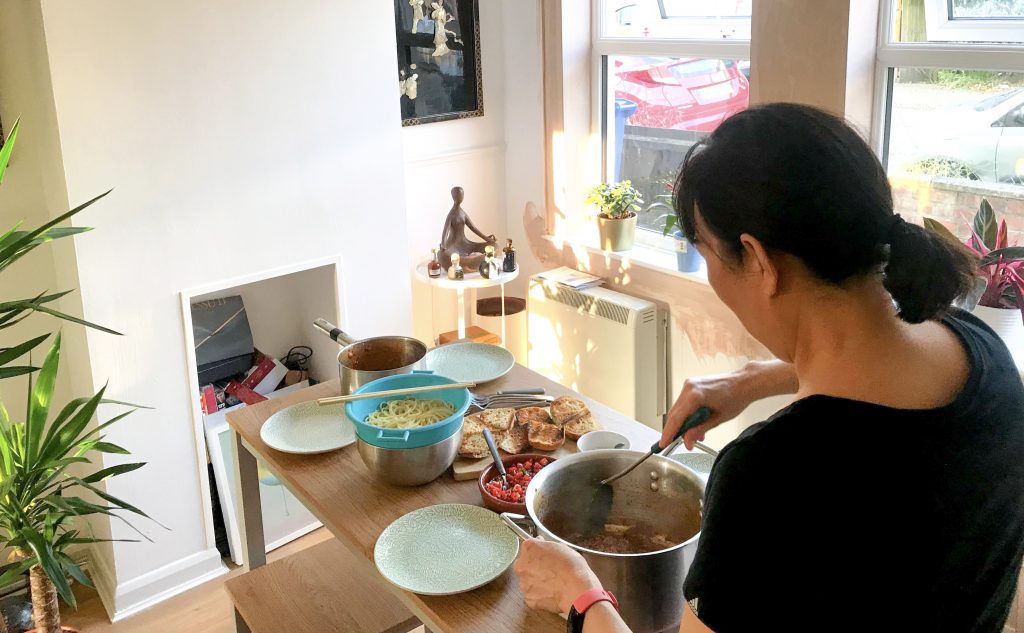
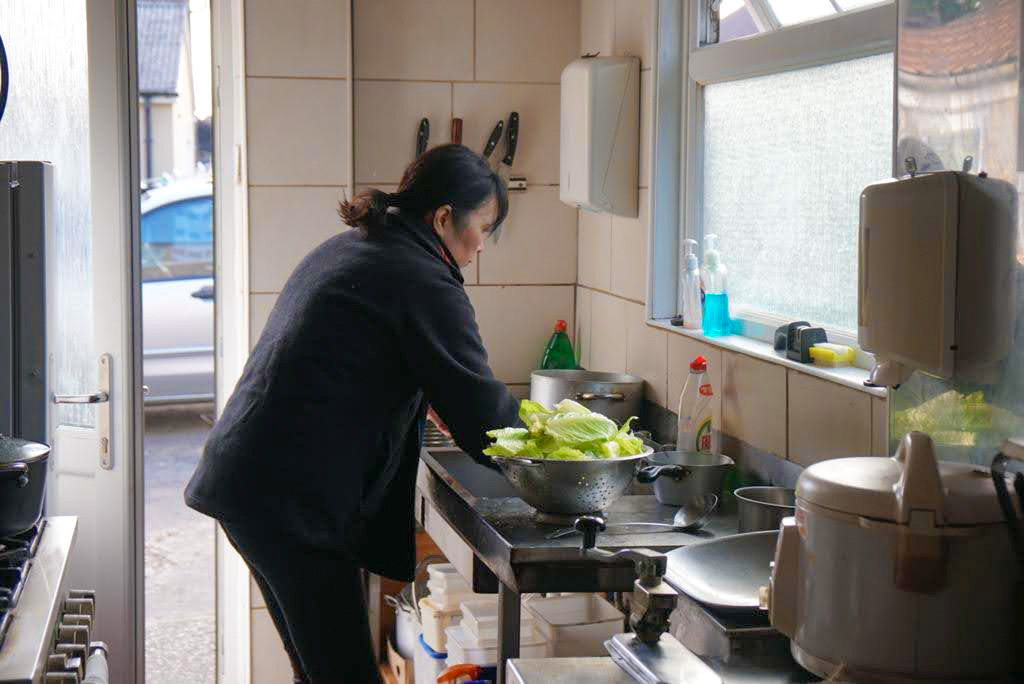
Yellow light gleams from the kitchen. The clicking of the gas stove sings in tune to the sizzling of garlic and onion. Mum’s cooking pork belly for dinner. She pops her head in to tell us to set the table and we promptly do so in the dimly lit living room.
We all acknowledge that mum has been the one most effected by dad’s passing. He wasn’t only her husband, he was reason why she migrated to the UK, her business partner in the takeaway, the person she laughed with the most. Mum is our sense of home and that’s why my sisters feel this incessant need to protect her. Rebecca even chuckles when she tells us that sometimes she lays in bed and worries about what mum’s doing.
Being at university, away from home means that I have the privilege of being selfish and allowing myself to be my sole responsibility. Whilst my sisters have had to face serious considerations about their lives, as well as mum’s.
“So, what do you guys consider other priorities in your life?” I ask. Their posture stiffens, their eyes are back to fixating on a corner of the room, their brows furrow once again. They almost seem taken aback that I brought this up. It’s evident that they hadn’t even thought about this.
I can’t steer Rebecca away from thinking about the family; she’s in a long-term relationship, they’re talking about settling down and starting a family of their own. All her priorities derive from family dynamics, but mum is always a key element of her plans. “I want mum to live with me,” she says. “But-” and she emphasises this exclamation very clearly, “she’s living in a separate wing.”
Annabel, however, is single and as I stated before, very career driven. That was her other priority. Her life is her job and her family, especially mum.
They don’t say anything else.
My dad and I shared a love for history, whenever I went home to visit, we’d sit in that once sepia-coloured room and babble for hours, trying to assert our intelligential dominance. I guess that’s why throughout my university life I’ve solely written about Chinese history or my family’s. It was a form of redemption for those teenage years when I shunned them. It was a way of staying connected to my dad and to show him how I was beginning to embrace my Chinese heritage.