My battle with insomnia started when I was eleven years old. It didn’t seem to be a problem as I lived in a house full of nocturnal musicians.
Records on the floor, tour itinerary’s scattered about and the throbbing bass in every inch of the house, my brother can be held responsible for that. He is a producer and a Dj. He has worked with big names in the dance world, Dusky and Leon Vynehall to name a few. His musical beginnings root in DnB. My big sister Danielle would sneak him into raves when he was only fifteen, she had an enormous collection of records for him to thumb through and built a studio in the back garden shed (much to the neighbour’s dismay) it was like something out of Kurupt FM. At this time of my life Danielle was working part time as a shop assistant and part time raver. She distributed fliers and was even offered a job as a dancer. A true grafter, sharing her earnings and treating me to a magazine and sweeties every Friday. But sadly, this was also the time in her life that she suddenly had a seizure. She was only nineteen.
I can visualise the moment unmistakably, though I was only four. Of course, I did not comprehend what was happening but as I grew up, the reality sunk, how serious it was. How could this happen to one of the kindest, selfless souls on the planet? Her dreams of working at a label, in fact, working anywhere at all, were stolen from her. Yet her influence had a profound effect. My brother saw great success from his humble beginnings in that little shed and now much to my luck he produces my music.
I’ve only recently released my first single, before that playing music was solely a therapeutic tool, for pleasure but also to aid my anxieties and help my insomnia. After wanting to learn more about the brain in general to gather an understanding of epilepsy, my curiosity grew on finding out about the brain’s relationship to music.
I was lucky enough to have some of neuroscientist, Dr Diana Omigie’s time, to fathom the logistics. She enlightened me on her journey…
Though always good at sciences and stereotypically that leads to working within healthcare, she realised a research career was more suitable so studied neuroscience at university. During her PhD she worked on a disorder of music listening known as Congenital Amusia. She explains “Congenital means with birth, people with Congenital Amusia are born with difficulties making sense of music and processing music, compared to the way most of us are born learning all sorts of things about how music works and later developing a rich appreciation of music when we hear it.”
Questions she asked in this research included “what are the reasons why they may struggle to hear that a note was played out of key? Is it that they are just not able to learn, because of internalised regularities that music from a particular culture follows? Etc.”
However, she was also drawn to ask how the typical brain appreciates music, why that happens. “After my PhD I did post-ox where I had exposal access to a very unique type of data, data you collect from people who are undergoing clinical procedures.”
My sister has previously undergone telemetry tests, these tests monitor parts of her brain that seem to be the origin of the seizure, to deliberate what steps to take next to assist the condition. Omigie explained how she utilises people like my sister to further her research.
“Because these electrodes are on the brain anyway and they have two weeks to kill, we approach patients and ask if they’d take part in our music experiments? We present stimuli to them, collect all of that rich intracranial EEG data and try to answer questions like, what are the systems of the brain that are tracking how pleasant and unpleasant a chord sounds?”
Benefits the brain reaps from music is something that has been looked upon quite widely, but I wanted to find out more on the processes behind these therapeutical applications.
MOOD
The reason why music seems to be able to moderate our mood is because of all the things that are happening in music, she explains “Everything from, music having some sort of pulse then therefore a tempo that can modulate our physiological responses, if something is a bit more slower paced our physiological systems slow down as well, if our hearts are beating slower, if our breathing is slower, we will feel more relaxed because that is the physiological state our bodies are entering in to.”
The term Iso Principal arrived in conversation something which is procured by music therapists “you start where people are, using music that conveys what you expect that they are feeling and then you try and slowly bring them back wherever you’d like to take them.”
This connects to the notion that those who tend be more empathetic tend to also feel more moved by music, due emotional contagion. Omigie explains “Empathy came from the German word Einfühlung which means feeling in to and even though nowadays we think of empathy as how we empathise with other people, the original sense of the word was about us feeling into artworks, and our ability to share the emotion expressed by artworks… it seems if you are someone who can pick up on emotions easily, then when a piece of music conveys some sort of emotion, you’re able to start sharing that emotion.”
SLEEP
Ardently Omigie tells me “For every two studies that you see that seem to have a positive effect on sleeping, you’ll find one that doesn’t. It’s because people are different, the music that is used to try to help people sleep is different. Some music may be more efficacious for some.”
I found through my battle with insomnia that for a good night’s sleep there are certain stages of sleep you need to get for certain periods of time.
However, Omigie adds “Even if you don’t end up being in all those stages, people still have a subjective experience that they slept better when they hear music and that can actually be pretty powerful as well.”
So music can aid sleep and mood but it must be curated appropriately for different people. I wanted to dig further so I asked Omigie, what is the science behind it?
“We have systems in the brain that are involved in the fight or flight system as soon as you bring a calming environment that seems unthreatening you reduce that system that is pumping adrenaline and cortisol out. Music is able to reduce the release of adrenaline and cortisol and releases transmitters associated with pleasure, serotonin and dopamine.”
Being a musician I was naturally curious to ask whether musicians’ brains function differently to non-musicians… Omigie clarified that “musicians move between auditory and motor information. You mould your own brain by how you use it. So, if you are constantly making these fine-grained movements that are very much related to a sound output then your brain will just change in that network.”
Therefore, musicians’ memory abilities are strengthened!
So, watch out what you say around a musician because they may well bring it up ten years down the line! Music is fascinating; I don’t know what humanity would do without it. I am grateful for my sister, for sparking the fire within me to write, for lending me her equipment and being my best friend who I can sing karaoke with when things go south.
I photographed some musicians and asked them a few questions, the video is accompanied by a song composed by a dear friend, I hope it highlights the importance of music.

Chris, bassist, when he listens to electronic music he feels energised 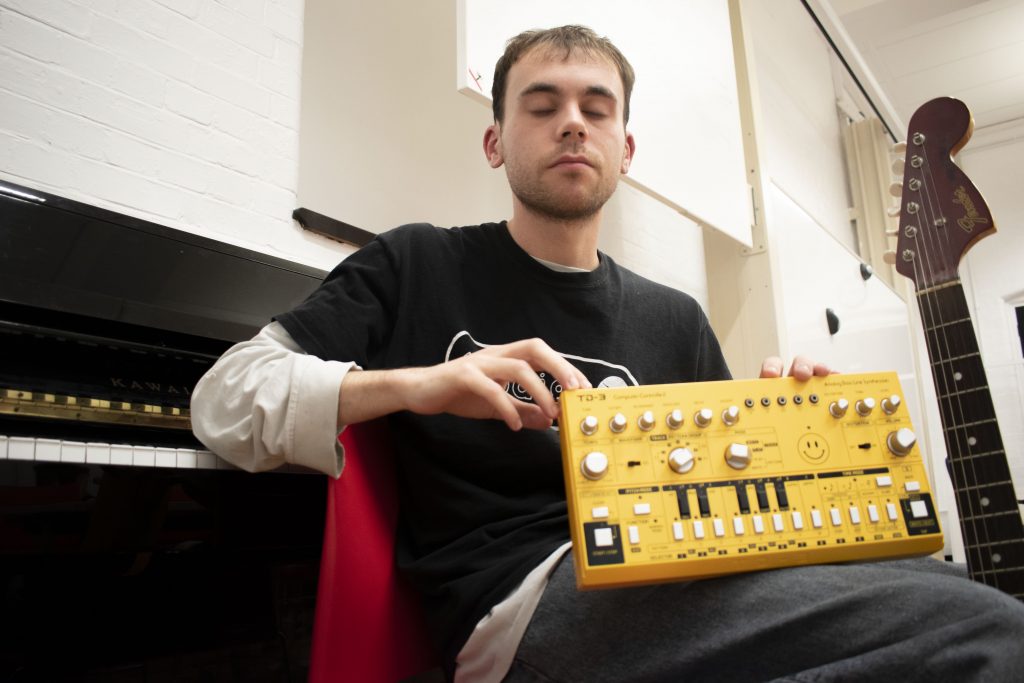


James, composer, feels moved by certain pieces of music which have memories attached
Kieran, guitarist, holds strong nostalgia from his youth from this Nirvana album
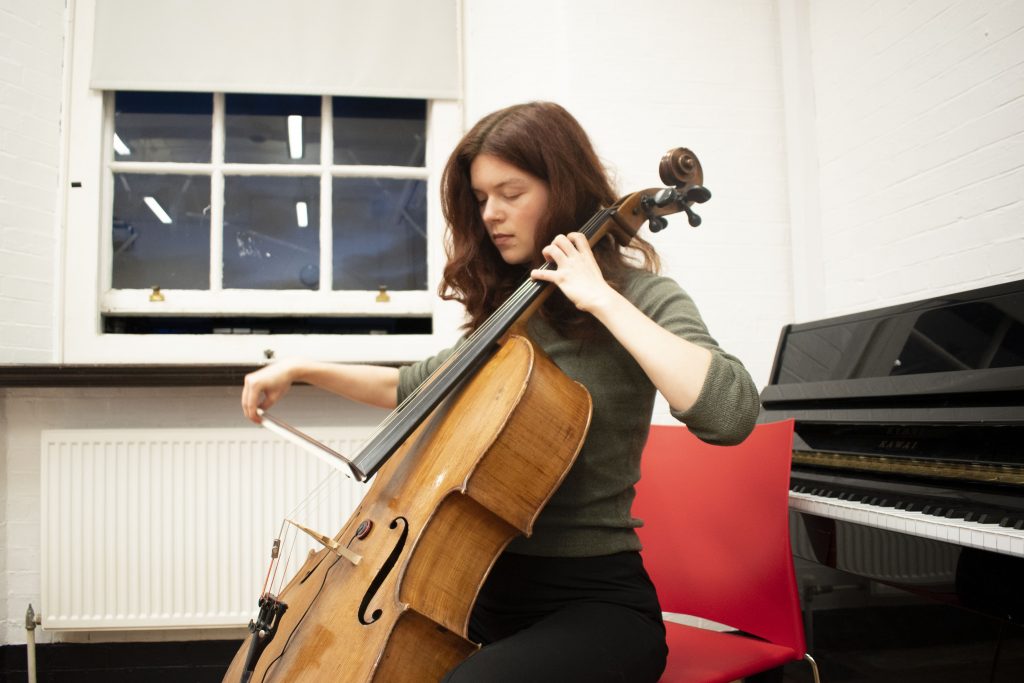
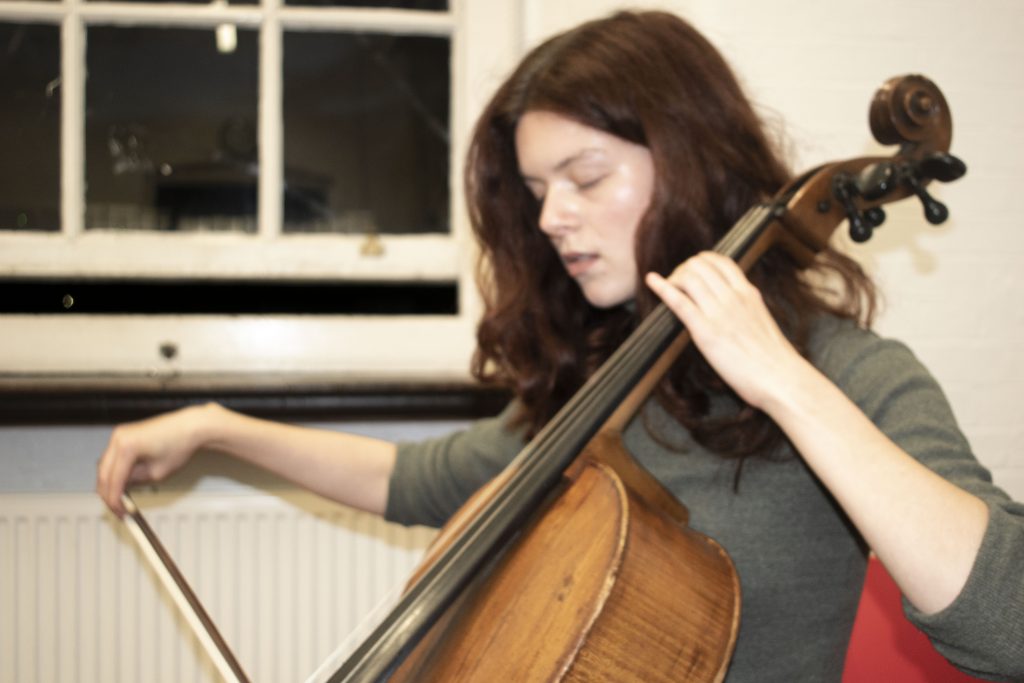
Kirke, cellist, was classically trained, the sound of strings reminds her of her childhood