Colourism in Bangladesh
“You will get a lot of flack from others if you marry someone darker, you will not hear then end of it, so I would be embarrassed marrying someone darker for my own reputation”
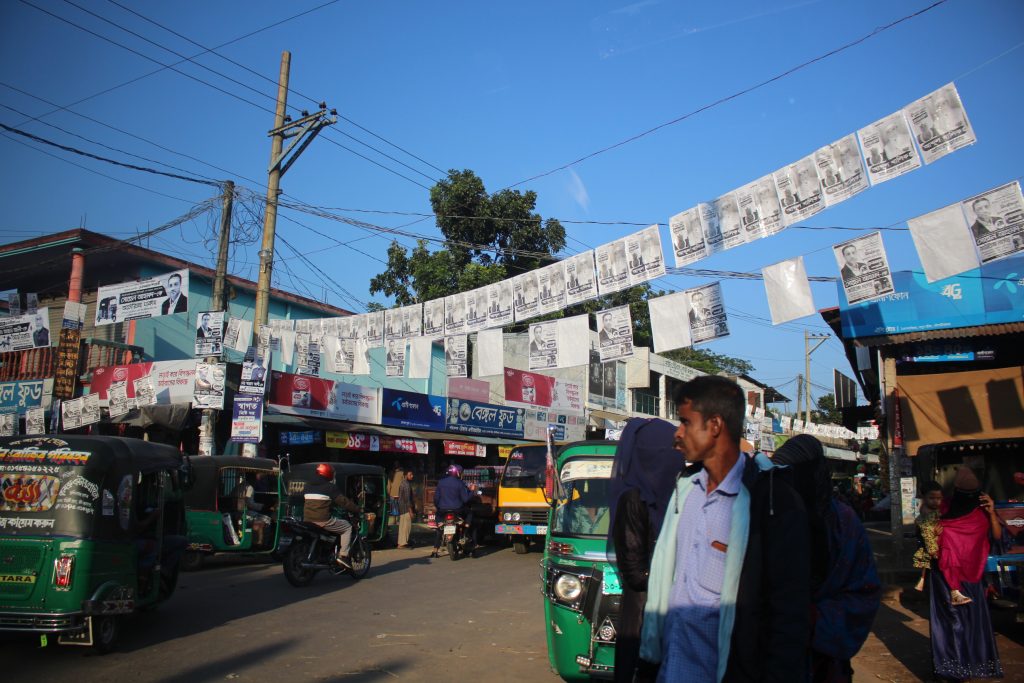
Understanding the traditional views of colourism with my cousins in a small village in Moulvibazaar, Bangladesh and having my very first experience in a beauty parlour
On the 8th December 2021 I arrived in Bangladesh, to visit my sick grandma forgetting all the issues I faced last time I came. The issues I mean are ones involving severe colourism.
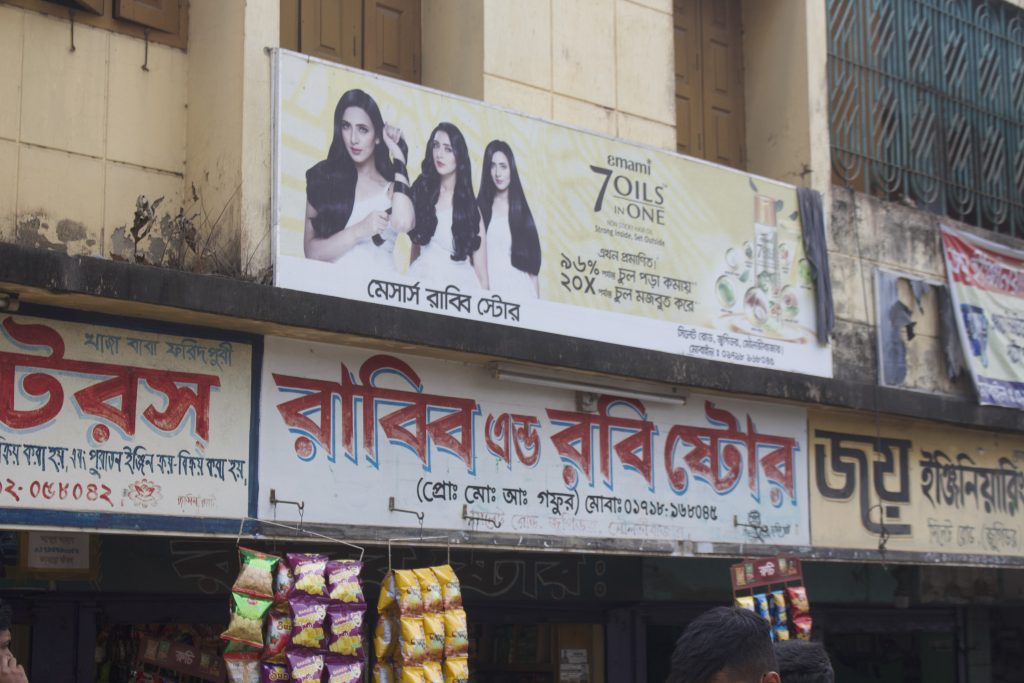
Colourism is the prejudice towards another by discriminating them on the basis of the amount of melanin in one’s skin. Throughout Hollywood and Bollywood, there is this fetishization of being lighter, leading the younger generation to idolise these celebrities that are publicised. With very little recognition for those who are darker. Many ethnic celebrities who have gained success usually fit the Eurocentric beauty standards or have had some sort of cosmetic or plastic surgery.
From the young age of 4, I was fed into this idea that fairer skin tone is more beautiful and superior. Which led many years of me bothered by this and truly believing it. Of course, at this age I did not question it and even till the age of 18, I had no idea where this came from nor could I fathom why. Growing up with that view forced upon me, I resented others who were fair and hated myself.
With my constant struggle with this topic, I came to confront it amongst those who follow it the most. As I am in currently in Bangladesh, I begin a discussion with my cousin Ameera who is considered dark skinned; her take on colourism. Ameera begins by making jokes and avoiding answering my question. However, she began to explain “Within school teachers would separate those who are lighter and those who are darker, they would respect you more and treat you nicer.” Which saddened me and slowly made me understand why this was such a difficult topic for her to discuss.
Colourism stems from early slavery and colonialism as white slave owners would favour those who were lighter skinned. Similar to how Ameera explained her experiences at school. When someone with authority is making you feel small, due to the pigment in your skin it will of course have an affect on your perception on what is beautiful.
As Bangladesh is mainly a Muslim populated country, arrange marriages are very common. During our discussion she mentioned marriage a lot. She explained that “Whenever we go somewhere, to visit family or just for leisure, people will randomly mention the colour of my skin and say, “oh gosh, your daughter is so dark, how did that happen?” or “she won’t be able to find a good husband because she’s so dark”. When asked where she thinks these ideas came from, she said “We have become accustomed to this idea that it is beautiful, it came from years ago, but I am not sure how and when, but is now traditional” she also went on to say, “you will get a lot of flack from others if you marry someone darker, you will not hear then end of it, so I would be embarrassed marrying someone darker for my own reputation”.
Gathering from her reaction, it is an extremely sensitive topic amongst many females in Bangladesh, I myself during the interview felt very emotional by the answers she gave me.
The use heavy use of foundation to make your complexion unrecognisable is more commonly used during weddings. A shade which does not match. I have seen this through out the years of images from distant relatives. So I decided to also get it done.
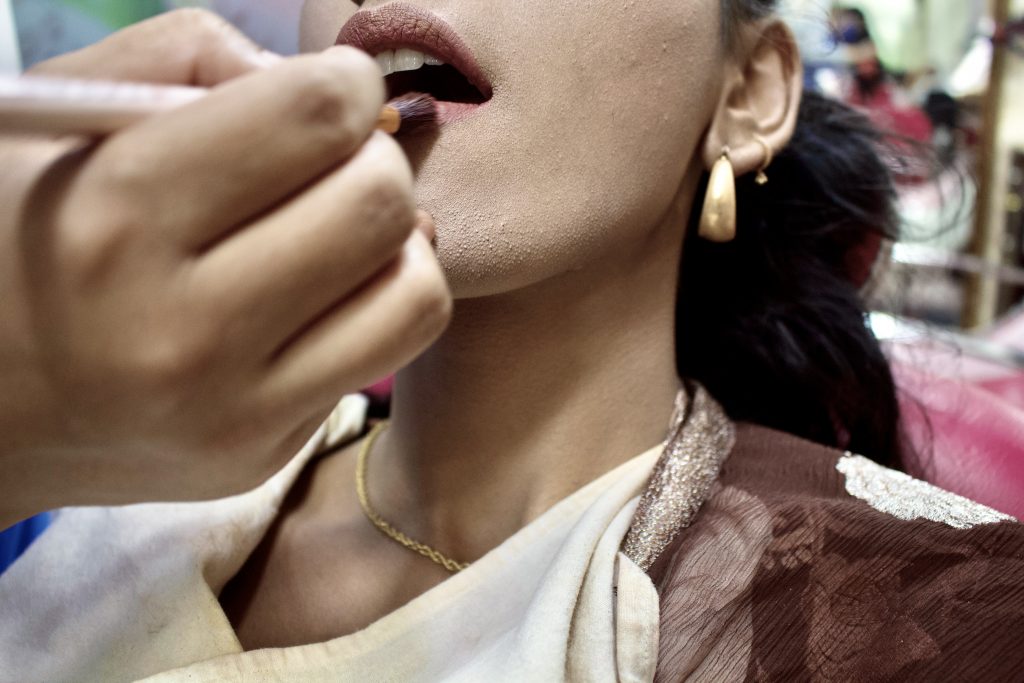
THE PROCESS
At the Beauty Parlour
The Final Result
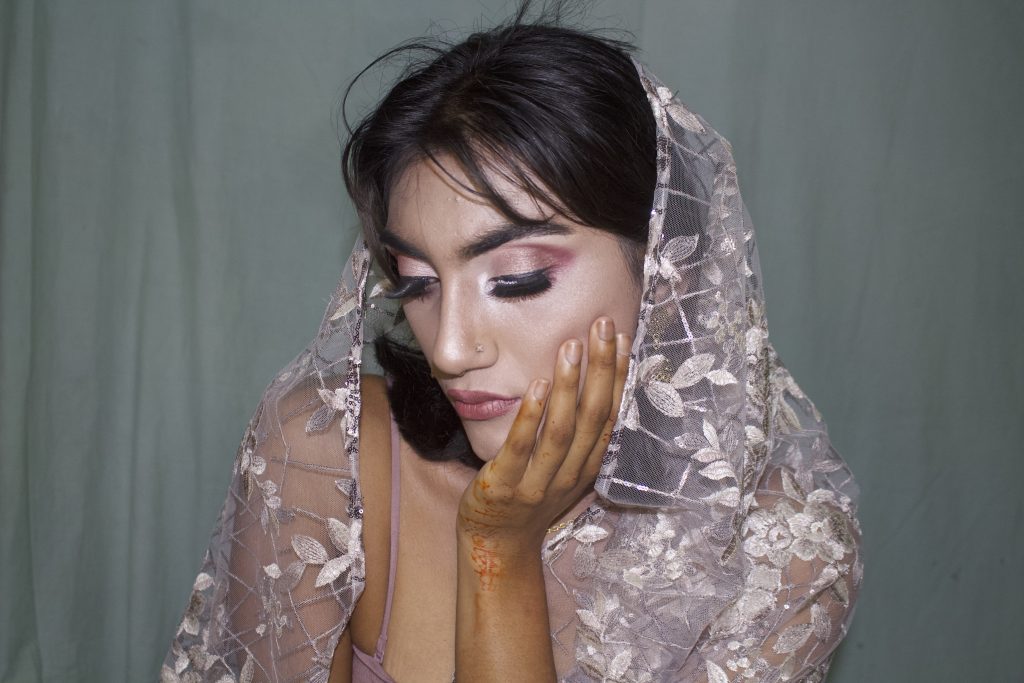
The makeup artist did a bridal makeup look on me
I use my hands as an example to show the contrast in my natural skin colour to the foundation the make up artist used
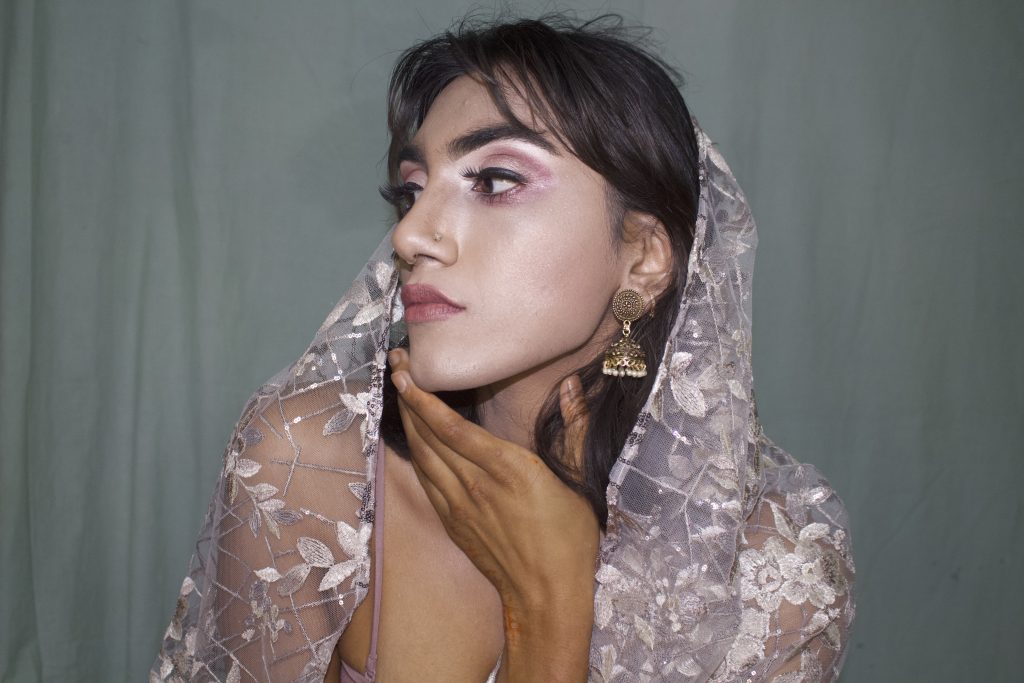
After seeing myself I was quite shocked and didn’t know whether I was sad or found it hilarious. On my way back to my grandma’s village, my cousin can see that I had my make up done and was very amused as he said I looked “shundor”. For me this was quite disappointing as I felt myself progressively getting embarrassed, irritated and not wanting to be seen in public. So, I covered my face with a scarf. I was shocked by his reaction and the rest of my families as I looked awful.
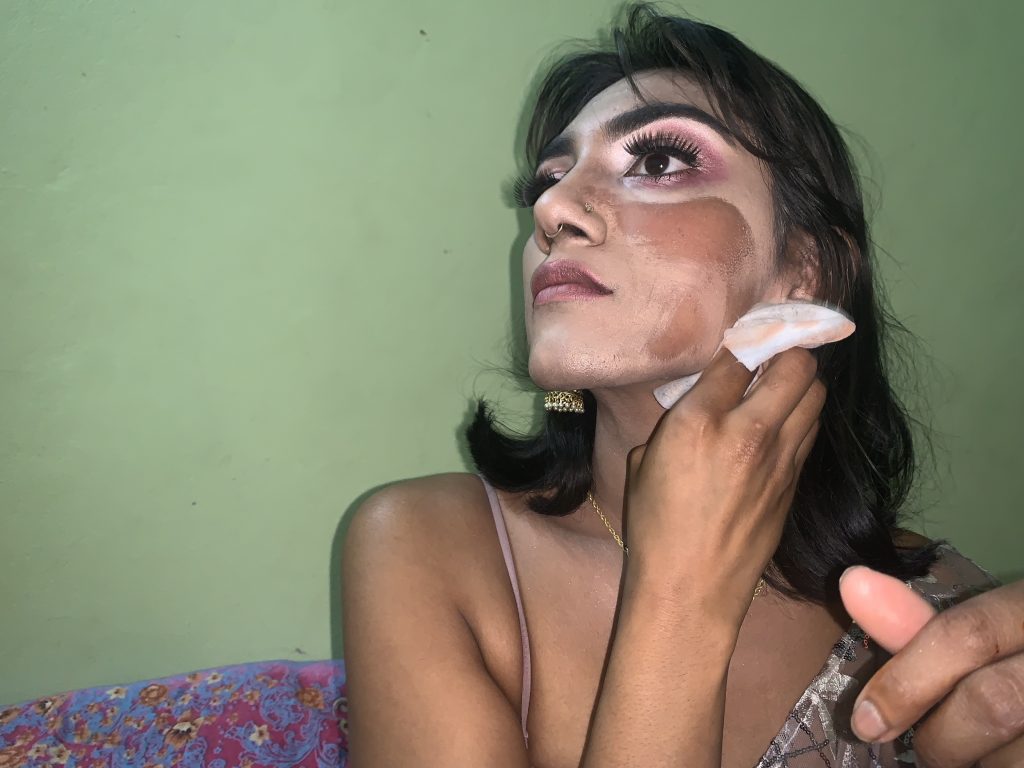
I felt like a clown…
This went on to me further interviewing Shipar who initially said I looked “shundor”. His views on whiteness differed to Ameera’s but it became clear that for men it is not so much something they themselves must worry about but do in terms of their future wives “The main reason why white is beautiful to me is that white is a symbol of cleanliness and purity, if there is any kind of dirt in the white color, it is easily recogniosed. And white colour is easy to catch the eye so white colour looks more beautiful. So of course, when someone is fairer, it is seen as you are being cleaner and pure”.
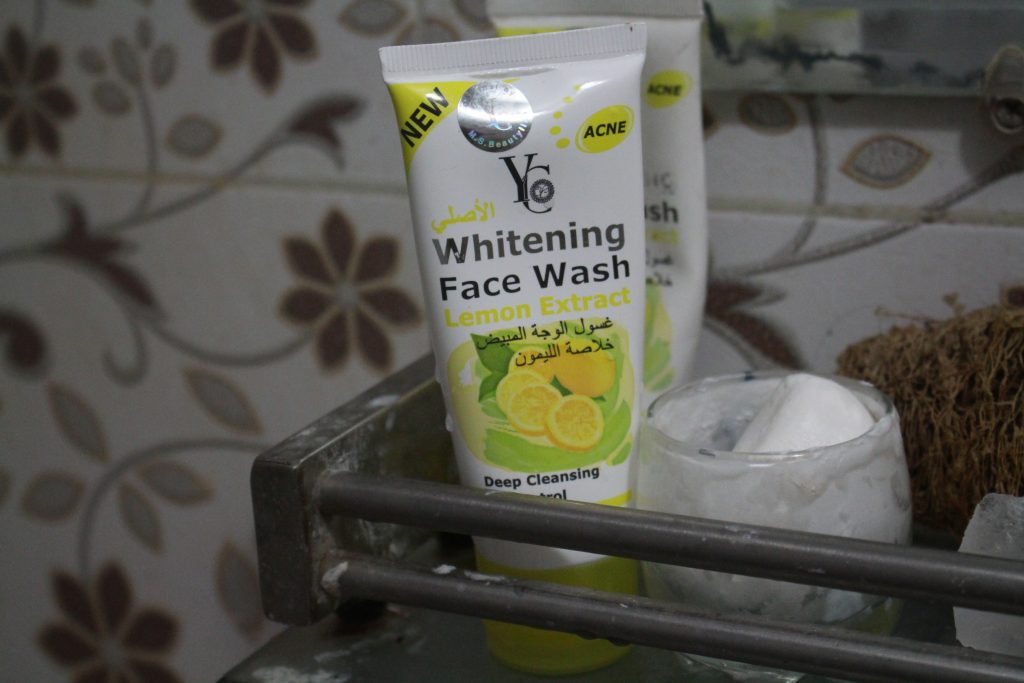
A product I found in my aunties bathroom
Skin lightening products you will find in most shops
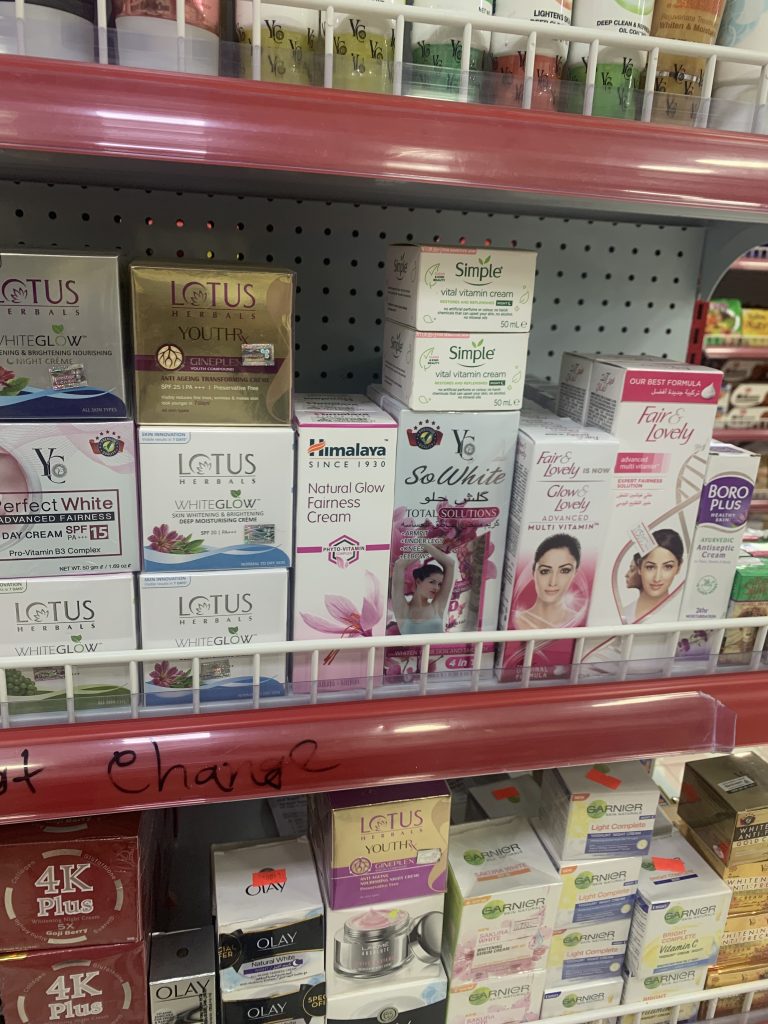
I also spoke to a young girl called Reshma who I found did not follow the same traditional views that many of the Bangladeshi community held. When speaking with her she explained that to her “colour does not matter but what someone’s insides are like, what their heart is like”. She went on to agree that the word “shundor” is used a lot when calling someone beautiful but more commonly used as a way of expressing someone’s fairness also the word “saaf” which means clean but also fair. The literal definition of the word “shundor” is beautiful but the meaning has lost its translation. She agreed that Bangladeshi people are very twisted and narrow-minded which is why they have these perceptions and plant it in you from when you are very young.
Of course, as I was born and raised in London I have learnt about colonisation and racism. Which is why I have developed an understanding on where colourism stems from and understand that the white people were always looked up to and always considered superior. Which is the same within the Bangladeshi community, if you are fairer you will almost be seen just as superior.
It brings me much sadness that People are desperate to be a race or at least replicate one that is not true to their own to avoid some form of suffering and for their pride and dignity. Being darker is something that is disgusted. It is clear that there is a great lack of education in Bangladesh on colonialism and slavery as my cousins struggled to answer where this perception originated and why it could be justified.
It’s taken many years to really love myself.
After my visit to the beauty parlour and the disgust I felt after seeing what they did to my skin, it confirmed that I truly believe my melanin is beautiful and I wouldn’t do anything to change it now. For me, I love to be controversial and rebellious so this is in a way me fighting against those narrow-minded people who would always make me feel like my skin was not normal and prove to them that their beliefs are bullshit and beauty cannot be measured by the colour of one’s skin.