My influences & approach
The outfits, the makeup and the music are the reasons my friends live for the weekend. Over the years I have witnessed my close friends Nicky and Eric use their creative talents to transform themselves ritually every weekend. An homage to the ‘Club Kids’ of the late 70’s and 80’s – these outfits blur our concepts of femininity and masculinity by seeking to obscure our understanding of gender entirely. The outfits are characterised by fantasy and artifice and adopt a DIY approach, channelling a style of their own. I could not help but begin to question the why’s and how’s of their painstaking and arduous processes of preparing for a night out. In search of answers, I soon found that there was minimal documentation and exploration of these ritualistic processes within the queer community. There are multitudes of images depicting various club-goers and their outfits, but little content on what happens before you reach the club. There is no denying that the visual element is fascinating, but I sought an explanation of these rituals in their pursuit of reinvention. Below is a conversation between my friends Nicky, Eric and I that will showcase the nuances, beauty and dedication behind these outfits accompanied by their various captivating looks.
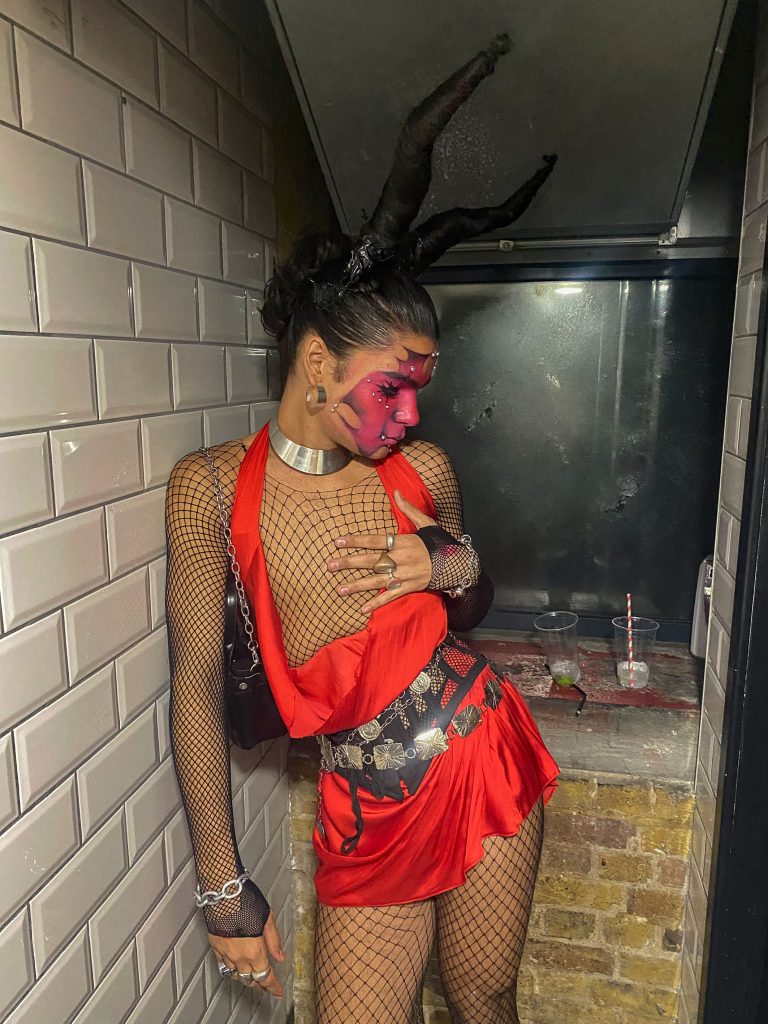
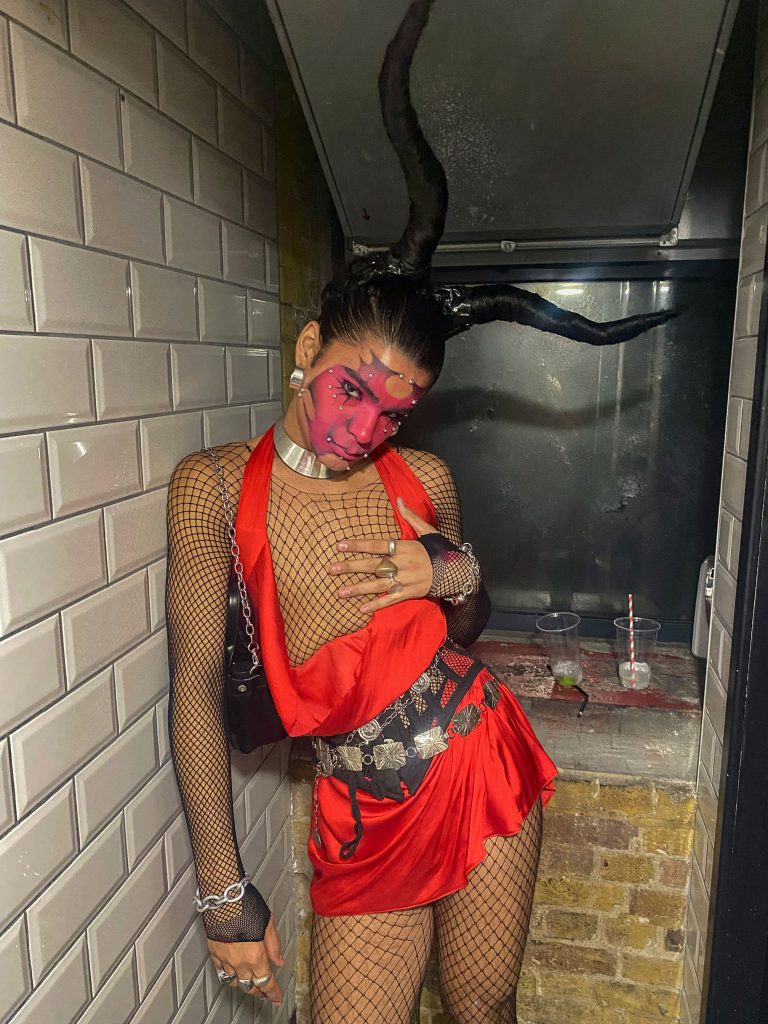
I observed the sheer impracticality of Eric’s gargantuan horns, having witnessed firsthand his difficulty in passing through every doorway. He was forced to bend, crouch and contort his body to fulfil even the simplest bodily function; going to the toilet.
Q: Where does your inspiration come from?
Eric:
“I think inspiration comes from everything. For example, for the horns, I was just inspired by the various animals I was looking at for my university project about animals and I was like, “Oh my God” , wouldn’t it be fun to make horns for my outfit. As a queer person, you have a responsibility to uphold a heritage that was lost, as a lot of artists and visual culture was eradicated and forgotten due to the AIDS crisis. One of my main sources of inspiration is just really beautiful pieces of queer art, like the film Pink Narcissus, that take the concept of queerness and really elevated it to something that is exquisite and that’s what I aim to do. I don’t know what other people do, but that’s my objective.”
Nicky:
“It comes from everywhere and nowhere. Most of the time my inspiration doesn’t come from exterior sources. It comes from something I want to wear, for example, with a my recent angel inspired look I did. I had these strings of crystals and I wanted to put them on my face. So I then based the whole look around that element. I usually look at my saved makeup inspiration on Instagram and I’ll pick a few that I like and then think about how I can mishmash bits of them together. With my makeup I know what I’m doing, but I also never do – I just have an idea and then I kind of see where my process takes me. I’m never like this is exactly what I’m going to do.”
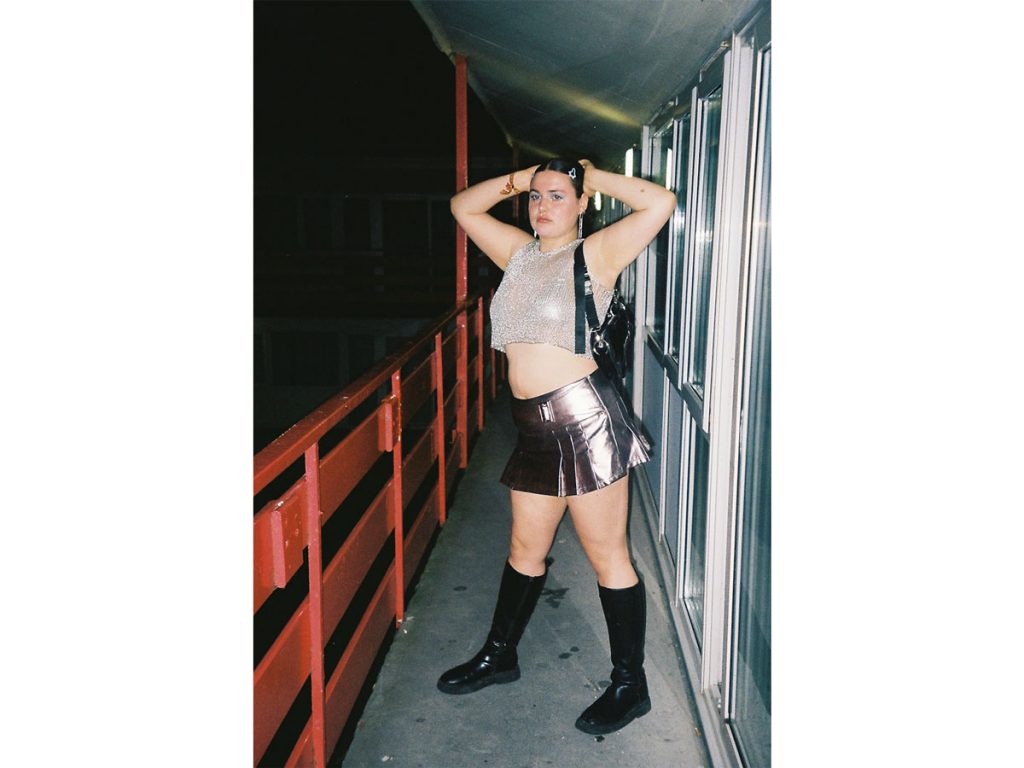
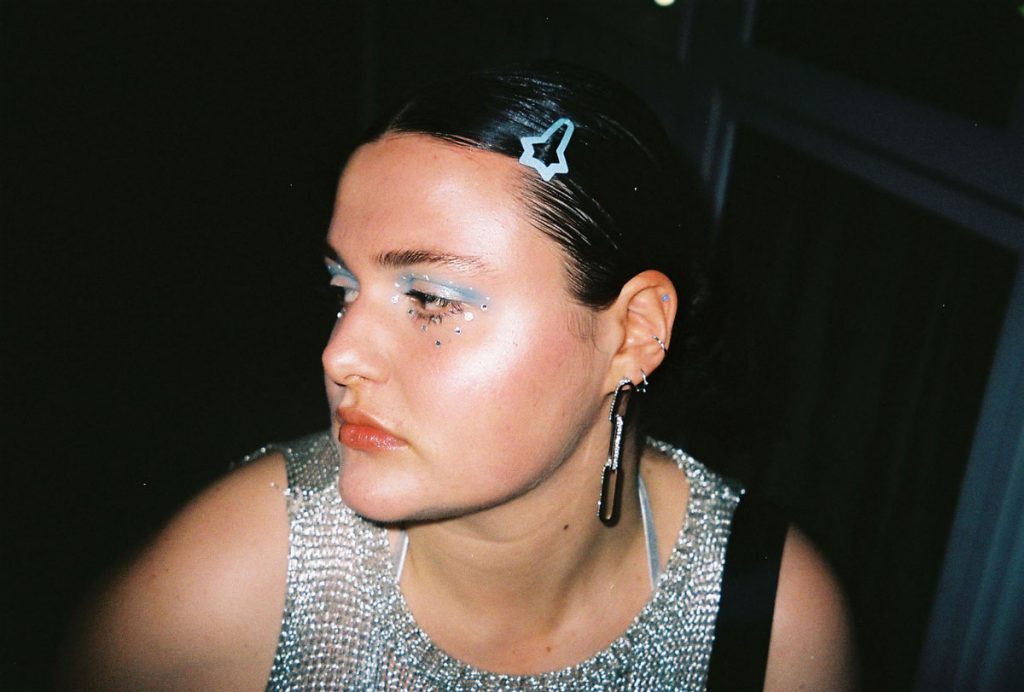
Discomfort seems to be the common denominator in their outfits, from being barely clothed in freezing temperatures to adorning ones face in rhinestones, these impractical outfits have become a ritual staple.
Q: Why do you endure discomfort?
Nicky:
“A big way that I’ve tried to make myself more confident in my everyday life is through making myself uncomfortable in terms of how revealing my clubbing outfits are. A queer space is a safe space, whereas the real world isn’t. If it weren’t for these revealing outfits I would have way less confidence in how I look in everyday clothes. If you feel really confident and you look cool and hot in the club, the discomfort doesn’t matter – confidence overrides all of that. When I wear crazy outfits and makeup I am garnering a reaction from other people, I’m not trying to blend in. So of course I do enjoy people complimenting me. When you think about clothing, especially for women, they go through all different types of discomfort just on a daily basis; stilettos, skin tight dresses, waist trainers and underwire bras to name a few”
Eric:
“If we take the idea of being camp and being queer as being out of a norm, that is exactly it. The fact that you are wearing something that is uncomfortable and impractical to the club is inherently queer and inherently camp. The discomfort is worth it because it makes a point. That is the point of being camp, it’s being extravagant for no reason and being too much. The taller the wig and the bigger the hair – the closer to God. If you’re going to do it, do it right.”
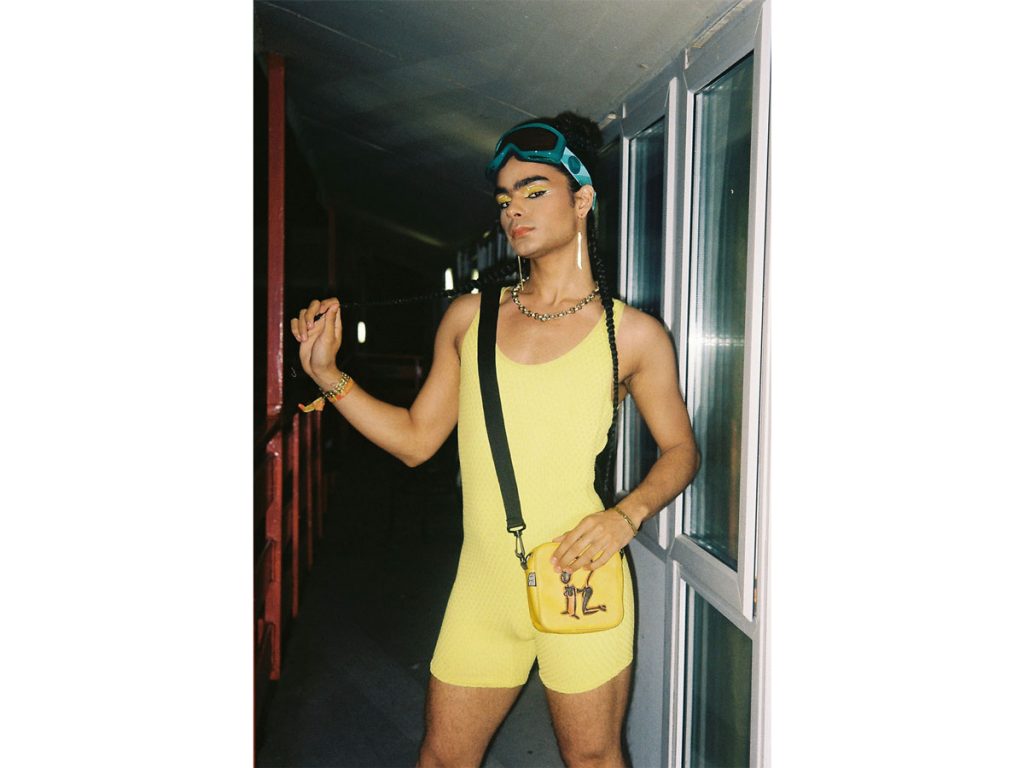
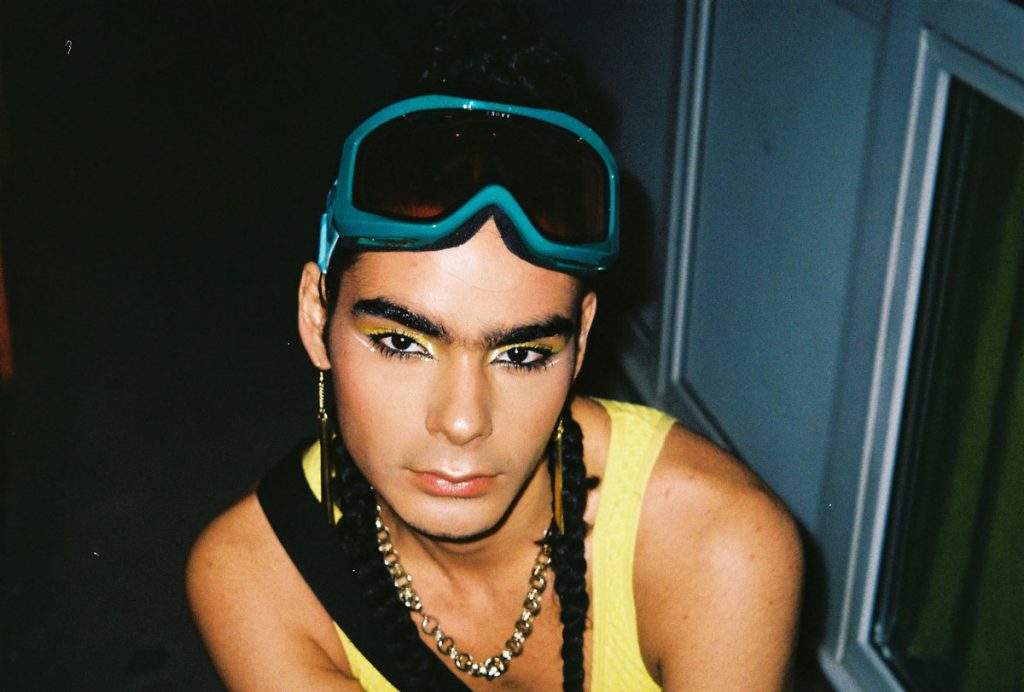
The act of getting ready serves as a creative outlet for the both of them. They use these outfits to not only showcase their talents and look good, but to also feel good.
Q: How important is getting ready?
Eric:
“I’m a firm believer that getting ready is part of the night itself and ultimately at what point do you put the brush down? At what point do you stop glueing gems on your face? At what point do you stop putting the extensions in your hair? Something more can always be done. So I think it’s just a matter of embracing the fact that it’s a moment of creativity, it’s a moment of community. This is a moment where you come together with your friends and you get annoyed at each other; for having to do someone else’s hair or having to help someone with their makeup. I think any moment of creativity is going to be inherently stressful. So it’s about pushing through the stress to collectively get together and create how we look and then go have fun. That’s the important part of getting ready, it’s to utilise all the creativity you had that week and push out a creative baby.”
Nicky:
“I’ve always found makeup to be therapeutic and calming, it is my creative outlet. I enjoy spending a long time doing it and it makes me feel hyper focused on something as I’m not thinking of other things when doing it.”
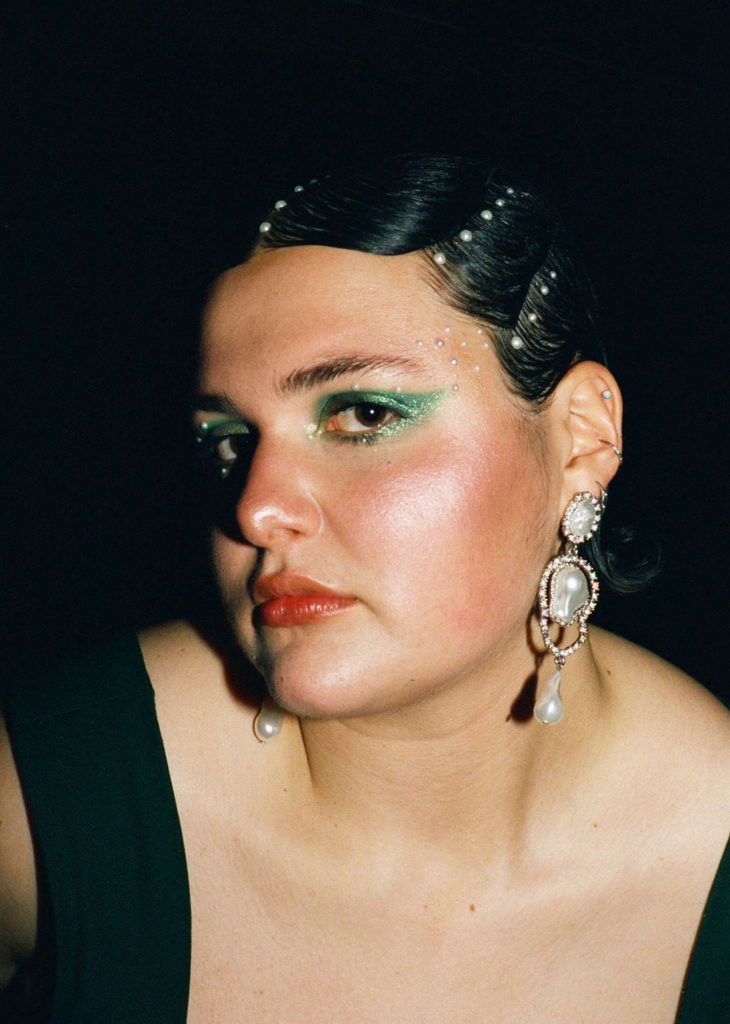
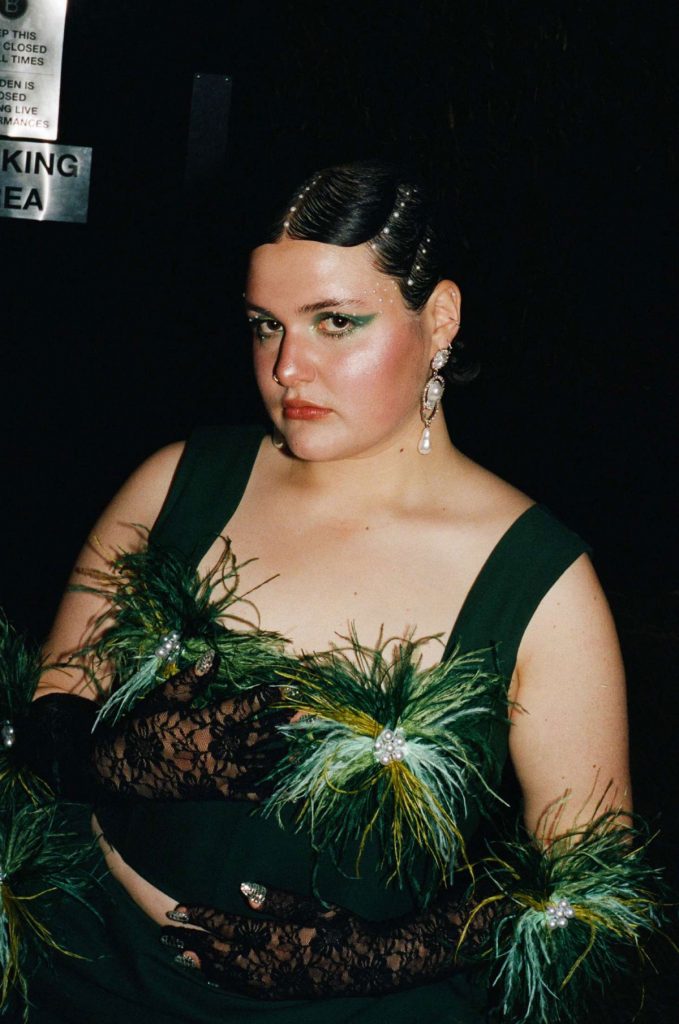
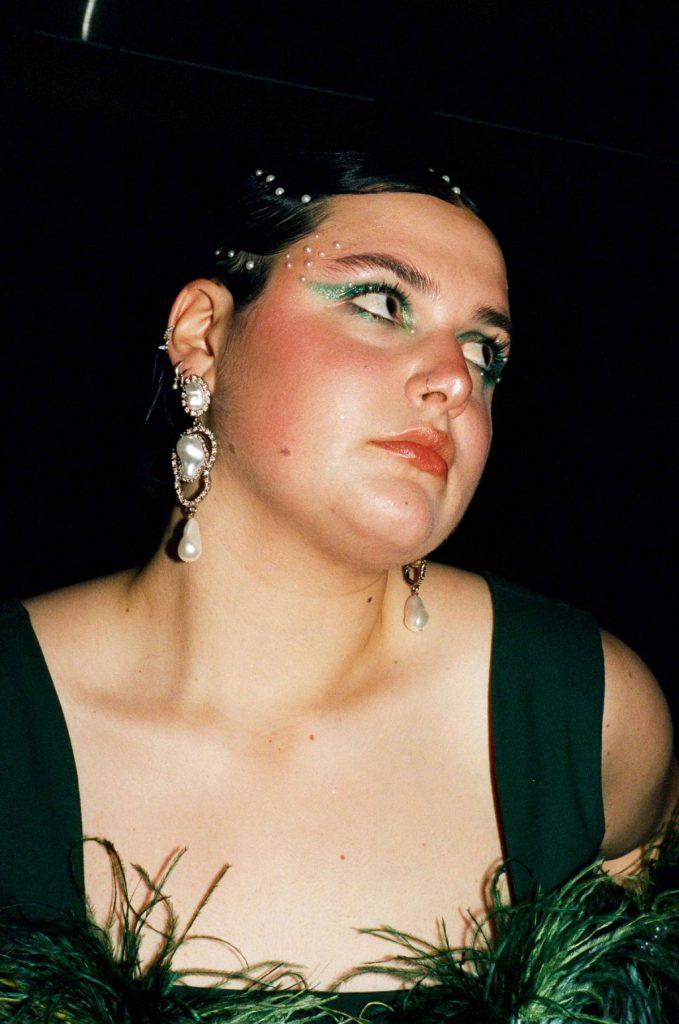
These queer spaces play a crucial role in the finding and building of young people’s queer identities. They allow for complete freedom in dressing and expressing oneself.
Q: Would you say this part of you is a different identity?
Nicky:
“I wouldn’t say it’s an alter ego, but it’s the other side of the coin of my style. I think it comes from my love of fashion because it’s the duality of me as someone who loves both Grandma chic and whore fashion.”
Eric:
“There’s this really funny notion in society where people say, “Oh, you need to go and find yourself”. No, that’s not true. You don’t go on a trip to South America and then come back saying, “I went to Peru and found who I was”. No – you don’t find it in the Peruvian jungle, it’s a process of building yourself up. When you are straight you are given so much guidance and instruction on how you’re supposed to be, how you’re supposed to act, and how your life is supposed to go. We have to start from zero, there is no guidebook on how to live or what to do. So I think in relation to queer nightlife they are spaces of identity by finding your identity. You’re trying on all these costumes to see which one fits.”
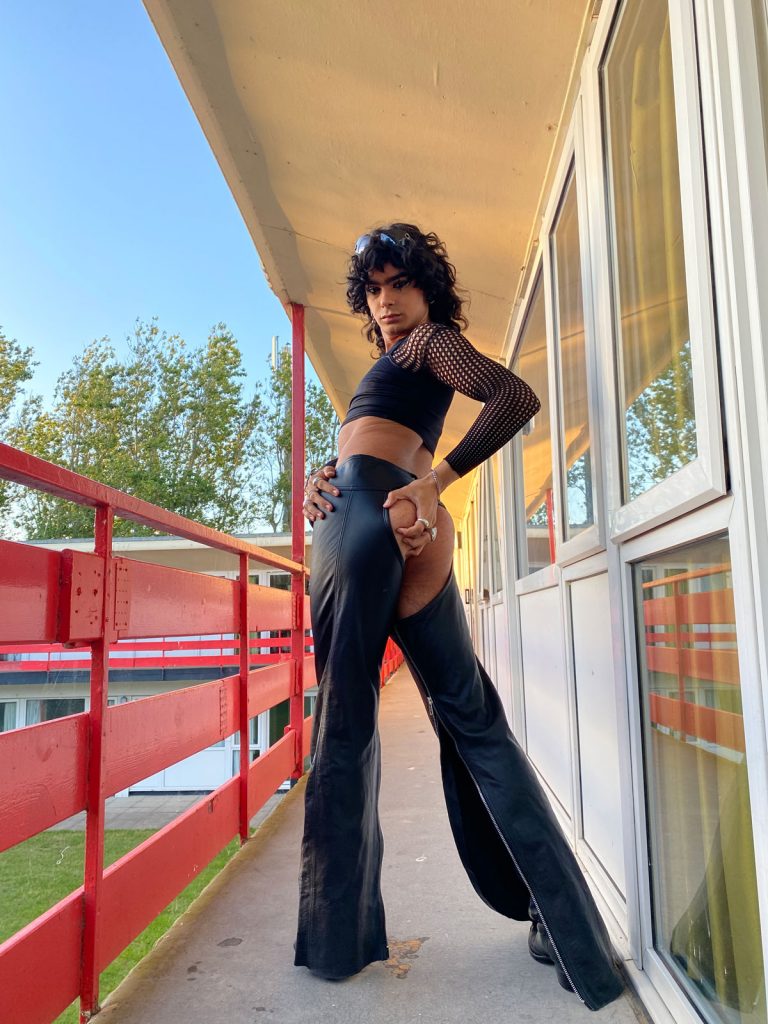

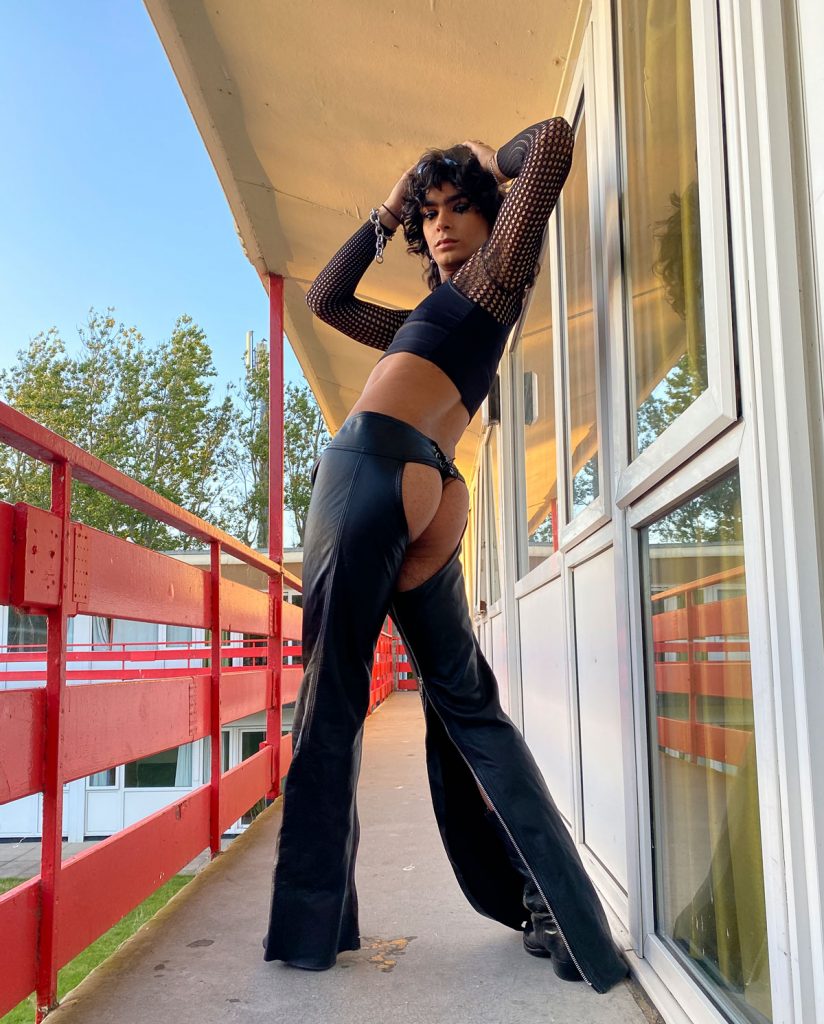
To many, the purpose may appear to be surface level with the aim of ‘looking good’, but purpose is personal and unique to the individual.
Q: What is the purpose?
Eric:
“It relates to the idea that most queer people are considered to be too much and it’s we get that – if you’re gonna say that we’re too much, then we’re going to be too much. You can make fun of somebody all you want, when people say like “Oh, why do you care so much about getting ready?” – Then you respond with “Look at me, I’m gonna wear this crazy outfit that someone can visually notice that you’ve put so much time and effort into. This switches the narrative from being teased, to being respected and it becomes “Wow, you put so much time in!” – and they’re impressed. That is the point of being camp, it’s being extravagant for no reason. I feel like as queer people, we’re very visual and very creative as a community and therefore these spaces are also visual spaces, so I think all of these elements merge together and influence your outfit decisions before going out. But you would also never be disrespected if you’re not wearing something outrageous because ultimately, it’s all about your energy and appreciating everybody for all their differences.”
Nicky:
“When I’m in a queer space I never feel uncomfortable, even if I’m basically naked because so is everyone else. In real day to day life everyone else is much more clothed than you. So I would feel more uncomfortable in a setting where everyone else is covered up and I’m not. It’s also the fact that I’m not into casual, revealing outfits. I’m into ‘crazy’ naked, something with a purpose. It’s the purpose of looking crazy naked, not just everyday naked.”