As I arrive home after a stressful supermarket sweep back in March, my dog Larry happily rushed to the door. He greeted me with a wagging tail and barks that almost sounded like cheering, and for a brief moment I felt an overwhelming wave of guilt. The peak of panic buying had meant that I was unable to get Larry his favourite dog treats. Despite my lack of treats Larry was still, well, “happy as Larry”, hopping onto the sofa providing me with stress-relief snuggles. King Frederick of Prussia once famously said “dog is man’s best friend”, and in this small moment of affection between Larry and I, this old saying couldn’t be anymore true.
‘The Love Between People and Pets’
Music Credits: ‘Perception’ from BenSounds.com https://www.bensound.com
Dogs, along with animal companions of all furs, scales, feathers, and gills are considered to be best friends for millions of people across the globe, with approximately 12 million households in just the UK alone living with at least one pet. In recent months many people have bought a pet due to the Covid-19 pandemic and lockdown loneliness. In August of this year, The Kennel Club reported that more than 2 in 5 new puppy owners admitted to buying a puppy to be their “Covid-19 companion”. However 1 in 5 new puppy owners also admitted that they didn’t know whether their dog will suit their lifestyle after the first UK lockdown, with worries about behaviour, time and costs.
With these facts in mind, now it is more important than ever to remember why we live with pets, and to consider how our ownership over them (and arguably their influence and ownership over us) strongly impacts the day-to-day lives of both people and pets.
“[Its] absolutely a relationship of co-dependence, co-ownership, and shared power” – Sophie*
People choose to live with pets for a whole array of reasons. Lisa, a doctoral researcher conducting participatory research with Staffordshire Bull Terriers in a South London rescue kennel, told me it’s because she has “always been obsessed with animals” and her “life doesn’t feel very complete without dogs”. Whereas for Sophie*, a university lecturer in animals studies, “[i]t just seems natural to have animals in the house”.
Undoubtably, a predominant reason that so many of us live with pets is for our own well-being. Omar, a 22 year old self-proclaimed Cat Dad told me that “it’s quite nice to have that companionship. I think they can do wonders for your mental health”. Unsurprisingly Omar is not the only one who thinks this, as a statistic from Wisdom Panel’s 2020 Pet Census reveals that “99% of dog parents and 96% of cat parents said their pet has a positive impact on their mental health”.
The influence that pets have over our well-being and mental health has proven to be especially significant during the Covid-19 pandemic. With social distancing, self-isolation, and multiple lockdowns limiting our ability to form and maintain physical and even emotional connections with other people, it should come as no surprise that so many people bought a puppy as a “Covid-19 companion”. According to an article by Healthline these side-effects of the pandemic have left many of us feeling “touch deprived”. Drawing upon research from Janette Young a lecturer in health sciences at the University of South Australia, Healthline reported that pets may be the answer to touch deprivation, as touching our pets provides comfort, relaxation, and familiarity; with pets also having the ability to “know” when their owners weren’t feeling well or wanted to be physically close.

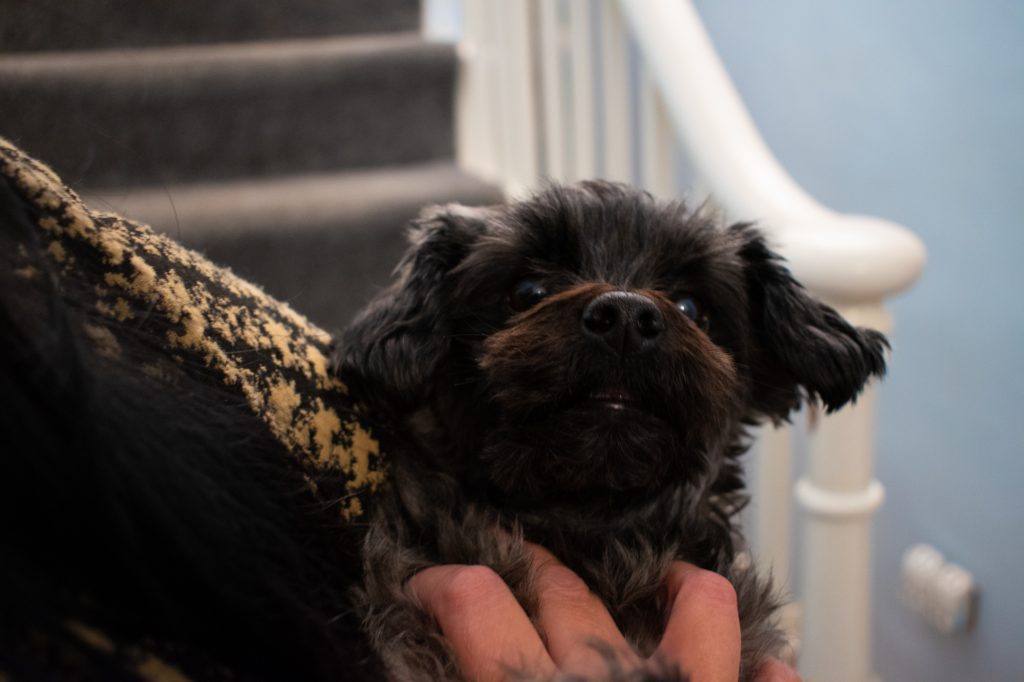
Humans have three colour cones in their eyes (red, green, and blue) whereas dogs only have two colour cones in their eyes (blue and yellow). This means that dogs see less colours an us. Find out more about how dogs see the world
Emotional well-being is not the only significant part of human life that our pets can influence. Pets control all aspects of our lives; from the food we buy, to where we call home. During our interview, Lisa recalls thinking “oh no I haven’t got any meat, I’m vegetarian but I go out and by all this crunchy chicken for the dogs, because that’s what they like. People will be very influenced for example in where they want to move because they need to think about their cat or their dog.” As I learnt while interviewing Lisa, living with a pet also has the potential to control the language we use and question the very sense of ownership we have over them. She told me that “it’s really funny you say own a pet because I would have said own a pet but now I think “would I say that I own them? I don’t know if I would call them a pet?. In the dog world a lot of people talk about being owned by their dog rather than the other way around”.
At first thought the notion of people “being owned” by their pets might seem slightly over exaggerated, even Lisa acknowledges that on a “large macro level humans do have a frightening amount of control [over animals]… legally”. Even on a micro level people still have control over their pets, with “breeding… how much food they have… what kind of food they eat, where they sleep, how much sleep they get, how much space they get, their quality of medical care and their moment of death”, being just half of the ways quoted by Sophie*.
“In the dog world a lot of people talk about being owned by their dog rather than the other way around” – Lisa
Despite all of this, it could still be argued that for some people the notion of “being owned” by their pet isn’t too far fetched. Sophie* proudly describes the relationship between herself and her dog Rover* as “absolutely a relationship of co-dependence, co-ownership, and shared power”. She clarifies this by stating: “it is obvious by the way that I’m speaking, it makes it seem like I am the one who is making it possible for Rover* to be an agent, so power is still on my side, and to a degree that is still true, but as we go through time… Rover* has more and more power”.
But what does it mean to have shared power with a pet? This question cannot be answered in a simple way, because the reason is different for every pet parent. However for Sophie* it means that she accommodates life around what Rover* wants or what he feels is right, stating “[t]hat’s how you would live with a partner so why shouldn’t you live like that with an animal?”
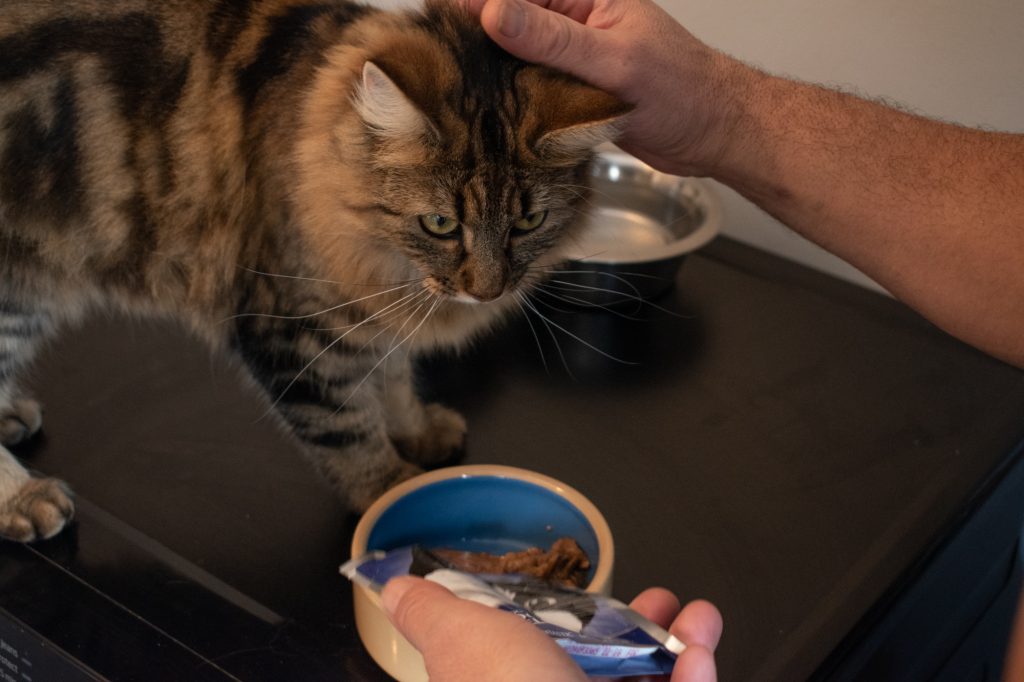
Cats are nearsighted and have to be 20 feet away from something that a human could see from 100 or 200 feet away. Cats also can’t see richness in colour as well as humans, this is to allow cats to see in the dark. Find out more about how cats see the world
So , is it possible to say that people have complete control and ownership over their pets? The answer is both yes and no.
“It’s quite nice to have that companionship. I think they can do wonders for your mental health” – Omar
Ultimately, people have influence over their pets in numerous ways, meaning that someone could easily have complete control and ownership. Even the option of having shared power with a pet is arguably still a form of power that is decided and controlled by a human. On the other hand, you could just as easily answer no. Although the ways in which pets influence and control us are drastically different to the ways we have influence and control over them, they can still have a great deal of ownership, especially in a relationship of co-dependence and shared power.
And on that note, I have to go. Larry is waiting for dinner!
*Sophie and Rover are pseudonyms that have been used to anonymise their identities.