The recent UK government posters advising creatives to give up their dreams show that even in 2020, artistic careers are not held as highly as the ‘proper jobs’ in society. But how right are Boris and his friends and should we listen to them?
“Boris relies on us, for every single campaign. Any media event that they do. I’m just baffled, it was a waste of time just trying to make that a thing”, says Anika Verma, a fashion student from Central Saint Martins (CSM). Anika is one of the thousands of creatives across the country who were left irritated after the UK government released posters in October 2020, advising the art community to change their career into the more stable STEM industries (science, technology, engineering and mathematics) with their infamous triple ‘r’ slogan “Rethink. Reskill. Reboot.” The power of social media has enabled artists to thrive in today’s society and as a result, is a huge contributor to UK’s economy and cultural value, yet the government has established their stance that ‘hard’ subjects are still more valued compared to the arts.
Ask anyone what they mean by ‘proper’ jobs and chances are, the occupations they list are not in the creative fields. Feels like everyone nowadays strive for white collar 9-5 jobs in Canary Wharf, London’s financial hub.
“It’s on our shoulders, as the creative industry, to make sure that we’re not repeating the same mistakes”
Back at home, it is no secret that most parents want their child to be a lawyer, doctor or an engineer, and from childhood, this mentality is driven into heads when education begins at age 5, where maths and science are compulsory subjects. Fast forward to selecting a degree, Google tells us that the top earning qualifications are all STEM, so it is unsurprising that humanities have a non-progressive reputation. In and out of the home, the goal, even if unspoken, seems to be a career in STEM.
Statistics from The British Fashion Council’s Value of Fashion report proves the significant contribution of the UK fashion industry to the economy. In 2017, it provided £32.3 billion to UK’S GDP and 890,000 jobs across the industry, securing them as a major UK employer. Compared to the rest of the economy, the industry had a 1.6% higher growth rate in terms of GDP contribution, meaning that fashion is a rapidly growing area. From these figures, the report concludes that it is almost as large as the financial sector.
So has the creative dream in British culture died? Surely it has not, since art trailblazing universities such as CSM and London College of Fashion (LCF) are UK based and the bi-annual London Fashion Week is one the ‘Big Four’, along with New York, Paris and Milan. Despite these, it feels like the struggle that creatives face seem to surpass the rewards.


When asked about the difficulties she endures as a fashion student, Anika took an unexpected turn: rather than discussing her personal worry to secure a stable career, she addressed the huge sustainability problem of constantly producing pieces of clothing. “When I first began studying at CSM, it never even crossed my mind but then as I kept producing, I realised the amount of resources it took. The amount of chemicals and wastage I witnessed during my internship for a print designer was so wrong”, she says. “It’s on our shoulders, as the creative industry, to make sure that we’re not repeating the same mistakes as the designers before us”. The World Bank labels water pollution as an “invisible crisis” due to the excessive water usage by the textile industry, where 79 billion cubic metres of water was used in 2015. Not only do they have to deal with their own problems, they are constantly reminded that their form of expression is, in fact, damaging.
Unfortunately, studying at a top university does not ensure employment after graduation, unlike their STEM counterpart. Angela McRobbie, Professor of Cultural Studies at Goldsmith’s University, points out that even talented designers from famous establishments are “prohibited from the field unless substantial funding is secured”, such as winning support schemes like Fashion East. Meanwhile, she reminds us of the staggering studio rental costs in the UK metropolis, making it impossible for youths to start their own labels. “All of the students whose parents are millionaires were able to move to Paris and immediately intern for fashion houses. My friend, who is from a working class background, couldn’t go and is missing out on these vital career opportunities”, explains Anika.
A 2018 survey by The Mandy Network, a recruitment firm for entertainers, discovered that 60% of performers were forced to take on second jobs to ensure bills were paid – compare this with the government pouring in colossal amounts into STEM, such as £179 million funding for science PhD education, industry marginalisation is the harsh consequence of the lack of governmental support.
“It’s all subjective and there’s no correct answer”.
You would think that the attitude towards fashion would have been more progessive by now since the inter-war periods, where McRobbie discovered that politicians never paid attention to it due to its low pay, compared to industrial sectors. Can this excuse still be used in the West today, where luxury fashion is sought after and creative directors from fashion labels are earning upwards of £70,000 a year.
There is hope for the newcomers though, thanks to organisations like The Creative Society, who connect young people from low socio-economic backgrounds to more opportunities in the sector through networking.
The most obvious answer to the question of struggle is the oversaturation of the sector – sure, Anika has a head start coming from one of the top fashion institutions, where alumni names include Alexander McQueen and Stella McCartney , but what about the hundreds of other fashionistas who graduated the same time as them? Clearly there is a problem of being drowned out within peers, where even if an artist finds something specific to them, it runs the risk of blending in with others due to generalisation and goes unrecognised.
Referring to whether he views STEM subjects as more important than art, Ben Huynh does not agree, and judges them at the same level, using media as an example: “It is vital because we need entertainment”. As a finance analyst at Frescobol Carioca, a men’s luxury swimwear brand, he makes the point that creative subjects are not less important, but easier because “STEM is just harder to perform because of the cognitive thinking requirement behind it”, which is why art and fashion are undervalued. “It’s all subjective and there’s no correct answer”. But the 25-year-old does draw parallels between the two topics at hand, ultimately saying that even though subjects and occupations are divided into ‘hard’, ‘soft’ and STEM, “people have to be creative, even in STEM” and that just because an occupation is not traditionally art related, does not mean it lacks creativity.

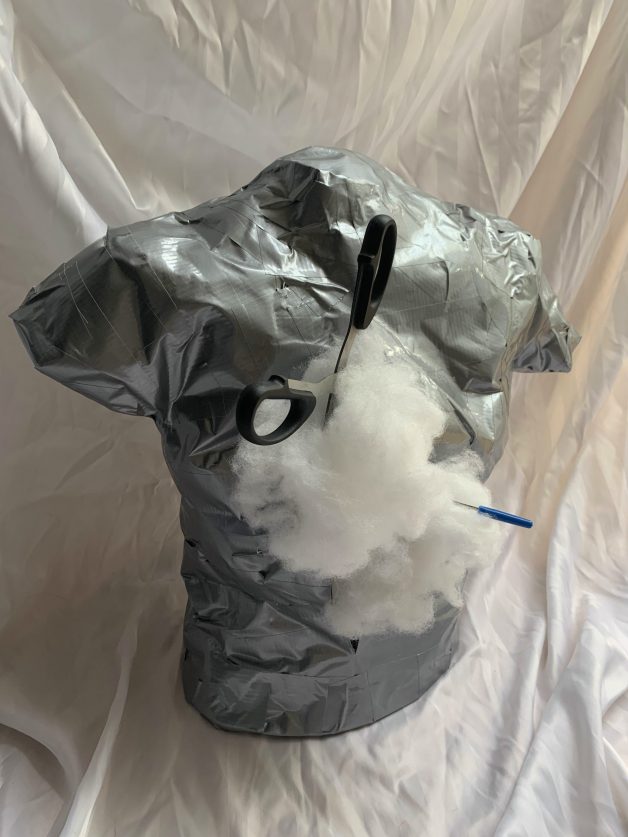
So perhaps the ‘you-should-retrain’ mindset is slowly changing with the new generation of professionals, especially with omnipresence of social media allowing anything to become viral. But it looks like we’re still going to have to wait for Boris and his friends to think the same way before creatives can reach their full potential.