With the surge in large animals venturing into cities around the world during lockdown, now is the time to acknowledge the lessons we can learn about the quality of our cities from the activity of nature. Ideas about how wildlife and city life can be connected in a more harmonious manner have been around for years, however, maybe it has taken sights of sheep on round-a-bouts, and deer in gardens, for all of us to fully consider the possibilities of human and wildlife coming closer together.
For years there has been a continuous increase in the amount of people living in urban spaces- more than half the world in 2016, with an expectation of an increase to over two- thirds by 2050. The way to deal with this population growth has previously been efficiency- the building of underground train tunnels, high rise building, amongst many others. However, considering the cost this has on nature has taken the backseat. This could also soon change though, as the sightings of animals in our cities that provided relief from the mundane time of lockdown Britain, could also be a lesson about the ways in which we live. Is a more harmonious relationship between humans and animals as farfetched as we have been led to believe?
In between the zoom quizzes and banana bread baking, the appearance of pelicans taking a walk along London’s infamous West End, played their role in relieving Britain from the monotony of lockdown. The pelicans were not the only unexpected visitors however- clearly the word got out about humans disappearing- as a greater range of animals were seen closer to home than ever before. This included two orcas that were spotted in Strangford Lough- reclaiming areas usually occupied by bustling human activity. Although at first glance these sightings merely serve as light relief from the pressures of the Covid- 19 living conditions, some have argued how significant the first physical evidence we have in recent times, that the animal and human world is not actually so separate could be.
One of these individuals is Mathew Frith from the ‘London Wildlife Trust’, who told me that our relationship with nature may be one of the “paradigm shifts” caused by lockdown. However, it is not just lockdown that has affected nature. Frith was sure to point out the strange climatic events of the past year- a wet February, the sunniest May since records began, and then the wettest October since 1820 were sure to play a role in the sightings of 2020. But these events only support Friths later comment about capturing what nature is; “something you can’t really control”. Cities are a constructed habitat for people- it makes sense that we attempt to control the nature that seeps in. However, with scientists predicting that world pandemics are likely to become as frequent as every 20- 30 years, a change in mindset is becoming a necessity. An attempt to create a habitat suitable for more than just the human population, will not only help the animals who made an appearance during lockdown, but also ourselves as we reap the mental health benefits that nature has to offer.
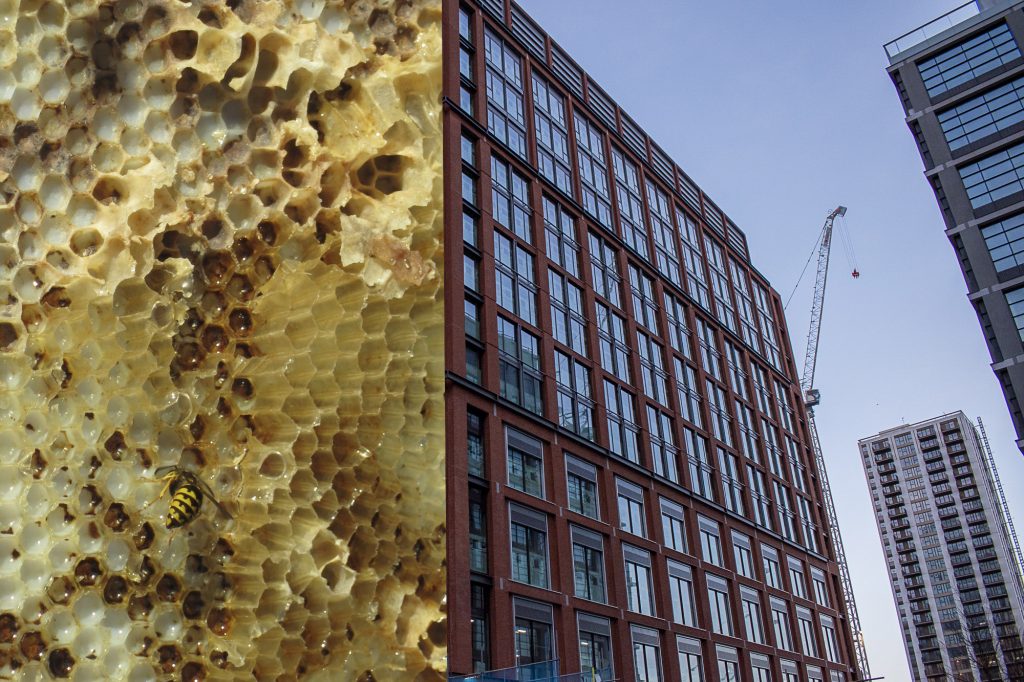
The question still stands however, about how this city-wildlife reality could occur. Enter, ‘rewilding’. Rewilding as a concept is by no means new, however, its importance is obvious now more than ever before. One individual doing his part is John Welsh. Someone who admitted to previously lived the ‘corporate life’, now spends his days working within his community from- quite literally- the ground up. Welsh spoke of his time ‘guerilla gardening’ in which he would attempt to bring life back to the tree pits in his North London borough. By starting with the soil beneath our feet, Welsh’s motto is to “leave the soil better than I found it…leave an environment where the gardens will be sustainable”. His techniques already seem to be working, he boasted that “three to five” species of bees have been seen down the streets he has been gardening- the first time in years according to Welsh. But in between his impressive statistics and positive results, there was an acknowledgement of the privilege that comes with being able to notice wildlife. The advantage of having a space that is attached to your home became glaring obvious during lockdown, as Welsh spoke about how many who were living in small urban apartments enjoyed the nature of the community garden that Welsh also contributes too.
“Wildlife isn’t just about what you see; it’s what you do”
– John Welsh
In cases where there were gardens available though, animals played their very own April fools pranks. As on the first of April 2020 a herd of deer ventured into Harold Hill, East London. They made their presence known by lying in the gardens of unsuspecting residents. Although this quiet neighbourhood has shared its land with deer for over 1,000 years, locals reported that the number of deer was a spectacle never witnessed before. Some other not- so -large visitors have included owls, stoats, and goats, who have also ventured into towns and gardens in Wales- previous out of limits due to human activity. In Devon, Harry Jones- a local- told me he had a “definite increase of wildlife” in his garden which really “centred” him. Of course, to expect this behaviour to continue as we start to get back to normalities is unrealistic to say the least- not many people wish for a literal pelican crossing in their day to day lives. However, these sightings have the potential to raise awareness- “start a dialogue”- as Frith argued. What we do with this awareness will impact future generations to come.
As much as these good news stories provide a welcome change to the normal doom and gloom that shrouds our knowledge of the environment, there have unfortunately been some negative effects from lockdown on animals. As it is not only land that animals share with us- but there are also many species who share our foods in the form of human scraps. Species who have managed to adjust to busy city life and have had to adjust yet again to the sudden disappearance of humans. For instance, the Jackdaws, who normally thrive off human leftovers have not returned to Ham House since lockdown. It is not just those on foot who influence the food chain either- the 75% plummet in traffic during the first week of lockdown in March, unsurprisingly affected scavenger species such as crows, who had less roadkill to feed on. Furthermore, the London mosquitos which have adapted to specific tube lines, had far fewer opportunities to feed and mate due to the lack of people taking public transport during lockdown. Although these are unfortunate realities, something can be taken from the ability of wildlife and nature to adapt to their environment.
Sourcing inspiration from nature first became mainstream in 1950, with the birth of biomimicry– creating architecture that mimics natural phenomenon. Although creating high-rises that mimic the shape and life of a tree is something that only those in power can do, it does give hope of a future where nature is listened to. As well as this, creating structures that imitate trees unsurprisingly encourages animals- such as birds- to nest and live in a city environment. There is still an element of attempting to control nature here though, which conflicts with ideas such as ‘rewilding’. Biomimicry is still a step in the right direction however, and especially when combined with other attempts to aid nature rather than control it, we could see a future where wildlife on our doorstep isn’t just a lockdown event.