As Sally Thorpe connects to our zoom call interview, one of the first things to come into view is her modest student room and the rack of clothes behind her – some cut into pieces, some still intact. As a management & marketing student at Leeds University, she’d never had a committed passion for fashion, but during lockdown in March, she – like many of us – felt the need to do something creative and decided to freshen up her wardrobe. At first, she began messing around with her mums old sewing machine for personal use, but by May, Sally had made enough original pieces to sell as Up-cycle Apparel.
Today Sally is making a difference as a one-woman player in an exploitative global industry worth over 3 trillion dollars and providing jobs for millions of people.
100 billion dollars’ worth of wasted materials being discarded every year shows how extra-active these systems have become and why “sustainability” as a buzzword appearing more in company adverts is simply not enough. “It’s one thing to say you’re being sustainable, it’s another thing to put that into practice.”, says Jack Becht, Fashion Director at Selfridges.

Dr Kyle Herman from University College London defines sustainability through the Bruntland report as “using resources today so that we don’t jeopardise the resources of the future”. But this definition does not consider the injustices done to workers and the environment; and the historical processes of colonialism, racism and patriarchy leading to systems we have in place today.
Researchers such as Dr Herman have been aware of the lack of resiliency established in our business models since before the issues with supply chains during the pandemic proved them right. According to a US Coronavirus Response Survey by Cotton Incorporated, 35% of consumers said they’re buying from ethical producers and 56% said environmental responsibility plays an important role when shopping for clothes. In 2015, textile production caused more greenhouse gas emissions than world-wide flights and oceanic shipping combined.
We’re approaching a point of no return where the amount of water used to produce a single pair of jeans is enough for a year’s worth of showers; it takes a Bangladeshi garment worker her whole lifetime to earn what a fashion CEO earns in four days.
The tragedy of this scenario is that one in five of garments made are never even worn. Fast fashion brands like Zara, H&M, ASOS or Shein use quick response manufacturing to churn out as many new, cheap designs as possible, resulting in heaps of unworn items.
Currently, H&M’s website offers 7,760 items, with 911 new arrivals in the women’s section alone. This makes competition from small businesses out of the question because they’re unable to produce that much product in a whole year, let alone a season. “Sustainable fashion” – beauty with a dark side does seem to be an oxymoron.

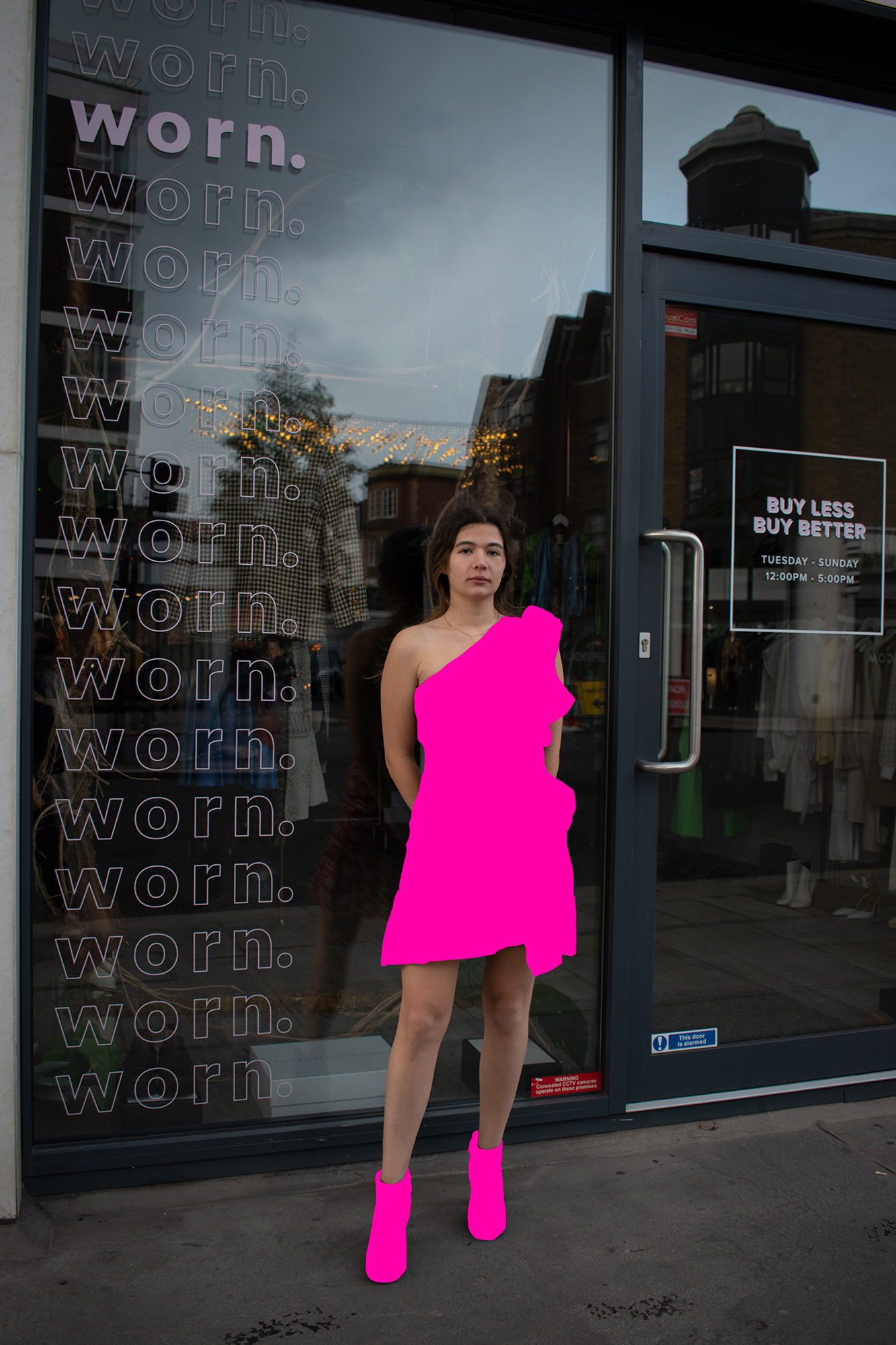

Speaking of her own consumption patterns, Sally admits, “I haven’t really done much shopping since (starting Up-cycle Apparel), because every time I see something I like, I think to myself ‘I can just make these’”.
“Companies should be smart enough to realise that those (Gen Z) are their consumers in the next ten years and especially now with all their reports online, it’s harder to burn up documents.” says Dr Herman. Soon, anyone could search for a company’s history of social responsibility and sustainability and find what they’re looking for to make an informed purchase.
Climate and social justice within the fashion industry demands immediate action, especially because there is so much false advertising and “sustainable” is not a regulated term like “organic” is for the food industry. Many companies are aware of this and are taking things to the next level. In August 2020, Selfridges launched Project Earth, an applaudable example of how companies are listening to consumer demand. The project offers a variety of sustainable initiatives from a vintage pop-up shop, to rentable high-end clothes, to refillable beauty products, to free online webinars.
“Traditionally, there have been many unsustainable practices, 2020 has brought a stand against those business models”, says Becht, adding that men were using their rental fashion collaboration with HURR more. This came as a surprise. Usually it is women who have a higher tendency of conscious consumption as sustainable products are marketed more specifically towards them, but that’s a whole other issue…
“The easiest, shortest solution would be if everyone studied a bit more Zen Buddhism but … that probably won’t happen.” says Dr Herman, chuckling.
“Governments and corporations won’t do anything until they have to, so consumers, so consumers need to vote with their wallet.” And are they? Discussions around reducing emissions have been on the global agenda through The Kyoto Protocol, Conference of the Parties and Paris Climate Agreement. Governments are typically responsible for reducing their own emissions, but with the US dropping out of the Paris Agreement, the schedule for staying below 2 degrees Celsius global warming is not quite on track. The fires destroying wildlife in Brazil and Australia also showed the lack of commitment to climate action in times of crisis.

Enlarge

It’s devastating to have to bring politics into a discussion on fashion but it does show how interconnected everything has become. Should consumers act together they would be a powerful force but at the end of the day, top-down, international governments intervention is needed for the quickest shift to a sustainable future.
“Governments and corporations won’t do anything until they have to, so consumers need to vote with their wallet”.
Dr Kyle Herman
As well as individuals and small businesses, fast fashion brands are seriously exploring ways to prove themselves as more sustainable. But for an international company with global consumers, this involves a huge amount of planning, processing and resources while dealing with supply chains.
The best option towards a sustainable supply chain is the use of block chain and machine learning technologies to track the lifecycle of a product. All the information concerning a product, from the farm the raw materials were produced on, to the charity shop it might end up in, is stored in a cloud – much like the iCloud on iPhones.
Computers required to operate the cloud use immense amounts of energy, which is mostly sourced by fossil fuels today. Dr Herman believes, “Computer technology needs to be checked, because none of those materials are recyclable.” However, “block chain can help use less energy because it can shift energy on and off and people can trade energy through these automatic processes.”
Sally’s approach to working zero-waste was to collect unworn clothes from friends, using all possible materials to breathe new life into fabrics. “Upcycling, say, from an old pair of trousers and making it into a new top is different from having a set pattern to mass produce from – which is the model most businesses use.”
She realizes upcycling cannot currently compete with mass production, but there is an increasing demand for transparency and accountability and her aim is to enlarge her business prospects by working with other individuals who practice upcycling. Sustainability has exposed the intricate contradictions and processes behind the culture of fashion, from racks of clothes to the use of mega-computers. The word is out, and the world is waking up to the necessity of sustainability. Many large companies are aware of this and accept the fact that to survive in the future they will have to adapt, economically change and operate with more transparency. Sustainable practices are being developed and improved as all industries go through a similar learning curve on a larger scale.
“Even the companies changing something are not doing enough, so I would consider them within a spectrum” says Dr Herman.
Perhaps sustainable fashion is not an oxymoron after all, but part of a much longer process where we need to unlearn certain things, relearn new practices and collaborate with each other.