“Sustainable fashion’ gave me an intuitive feeling that the brand uses more environmentally friendly and recycled materials in its products, and incorporates the concept of sustainability into fashion. In addition, I think sustainable fashion is not only a brand-oriented concept, but also a brand-new impact on consumers. The path of this sustainable link should start from the design and production of the brand until the end of the consumer’s buying scene and usage habits. Form a truly sustainable closed loop.”
Xaral, the founder of SARAL ZENS (a niche fashion brand in China)
The concept of “sustainable fashion” originated from the proposal and prevalence of “sustainable development” in the Global Economic Forum, and was introduced into the fashion discourse system. To this end, major brands have begun to take action to invest more energy in “sustainability”, and how to achieve “sustainability” has become the focus of attention. The fashion industry is one of the most internationalized industries in the world, and it is also one of the most polluting industries in the world. The British media BBC once pointed out in a report that “Today’s sewage discharge in the global apparel industry’s processing chain and the abandonment of idle clothing make the consumption and pollution caused by fashion even exceed the industrial production field.” Under this situation, the discussion of “Sustainable Fashion” has continued to heat up in recent years, and “Sustainable Fashion” has become a very high-frequency entry.
According to the “2018 Global Fashion Business Report” launched by BoF and McKinsey, sustainable development is not just a marketing tool. It goes deep into the upper reaches of the supply chain of fashion companies and uses the concept of circular economy to update fashion companies’ operating models. Francois Souchet, the head of the Make Fashion Circular project of the Ellen MacArthur Foundation, used the concept of circular economy to analyze sustainable fashion. He mentioned: “There are three main principles in the circular economy. The first point is to avoid pollution and waste from the beginning of the design process; the second point is to increase the utilization rate of products, which can also bring higher profits; the third point is to carry out continuous recycling, and to reuse and recycle natural resources.”
Zoe Xia, a student who takes Menswear Fashion Design major in London College of Fashion said “In my opinion, it is very meaningful to integrate sustainability into design. My end-of-semester work last year was to use vintage bed sheets to make a set of outfit, and every single piece has many different ways to wear and match. This not only saved me a lot of material costs, but also gave me a new understanding of the sustainability of fashion.”
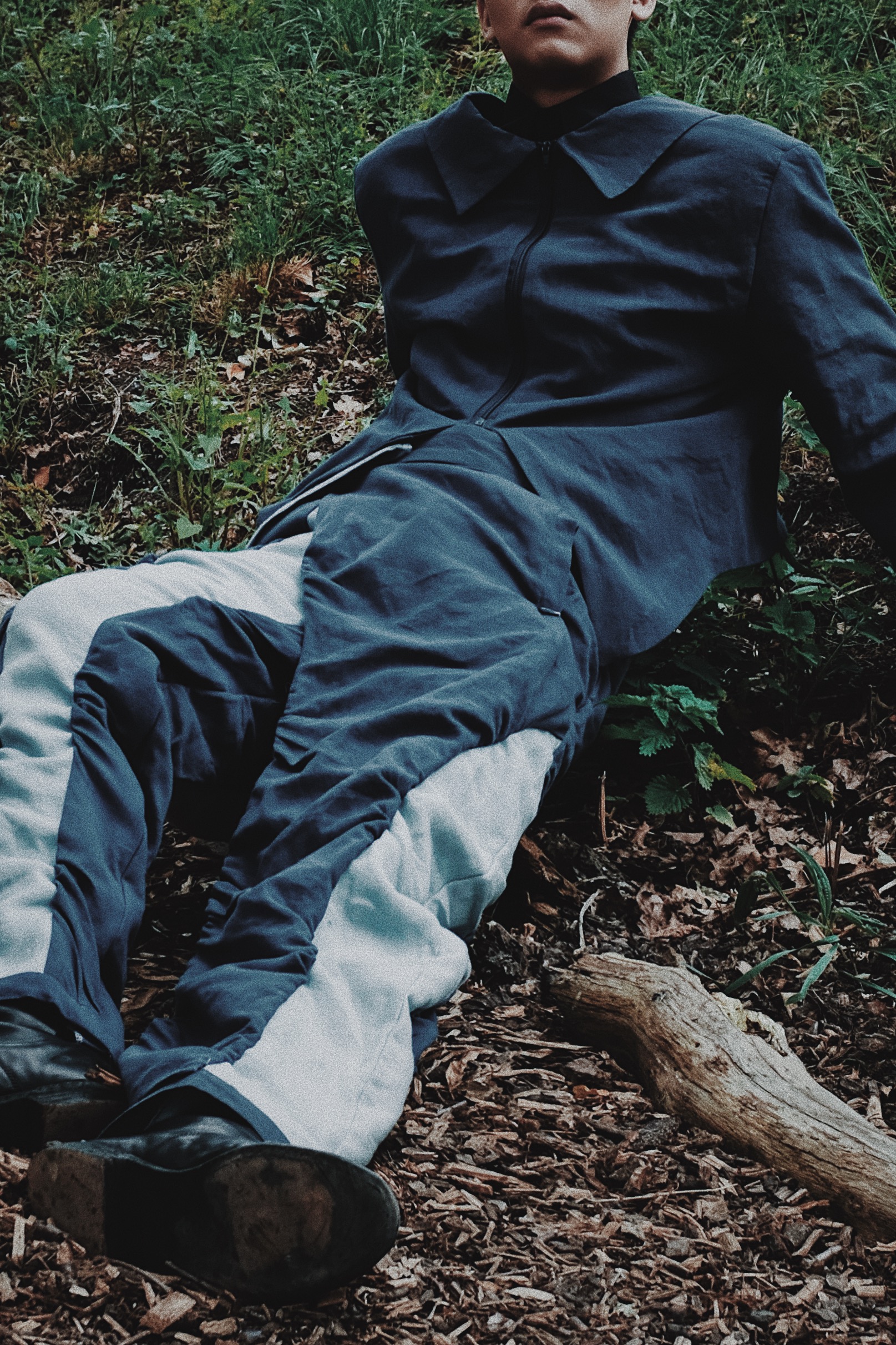
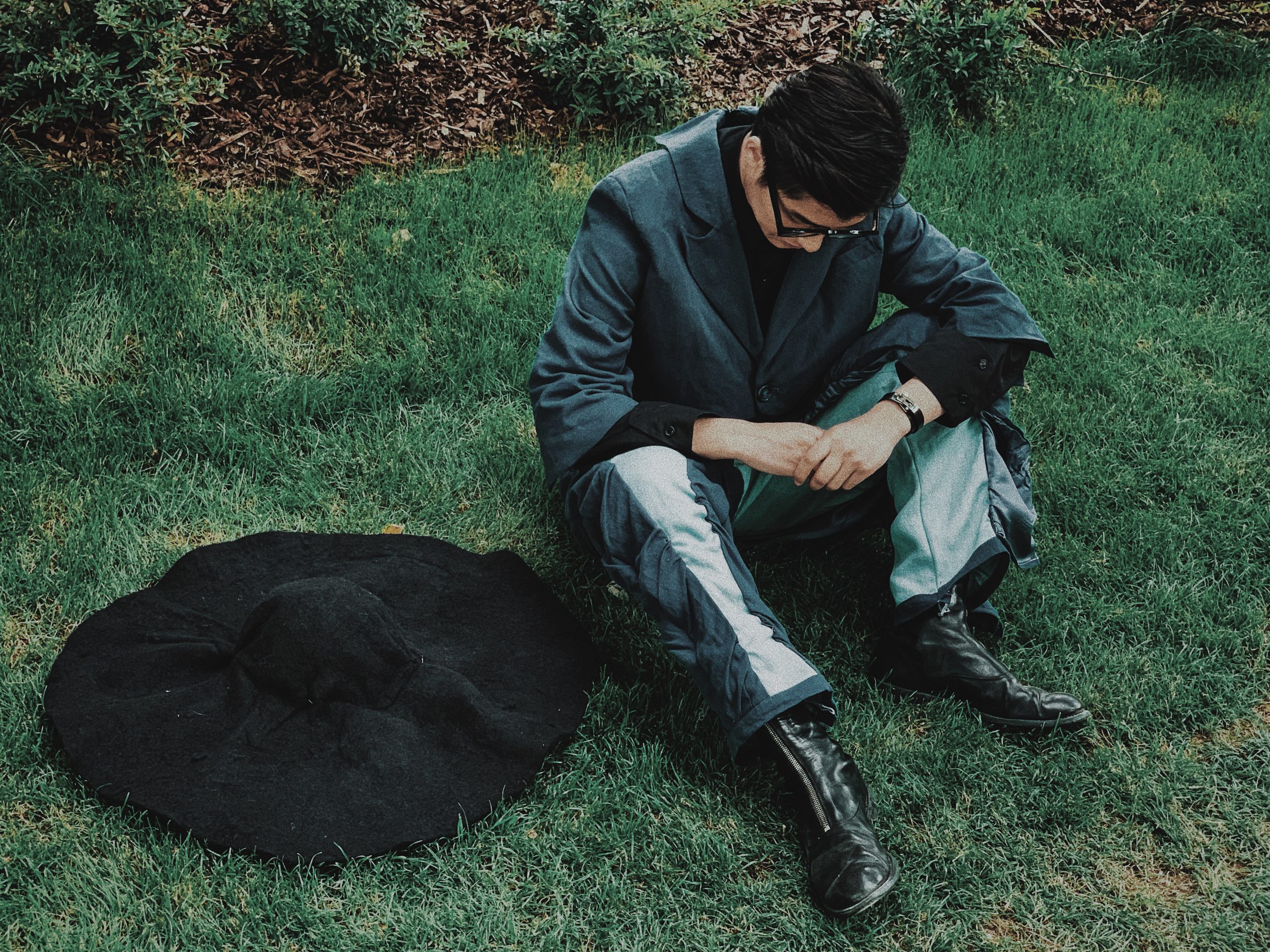
Zoe Xia’s Project—-2019SS
“In my opinion, it is very meaningful to integrate sustainability into design. “
Zoe Xia
Zoe is just one of the participants in fashion industry. Obviously, the concept of sustainability has been recognized by more and more designers and brands. Xaral said “White is the beginning of SARAL ZENS and the color we always use for a long time is the beginning of our imagination and inspiration.” Xaral believes that it is easier to match and less easy to get tired of looking at unique cut solid color pieces. The brand tries to make use of recyclable fabrics as much as possible while sticking to hand-made sample making.

“White is the beginning of SARAL ZENS and the color we always use for a long time is the beginning of our imagination and inspiration.”
Xaral
<Mist>—-2020SS
Phptographer: Anqi Li
Stylist: Xaral, Danni
Brand: SARAL ZENS
In fact, there are a number of brands that have gotten ahead of the game and received many positive response. Take Prada as an example. Last year, Prada announced that it would abandon the use of fur and launch a “recycled nylon” project, and focus “sustainability” on raw materials and supply chains that are often overlooked in the fashion industry. Starting from the product line, it uses recycled nylon ECONYL as a new material to create a variety of single products made of environmentally friendly materials. In terms of the show, GUCCI’s zero-carbon emission show, or Christian Dior’s close-to-nature “jungle” series, can see that today’s fashion brands regard “environmental protection and sustainability” as an important task for future development. In addition, some fast fashion brands have also joined the “sustainable” camp. Zara’s parent company Inditex previously announced that “from 2025, it will switch to 100% environmentally friendly cotton, linen and polyester fabrics to produce its apparel” ; there is also H&M in the “sustainable” camp, “Our goal is to make fashion sustainable and sustainable fashion.”
“Sustainable Fashion” may not be accurately defined today, but from “recycling” to “production of high-quality products”, people have a broader space when facing the issue of “sustainable fashion”.
From the macro perspective of “sustainability”, while brands are in the process of “Sustainability”, the corresponding general consumer groups are also quietly changing. The change of consumers’ purchasing will is not only reflected in their consumption behavior of daily necessities. Many people are making their own contributions to be more environmentally friendly and sustainable through the clothes and also the accessories. Linghai Zeng, a Graphic Design major student in Central Saint Martins who’s obsessed with fashion. In daily wear, he is keen on mixing styles and likes to match fast fashion brands with vintage clothing. At present, he yearned for trying more clothes with the label of “sustainability” and has his own unique opinions on sustainable fashion. “Nowadays, the speed of fast fashion brands offering new clothes every season becomes more and more faster. Not only do people continue to consume more ‘unnecessary’ clothing, the amount of raw materials and stocked products that the brand itself wastes also continues to soar. However, the reality is ‘We consume far more clothes than we need!’ Consumer groups should improve this phenomenon and achieve ‘buy less, choose well, keep longer’. As the literal meaning says, consumers should reduce consumption as much as possible, but extend the time we keep those clothes. Choose clothes that are not easily outdated and have matching value to achieve ‘one thing with multiple uses’. For example, vintage clothes are a good choice. I always try to combine fast fashion and vintage clothes with each other to extend the use time of single products and reduce the frequency of buying new products. Sometimes I will learn about sustainable products and I am also happy to try on these products.”
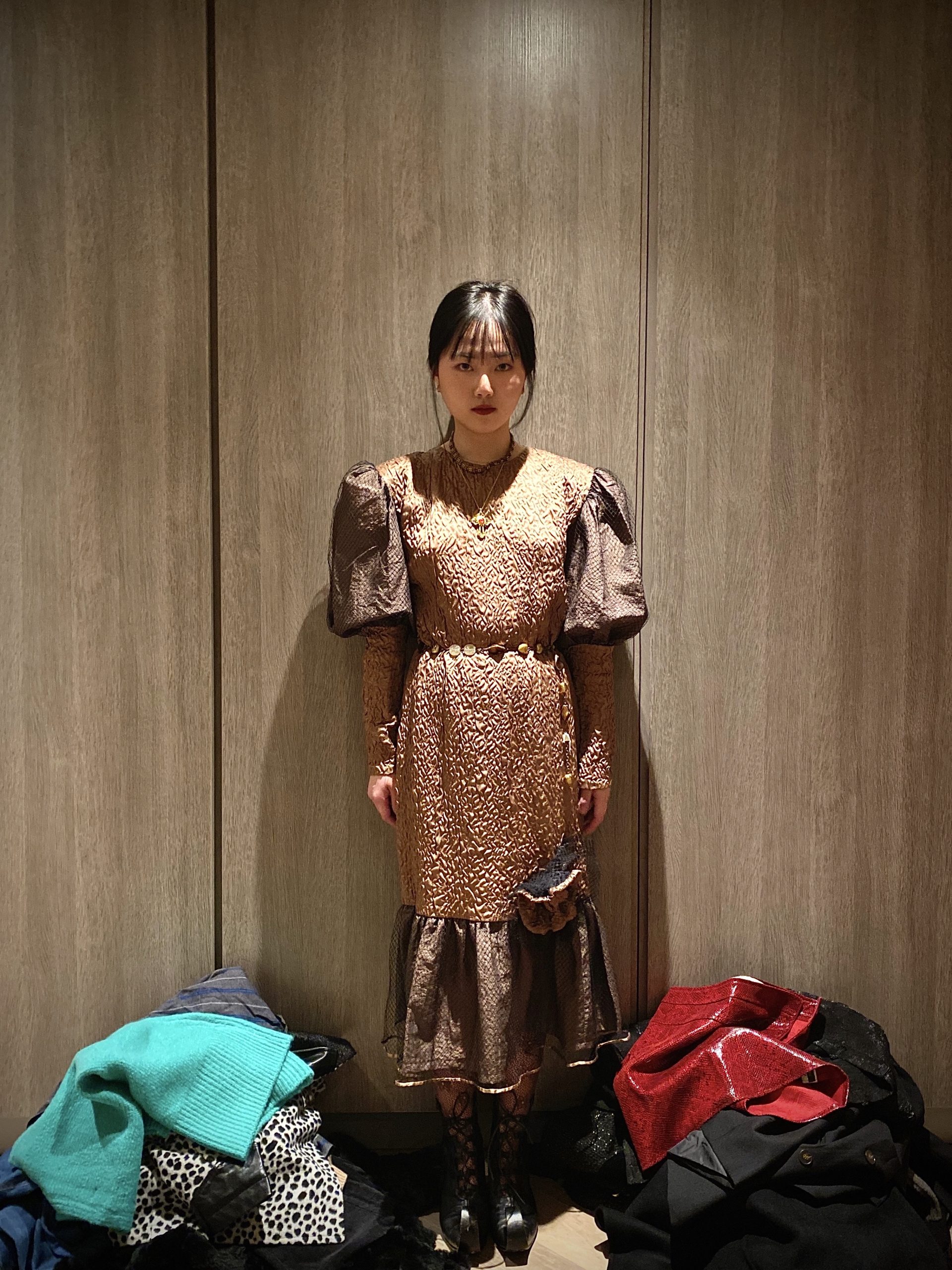
Rethink: buy vintsge items instead of fast fashion items, choose unique items instead of tons of items, buy less, choose well and keep longer. (From Yuqi Xin’s project)

Remake: always give your unwanted clothes one more chance (From Yuqi Xin’s project)
‘Buy less, choose well, keep longer.’
Linghai Zeng
Based on the attitudes from both fashion industry producers and consumers, if brands try to manage to “extend the lifespan” of the fashion item itself, then it will be very important for consumers. If a single product can be prolonged because of environmental protection, I think this thing is worth promoting and becoming a trend. Fashion and trend should not only play the role of “necessities” in life, they symbolize an attitude and become our “art collection”. What brands should focus on today is to meet the travel and aesthetic needs of contemporary people, while at the same time providing more possibilities for future fashion through “sustainability”.