The Beginning of the Ongoing
Eighteen years old, I was in my first year of drama school, laying on the cold white floors, looking up at a well lit room. Harriet, our voice teacher, a tiny classically trained white woman, was teaching us how to breathe. No, no a lot of people don’t know how to breathe; took me two years to learn. I found myself gasping for more breath, as if I couldn’t fill my lungs to the capacity I thought they needed to be. Tears streaming from my eyes as I silently cried in a room full of my peers, making sure no one could seem me cry. I hated that. After class, I went to her and described what I was feeling, because everyone else seemed fine. She looked at me concerned and quite stoically said “I think those are the symptoms of a panic attack”. She brushed it off, as it seemed like I was fine, but this was just the tip of the iceberg.
What I find amazing is that talking to many Black women in my life, and looking at the behaviours of women in my family, it’s evident that these women are dealing with undiagnosed issues or even finding out very late. I constantly ask myself why and how are others so easily diagnosed?
As a Black woman, it seems that we are met with a slew of trauma. From passed down generational emotions to sexual assault, mistreatment from the system, and general everyday microaggressions. If I could show what goes on in my head, it would probably leave you feeling a little baffled as to how I’m still able to function on a daily basis. My past trauma has given me the gift of predisposition, ADHD, Anxiety and OCD with depressive and manic tendencies. Now, this alphabet concoction is a mixture of my parents’ divorce, my rape at age 19, an abusive relationship, with a sprinkle of race related issues on top to add to the mix. Having been through this, it seems as if I would have been diagnosed early, right… no. I’m still going through the process of diagnosis and finding the right treatment for these issues, that paired with therapy and trying various medications.
The main issue is how are we, as black women, doing life without treatment? ADHD (attention deficit hyperactivity disorder) affects 1.5 million adults in the UK and is the most common behavioural disorder in the country. The gender health gap is also at play here: only 4.9% of women will be diagnosed with ADHD in their lifetime, compared with 12.9% of men.
The ADHD stereotype is typically white hyperactive boys. Usually miss behaving in class; getting away with things I could only dream of doing. This is inherently damaging for black women, as we simply don’t see ourselves in the same light. Social and cultural bounds stop us from accepting our differences. And to add symptoms in women can be slightly different. This makes it incredibly hard for us to see ourselves in this way and therefore not seek medical help.
The NHS states that as an adult, you must display six or more symptoms. The assessment itself cost £545, making it inaccessible for a lot of people, contributing to the disparity in diagnosis, as many cannot afford to take the test.
In addition to this, there is a lack of Black therapist. Therefore, there is an inability to discuss intersectional issues regarding mental health. This deters Black women from going to therapy, because empathy can only go so far, and if I’m being told by a white therapist that all I need to do is, work ‘hard and put myself out there’, I will cancel my therapy expeditiously. Knowing that your therapist may indirectly be complicit in racism and the structures that be, is uninviting.
2014 figures show that Black women made up the highest percentage of people aged over 16 to screen positive for ADHD. This is due to the racial medical gap. Black women are effectively invisible in the medical sphere. This has left an imprint, so there is no safe place to discuss ADHD and its effects within this community if they are simply not seen.
Unfortunately, I have not yet been able to access the assessment, but hopefully I can in the future. The cost of mental illness racks up.
However, the diagnosis is not the end point. It’s the start.
You have to make life choices to benefit and simply fit in with the climate around you. Jobs do not give you an easier time if you have any disorder, so management is key. Finding ways to keep yourself focused and accountable is fundamental, as you still have to go through your day to day like a neurotypical person.
When I was younger, I was somewhat of a high achiever, always doing a sport, competitive dancing, making progress in school, busy all the time. Though I did “miss behave”. This was in the form of inattentiveness or not doing as I’m told. Fighting these parallels in my adult life has pushed me into a box. This also made me set unrealistic goals for myself later in life. I still see this today, as I’m an undergraduate student, working actress and dancer, weight lifting the gym and working part time. I never stop. But I always had to ask the question, why?
Why do I feel as though I’m not where I want to be in life, and why do I always feel like I’m failing when others think otherwise?
I continuously spend hours trying to make myself better, whilst fighting the symptoms of undiagnosed ADHD, and I feel better at it. Managing time and rest, seeing friends, letting them know I’m unable to do certain things because I need rest. Because fighting against your urges is emotionally draining.
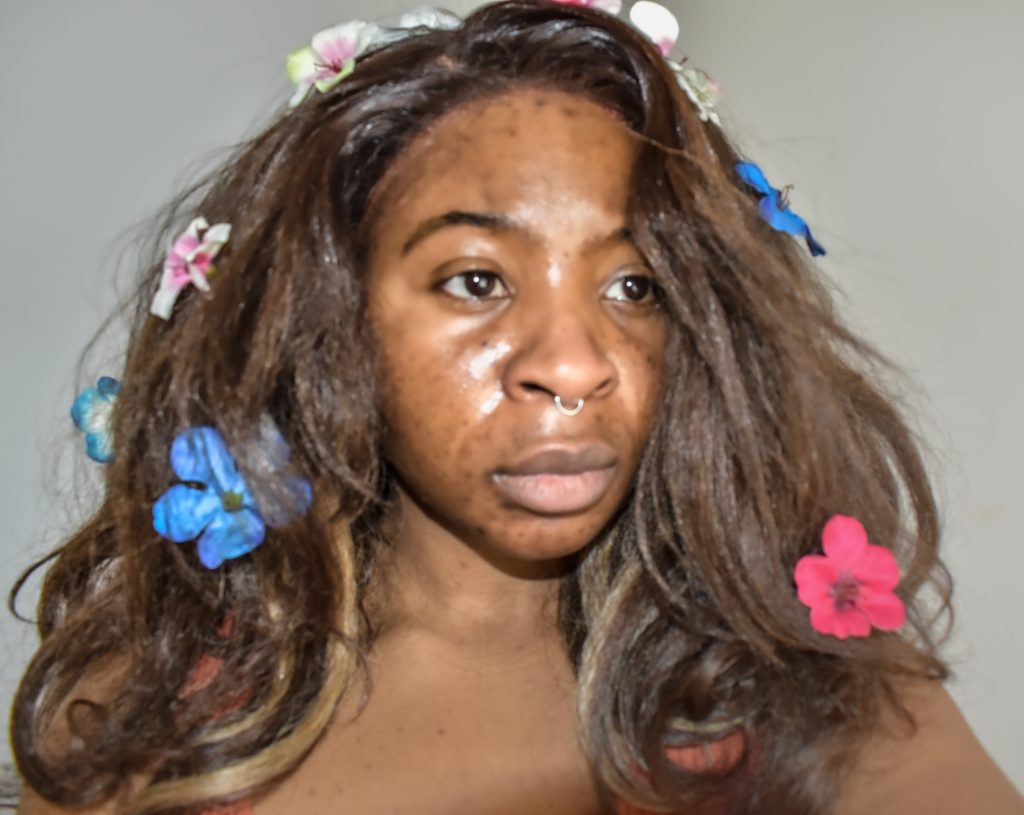
Most of all, what I’ve learned is to let go of what other people think. I’m on this planet for me. I’ve stopped trying to prove people I’m this version of myself, and I’m just doing things I enjoy and love. ADHD is my sparkle… I guess, and I’m okay with that. That paired with anxiety, depressive, and manic episodes makes up most of my psyche. But these are all protective elements that my brain has conjured up to better serve me. The difference is now I’m aware of them and can determine whether they’re useful in the moment or not.