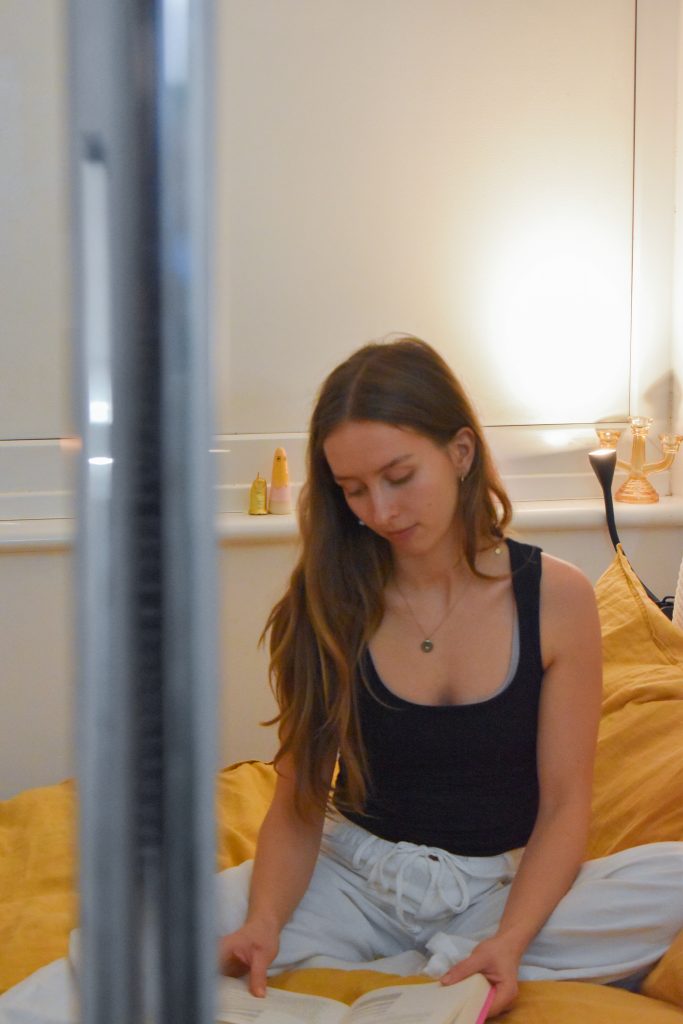
Pole dancing is a beautiful and versatile sport, with a diverse community and growing popularity. It’s an art that takes many forms; whether for the athleticism of it, the unlocking of sexuality, or joining a long-standing workforce, the pole community is passionate and dedicated. This piece documents stories from three pole dancers who share unique purposes and perspectives on pole, yet are unified by their involvement with the pole community.
Riley’s Story
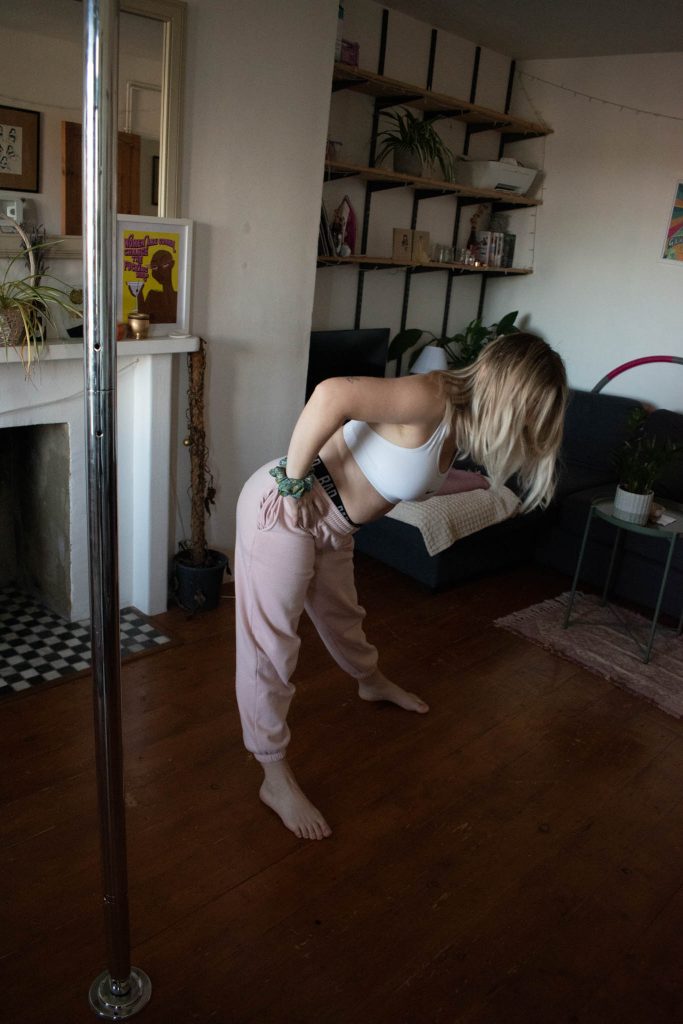
In professional dancer Riley’s London living room, she tells me of the journey and variety of her two years of pole experience.
“During lockdown I taught 1-2-1 pole lessons from home, but now I have a daytime job and work in a club. Stripping really changed my whole perspective on pole. I didn’t realise how privileged it was to go to pole classes and dance for free, because right now I’m working and need to make money from it.”
Currently, Riley is taking a break from her job at a world-famous strip club in London. Unknown to many visitors, dancers aren’t paid to work by the club: instead, the club charges a ‘house fee’ which is deducted from the dancer’s earnings every night. Since the cost of living crisis, Riley’s former club has increased her working hours against her contract, and she still isn’t protected from sickness due to being self-employed.
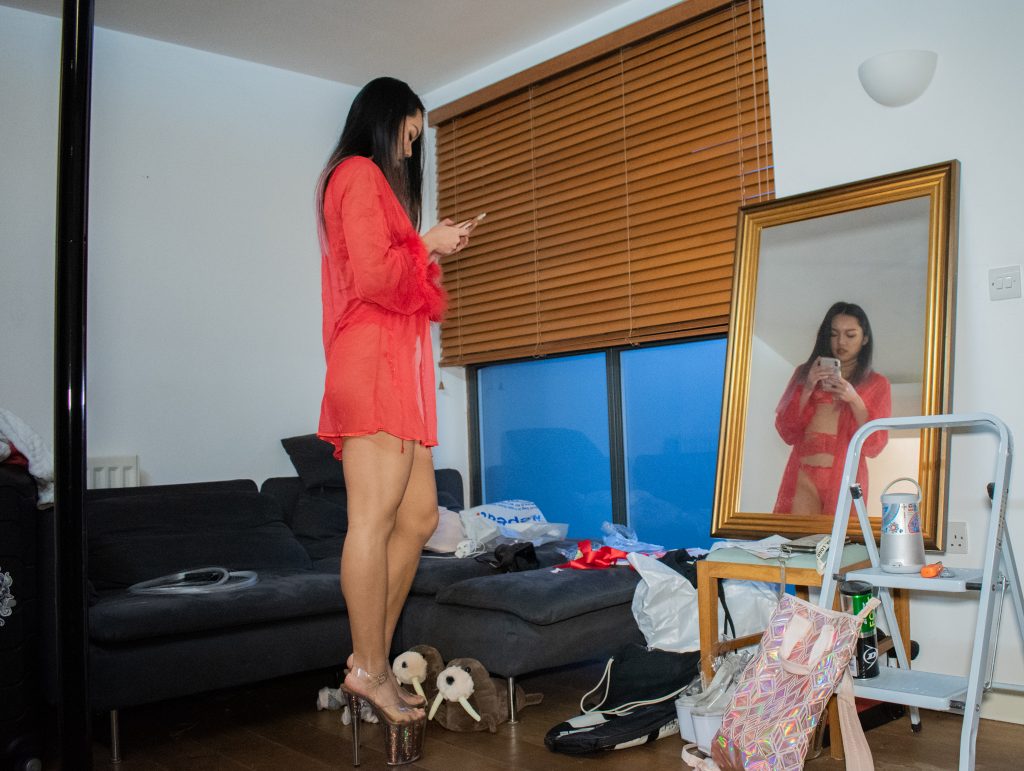
“I love performing, but it comes with all the stigma, terrible working hours, and mental and emotional labour. The club didn’t treat us well – they only saw us as girls who were there to help them make money. I wanted to provide a good service, but the working conditions were affecting other parts of my life. I need to do more pole for myself before I start working again.”
Riley’s home pole serves as a tool not only to practice choreography for performances and teaching, but also to help manage mood and escape into dancing away from judgement and observation. Competitions used to be a big part of Riley’s pole journey, but she has since lost love for them.
“Now I’m not competing, I sometimes feel excluded even though I’m practicing pole all the time. I guess I don’t have the time to balance my hobby with work. Though, the pole community is very supportive and inclusive – we all started from the same place. It’s not like ballet where you can start when you’re very young. I love going to classes and cheering everyone up, because I know they’ll do the same for me.”
“My goal with pole is to find a niche for myself. Nightclubs and cabarets have lots of pole dancers and aerial arts, but pole dancing is still considered sometimes too sexy to be in a nightclub. I want to be good for more pole events and do more performances rather than just stripping.”

Aurora’s Story
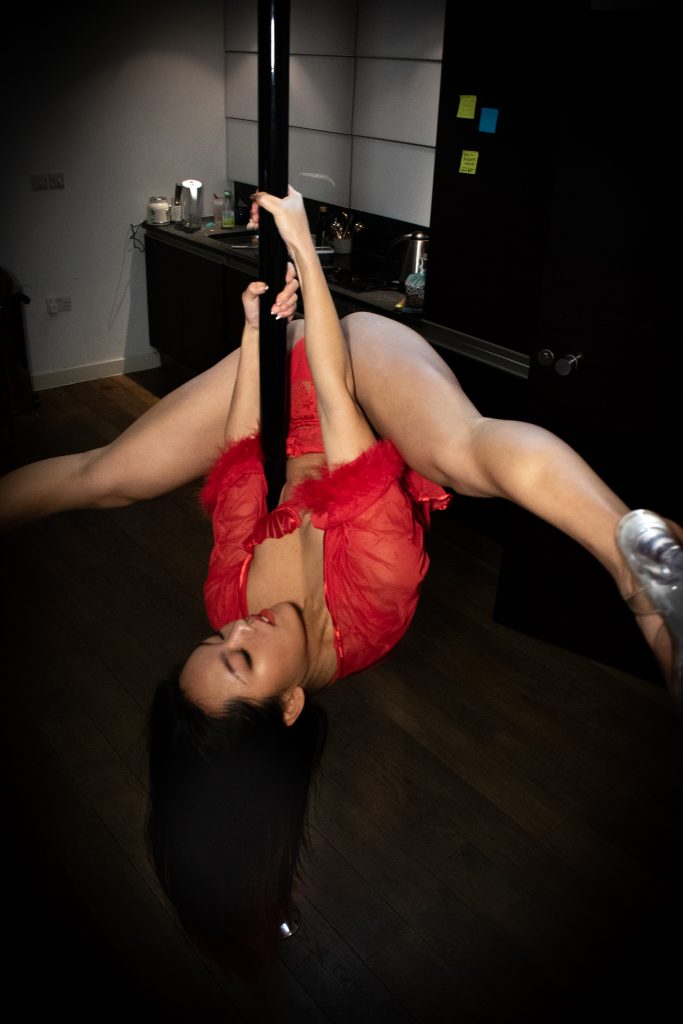
On the sofa of her Southeast London living room, Aurora recounts the day six years ago when meeting a pole instructor at the nursery she worked at inspired her new hobby.
“I remember how hilariously difficult it was trying to put one knee on the pole to do a simple climb and thinking, ‘why am I doing this to myself?’ This is so difficult, why continue?’ Years later, this has been the one activity I’ve been consistent in for these years.”
“At the time I think it was quite out of the ordinary to do pole dance. It felt like a rebellious thing, especially for my parents. But I loved how after even a month of doing pole, I realised how strong I became and that I could lift my own body weight.”
I remember thinking, ‘why am I doing this to myself?’ This is so difficult, why continue?
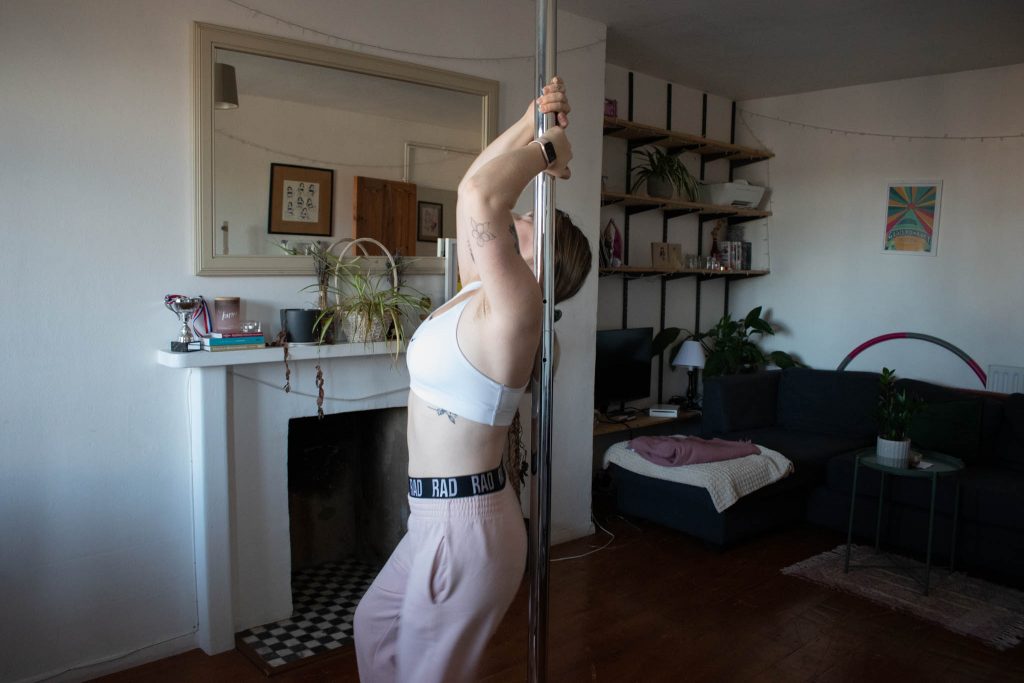
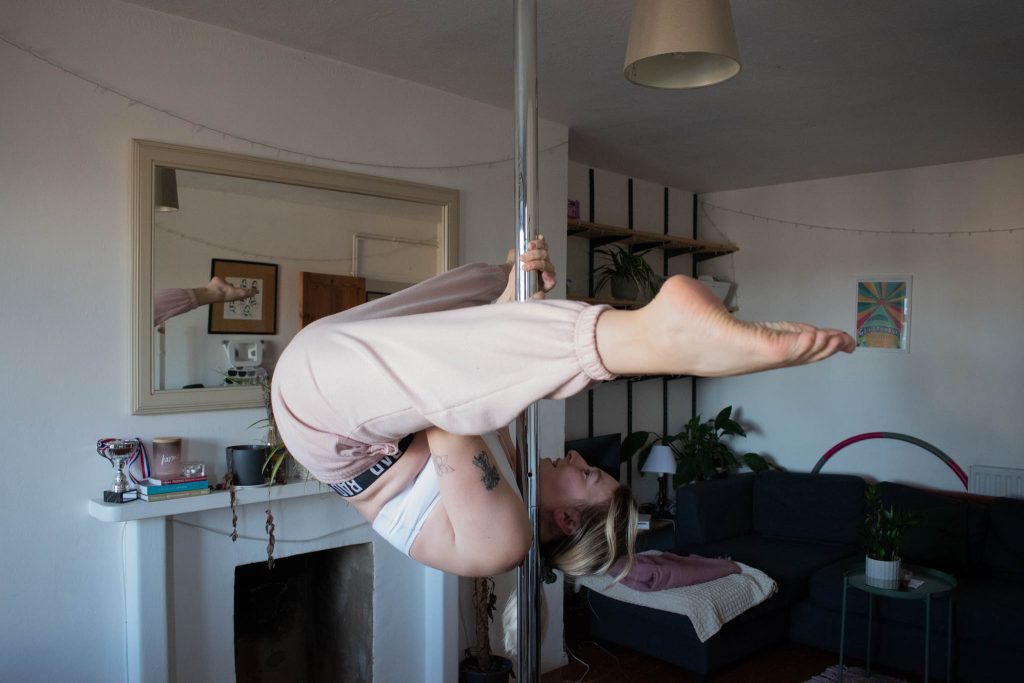
Pole fitness studios have snowballed in popularity worldwide, with at least ten in and around London. Studios teach a mixture of tricks classes, strength and conditioning, and pole dance choreography. For most of her six years, Aurora has been learning pole tricks and is building strength for athletic moves.
“You stick the pole with your bare skin and these gorgeous yellow blue purpley bruises start forming your legs you think, ‘I look so cool now look at me!’ It hurts so much, but you push yourself through the pain and you think ‘I need this. I really need this.’”
“There were a few times where I’ve been upside-down and just let go randomly – but my teacher Beccie was there holding me up. She yelled at me ‘Why did you let go!? If I’m not here you’re gonna die!’ Teamwork at pole class is so important – it feels like a community because everyone there knows me in that environment, it’s just so lovely.”
Tessa’s Story
After starting pole during her second year of university, Tessa has committed her Thursday evenings to learning pole tricks at a pole studio in East London. Her pole in her bedroom in nearby Bow, is also a firm presence in her pole journey.
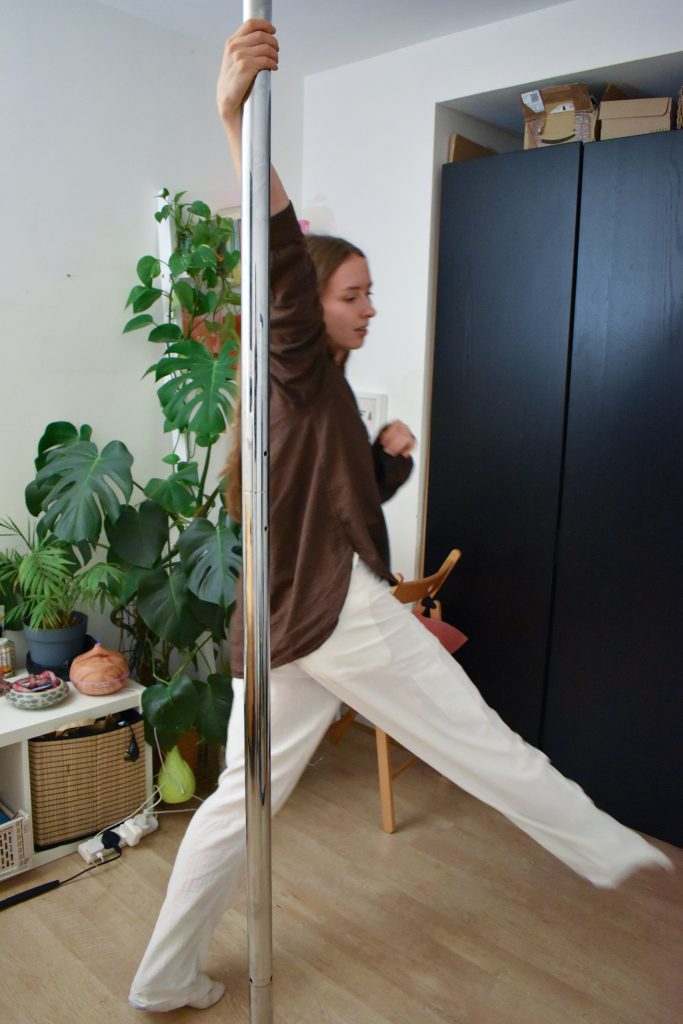
“In my old flat, my pole was up in a communal space. I felt like I was intruding so I’m glad to have it in my room now. It’s become a part of my everyday routine. Often I’ll stretch on it in the mornings, or do random spins and little unplanned flows. Maybe it’s all clumsy but I’m trying to get into a headspace of just moving and flowing and transitioning without overthinking everything.”
Tessa is natural creative: drawing, sculpture, pottery, jewelry making. However in recent years, she has lost touch with these crafts and choses pole as a physical way to be creative. Not only does pole give her creative expression, but also a support network, and mental health management.
It feels really good to just walk around the pole, hanging on for a moment. You can be very playful with it. And that feels really nice, especially if I’m in my head a lot.
“I choreograph pole dance routines in my head all the time. It’s almost like a meditation. The moves I think of are always way out of my skillset, all these impressive backflips and tricks that I can’t do yet. It’s like visualising where I’d like to be. I was listening to something about how your brain can’t really tell the difference between what you’re thinking about, and you really doing that action – so I’m subtly trying to get myself to do that.”
“At the beginning I just wanted to go and experiment and challenge myself. Those are still my goals, but I feel I’m getting stronger and more serious about it. One day I’d like to perform, but that scares me quite a lot.”
Below is a film shot in Tessa’s bedroom. It aims to capture the essence of using pole in everyday life, and the mental space pole dancing can help create.