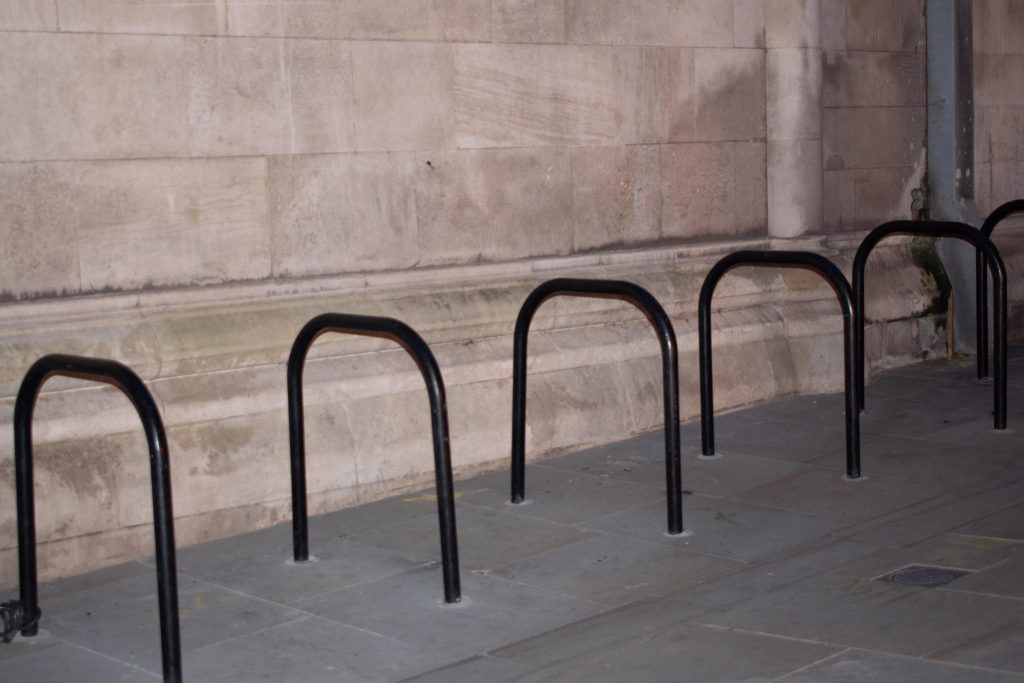
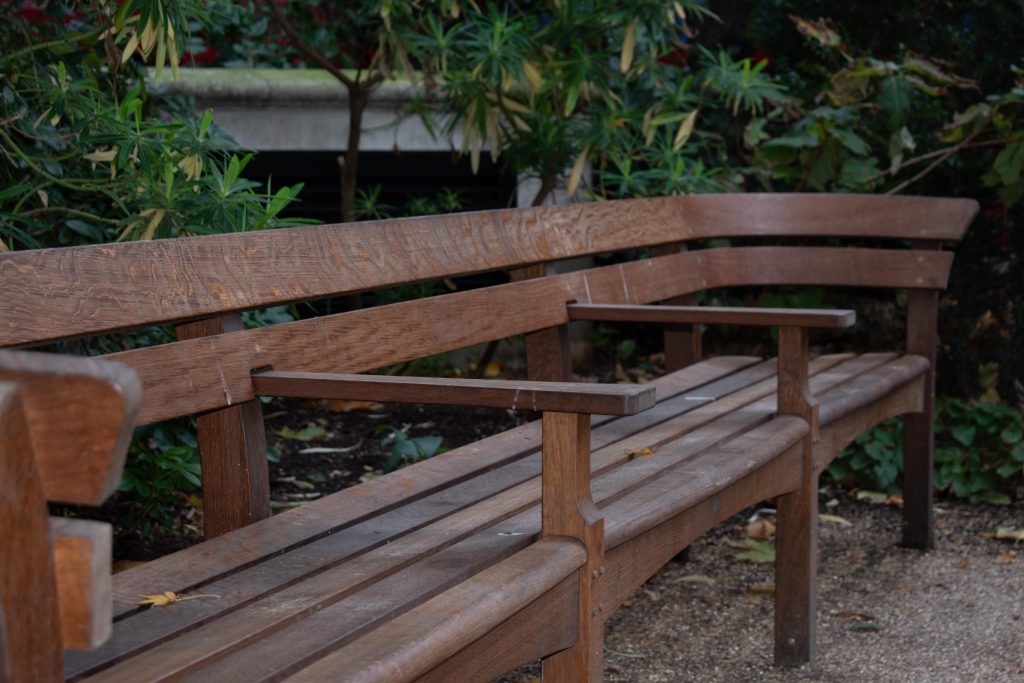
How hostile archiecture shapes the metropolitan environment
The concept of hostile architecture has been something that’s interested me since I began researching what it means to be in a ‘liveable’ city. Concepts like 15-minute cities, stroads and car free cities had all been concepts and campaigns I had been introduced to in my research, but with looking into defensive design, the fact that councils and private landowners would commission a piece of design for the purpose to limit it’s use or not be used at all blew my mind.

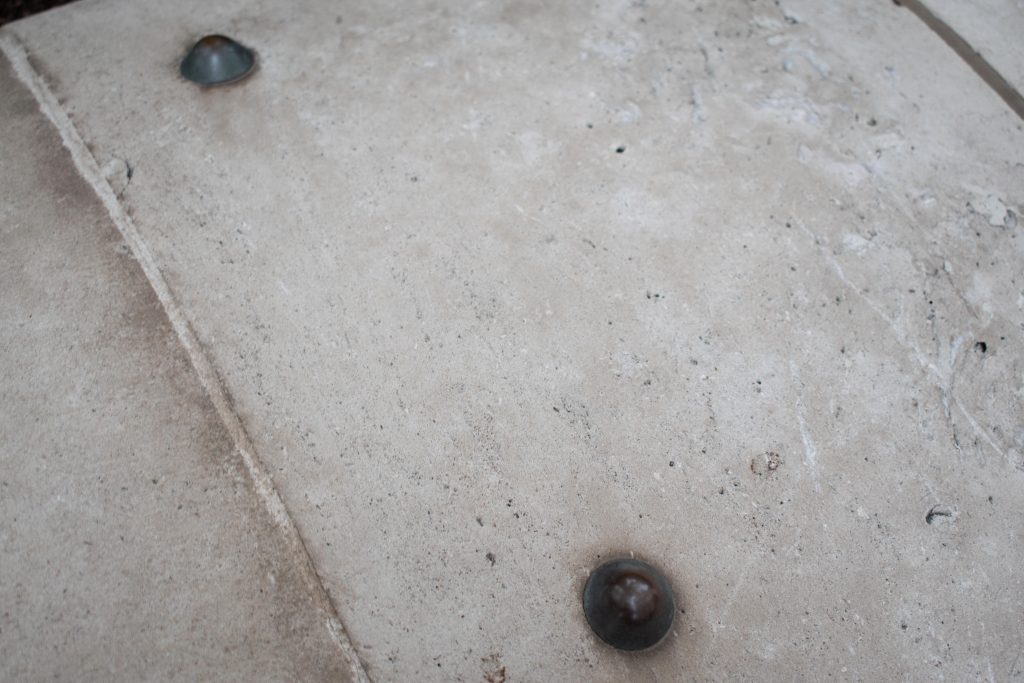

Through researching this topic, I found examples of artists who had approached this issue. Sarah Ross’ work Archisuits where they create tracksuits to make hostile architecture accessible, it made me realise how our mundane environment forces us to view these poor and uncomfortable designs is normal.
Learning that other people could create a piece of art work that captures this environment inspired me to go out and capture the ontology of hostile architecture.
When I capturing my footage and photography, common questions I asked myself were; where are the boundaries? What is here for practicality? How do we define hostility in design compared to just practicality?
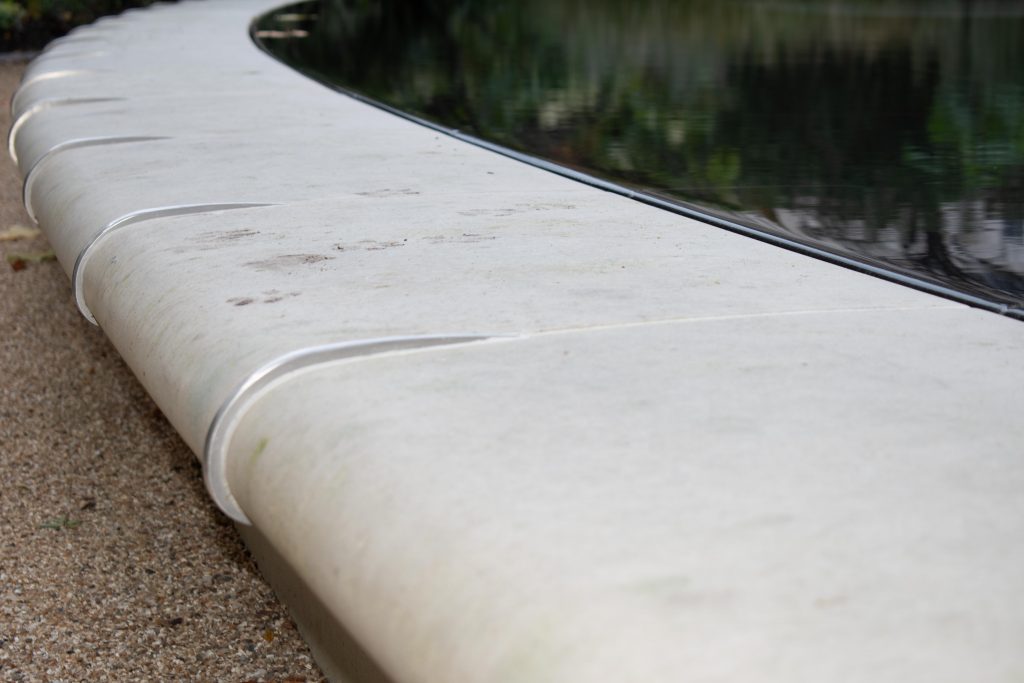
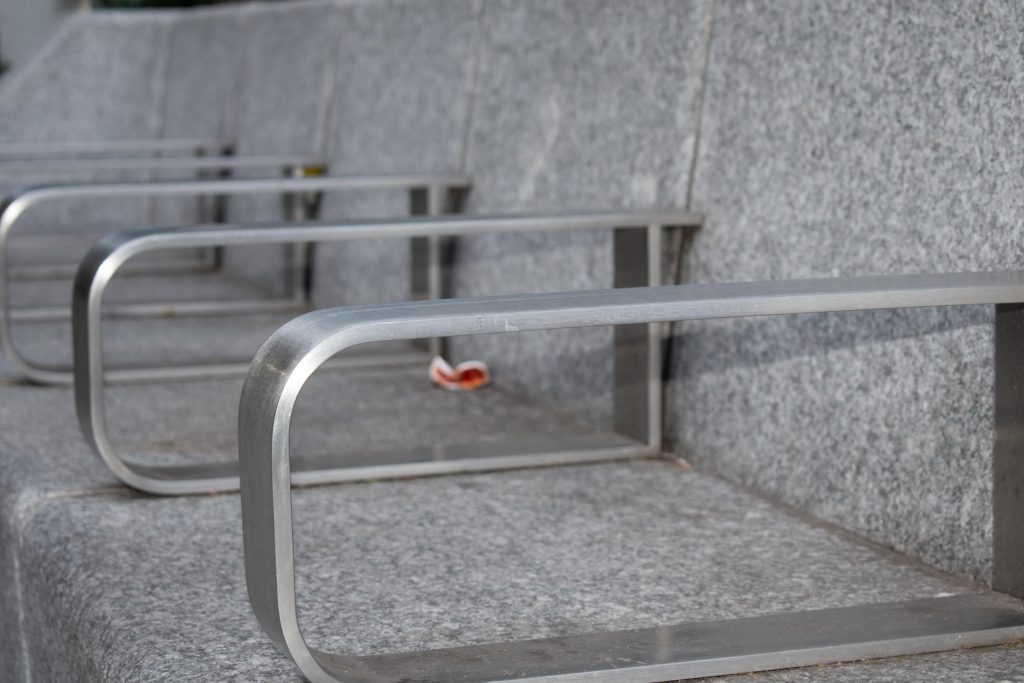
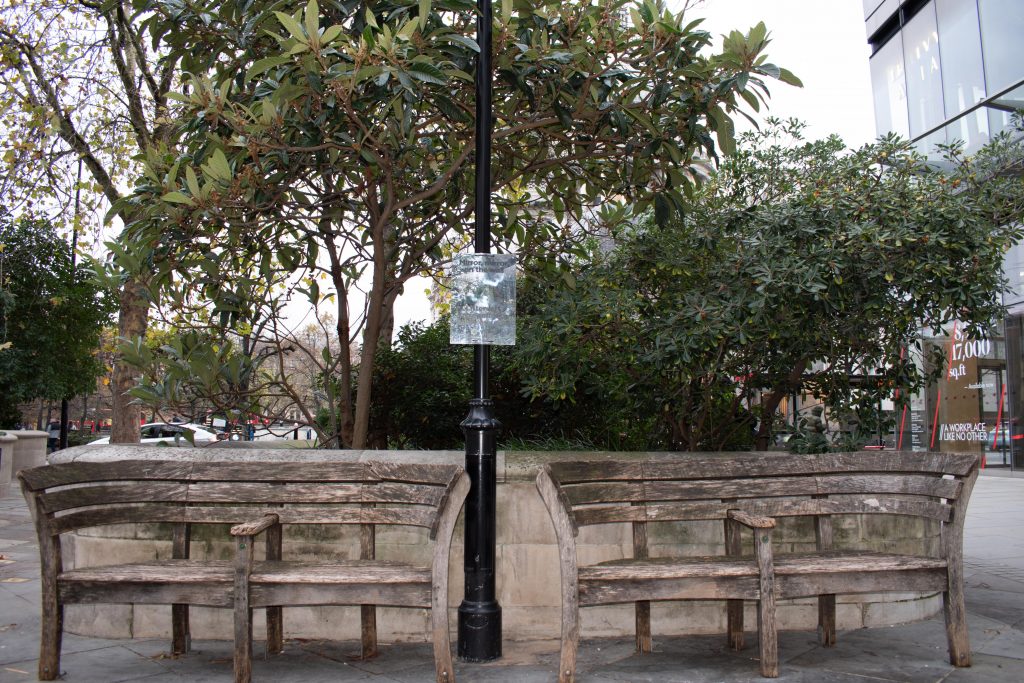
This is something important to consider when analysing this topic, it’s subjective to everyone. When I take walks around the city, I will point at what I see as hostile architecture (high armrests on benches, gates blocking a window ledge, spikes to stop birds from resting) it devolves into a debate about where this is merely functional or where it’s designed to discourage is not prevent at all use.
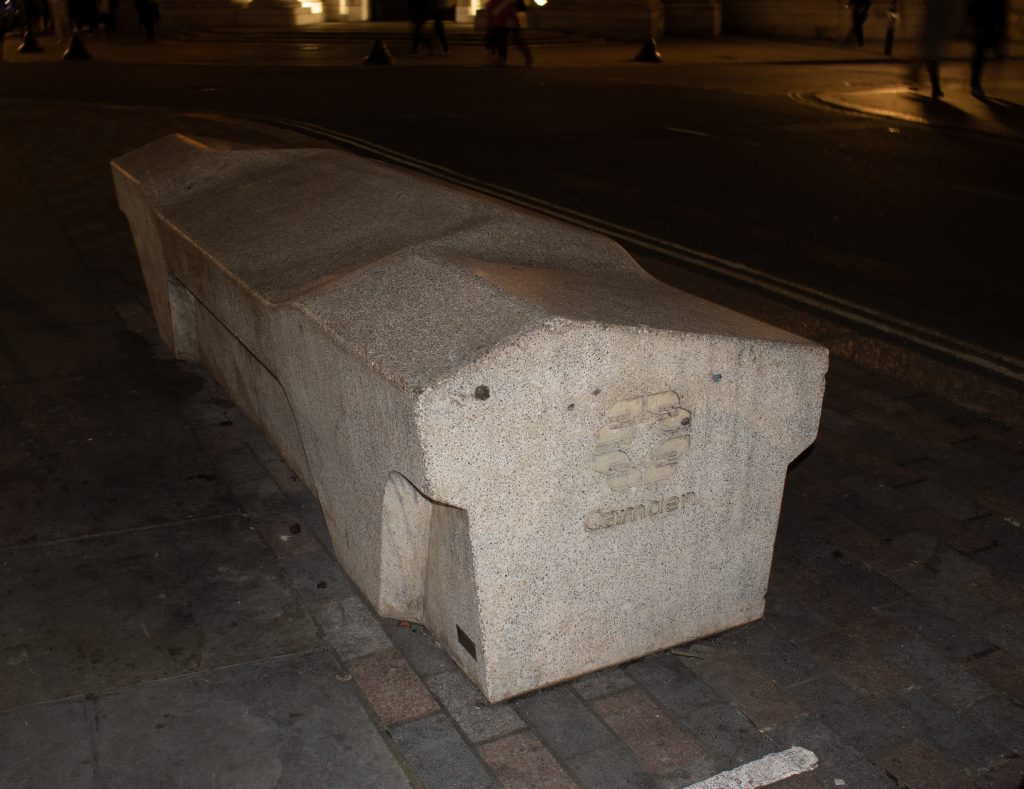
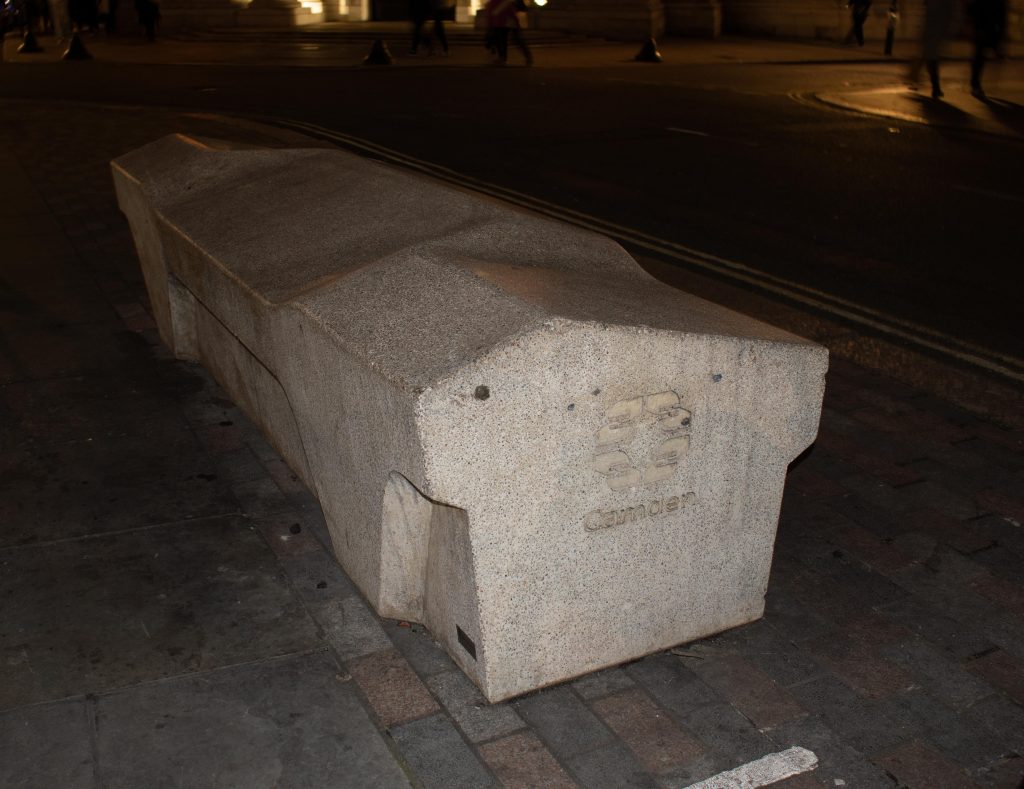
An argument back I hear is “but it’s comfortable to have armrests on a bench” which can be true, but in terms like tthe camden bench (as shown to the side) it’s purpose is to discourage most kind of use.
I spoke to Nils Norman who has worked with the subject of hostile architecture since the 80s in both London and New York. He speaks about how and why in his experience these changes have come in since that time, and since then not gone anywhere and in fact increased. “I lived in London in the late 80s … spending a lot of time in central London I began to notice design changes that were implemented after various IRA bombings and bomb threats. The removal of dustbins, the installation of CCTV cameras, and later the “Ring of Steel”, in the City of London.”
Though tensions between the UK government and Ireland have since significantly decreased, we still see these design choices everywhere in London showing these kind of designs are often cloaked under the guise of anti-terrorism or anti-crime but these choices really are here to stay long after these issues have not as much relevance.
Norman also makes an excellent point along these lines, he says “the chances of being a victim of a terrorist attack is very low when you compare it to being hit by a car, yet car culture and urban design is rarely addressed in any serious way”.
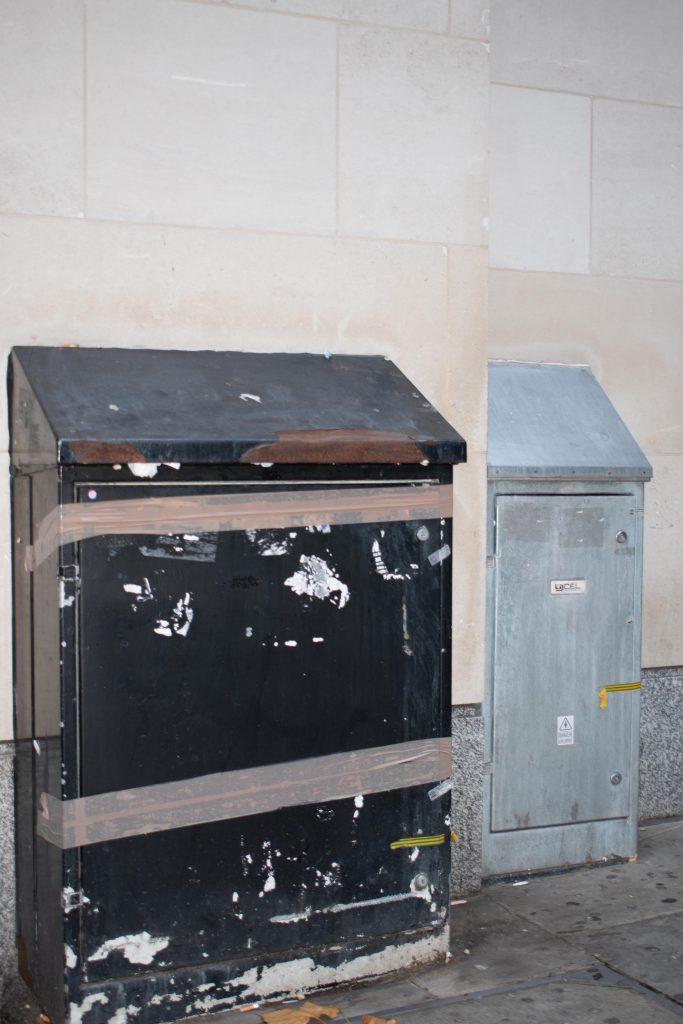
Hostile architecture that has implemented itself throughout most public spaces, we have to come together to change that. The impact this has on us as a community will make us all isolated from each other. Random small talk with strangers, social activities and people feeling welcomed to a city are what makes a comfortable living environment and keeps our mental health stabe. It’s important we are aware and engaged to make a difference.