An Investigation Into Celluloid Loving and It’s Qualms in the Digital Age
There I sat in the Cinema cafe, as the speaker softly played the soundtracks of Spielberg, Tarantino, Miyakazi, animatedly discussing the cinematic works of the Coen Brothers, with a glee that can’t be faked.
‘Cinema had apostles. Cinema was a crusade.’ Susan Sontag wrote, as she declared the death of cinema in 1996. In her eulogy she mourned the art of film, but also the lovers of it, the eager devotees, the cinephiles, digging their grave as the century ended. Yet, despite the prosaity and commercialisation that cloud the craft as Sontag rightly predicted, they survived. What she thought then to be the end of cinema was a whispered threat compared to what exists now; the multiplex, the streaming service and the social media platform have created a greater homogeny, over cinematic art and culture, and now, post-Coronavirus, cinephilia seems almost impossible in this 24/7 streamable world that makes standard and casual the pleasure of viewing and loving film. Yet, the modern cinephile still pursues, finding new ways to practice and profess their undying passion for the term ‘film’ that encapsulates the works of Fellini, Tarr and Kubrick, that inspires theory and criticism beyond a Cineworld blog post.
There is no place better than an art university corridor to search for celluloid lovers. A black-and-white poster titled ‘DO YOU KNOW WHO THESE PEOPLE ARE?’ showing Godard and Varda and my email address worked well enough, as did a message to several London University film clubs asking to speak to the self-professed species. The conversations that followed defied my Marlboro-scented, turtleneck-adorned expectation.
Sontag’s descriptions do ring true: film can still be referred to as a religion of sorts. Luca, a student filmmaker, likened the cinema to a church he could ‘worship’ in, with Letterboxd logging as a form of religious practice and community. With walls and walls of DVDs and other tangible manifestations of devotion, it’s a metaphor that makes sense to cinephiles.
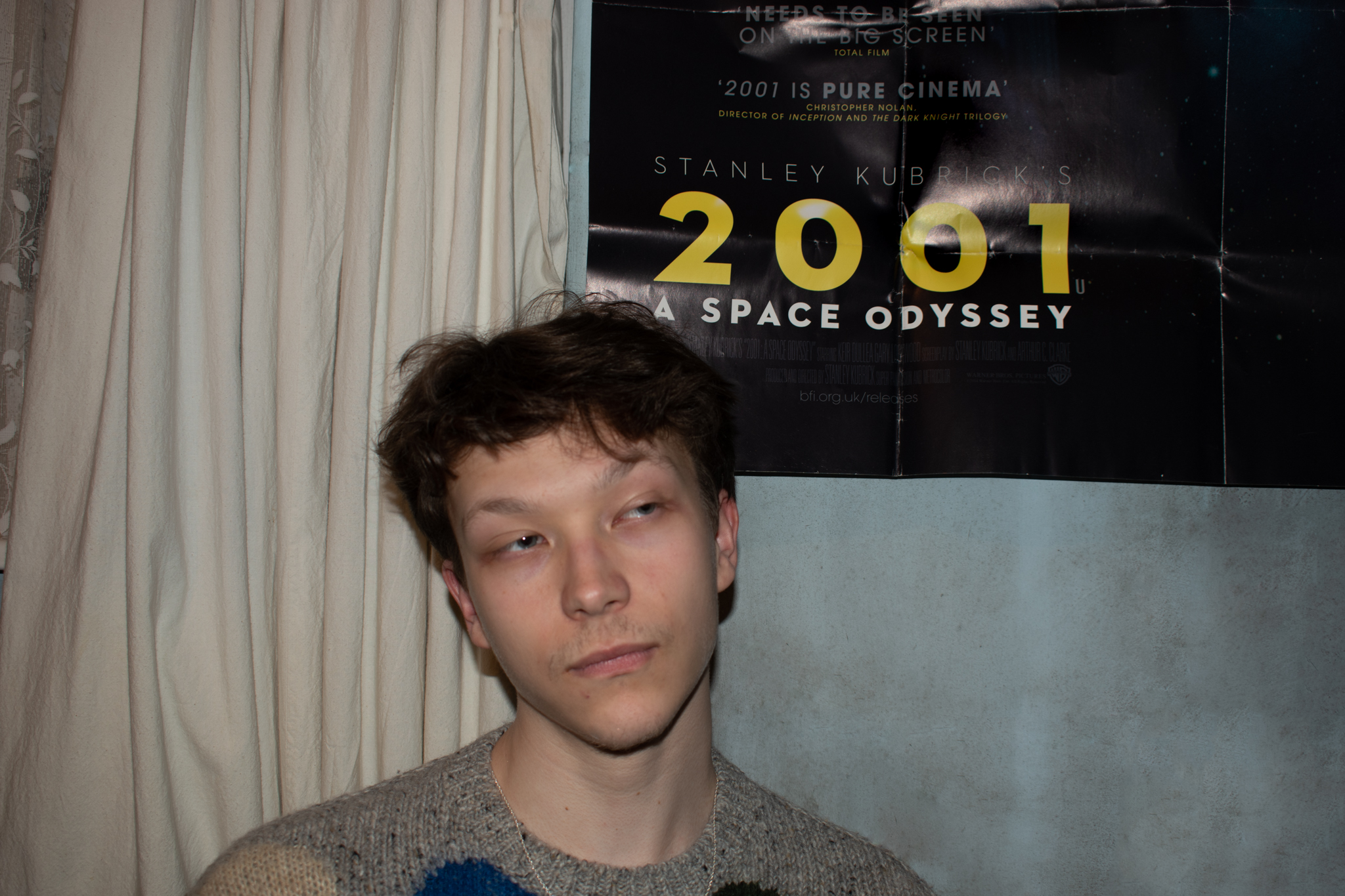
Over coffee, we’d talk about the silver screen, controversial takes and cinema-going. Billy, head and founder of Ravensbourne’s Film Society, compared his screening addiction against his refrain from the binging culture that’s begun; “If I could, I’d go to the cinema everyday or every other day, but with binging TV and film it comes to a point where it just becomes noise”. This seemed to be the case with a lot of the people I met with; somewhere in time, within the reign of the SVODs (Subscription Video On Demand), binging became a normality, disposability became regular, and it was up to the cinephile to diverge from that. The matter of the multiplex was not as contested as I had imagined however; it could be enjoyed just as avidly as an independent screen, it was a different experience, but a cinematic one all the same. Zak, who had lists of each cinema experience he’d had, starting somewhere between 2003 and 2006, was a big supporter of IMAX and it’s allure, mainly because of the complex detail, sound-mixing and visuals of films that only it could reveal. Tired of indie films and their prententiousness, Zak took to spending his time and money on collecting and watching Action, studying the classics, the old and the new. I had realised, from this point, that cinephilia didn’t have to be all about the black and white, the world cinema, the arthouse, but also engulfed the well-liked and well-known, and its memorialisation in BluRay copies and studied trivia.
There existed a contempt for Marvel, somewhat for its monopoly, but mostly for it’s blandness and repetition; Zak’s term ‘superhero fatigue’ encapsulated the general feeling of boredom, and not disgust, at it’s dominance. “If the movies were better I would be happy with them winning the culture war”, as Billy said. Conversations around such a force were more focused on films that transcended the formulaic movies, and less like the rants that I had imagined. It seemed there was an optimism, that viewed the commercial blockbuster and the streaming service not as so much of a threat but a tangent.
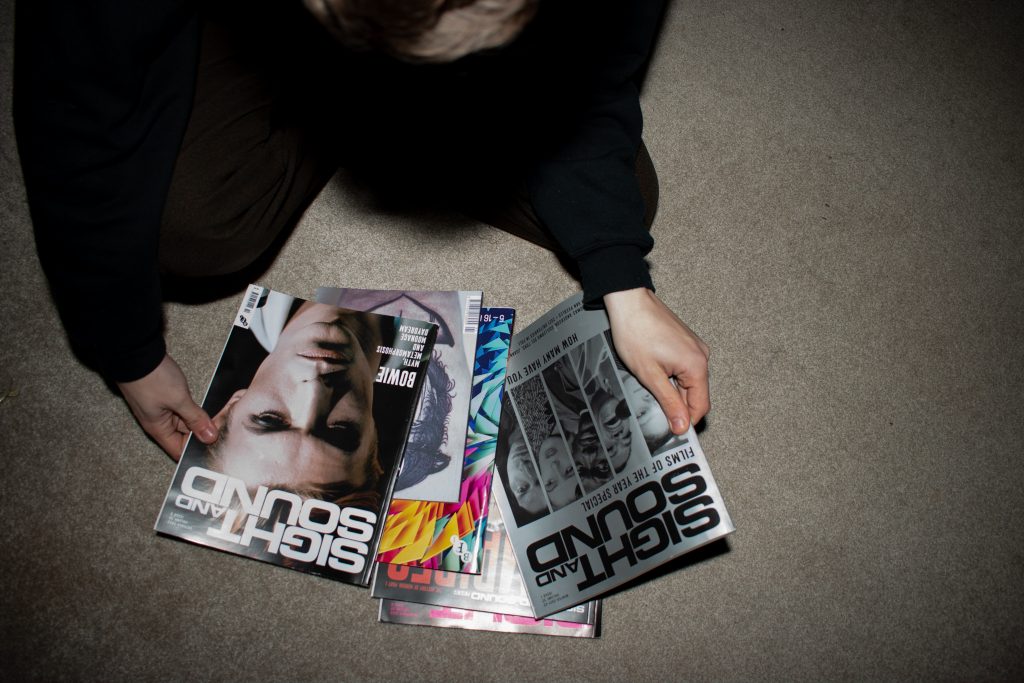
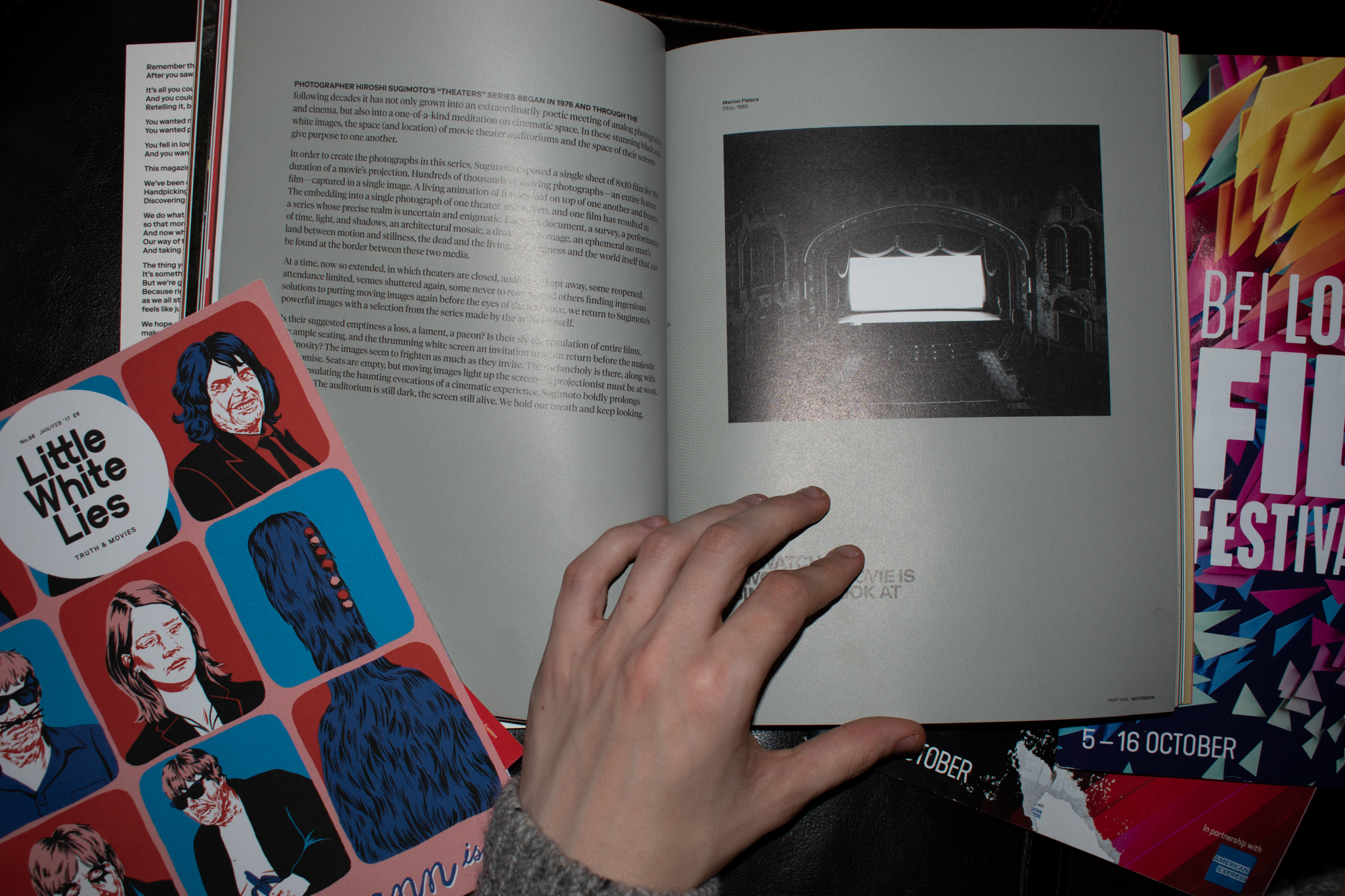
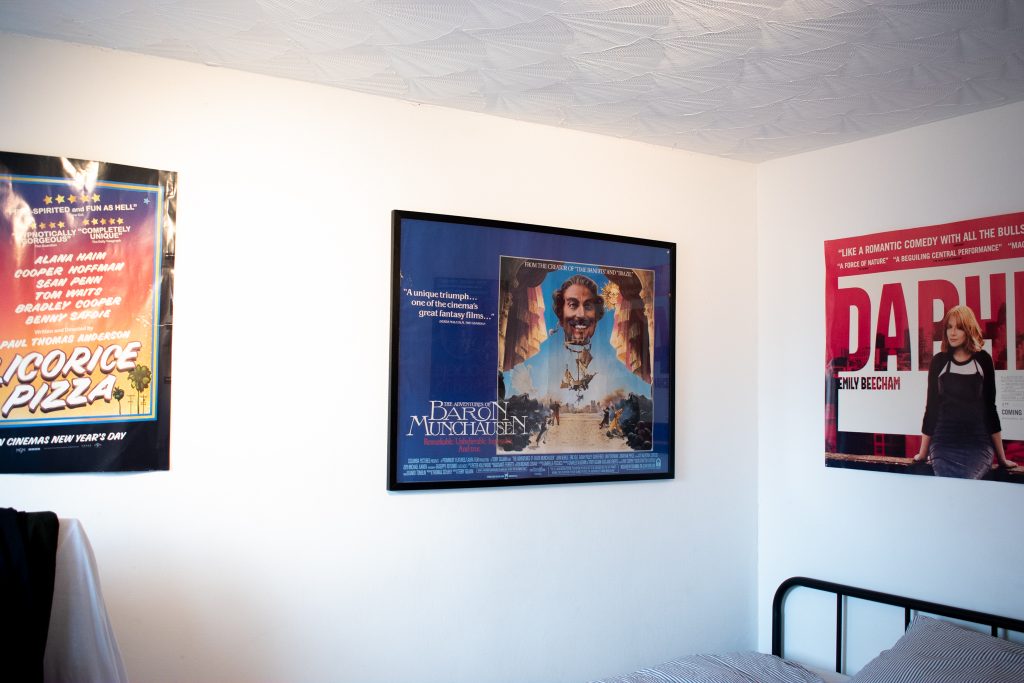
It occurred to me, then, that the mainstream was not the enemy, that there was no enemy at all; that modern cinephilia was defined not by what was loved, but by how it was loved. These cinephiles had such intense passion and knowledge for all film, not only the late and greats or the small and independent, and their dedication to the art form – just as with the melomaniac – was physicalised in a digitalised world, with old cinema posters and new BFI flyers, three-year-old Sight and Sound issues and pristine Criterion collections.
‘For cinephiles, the movies encapsulated everything. Cinema was both the book of art and the book of life’
Sontag, 1996
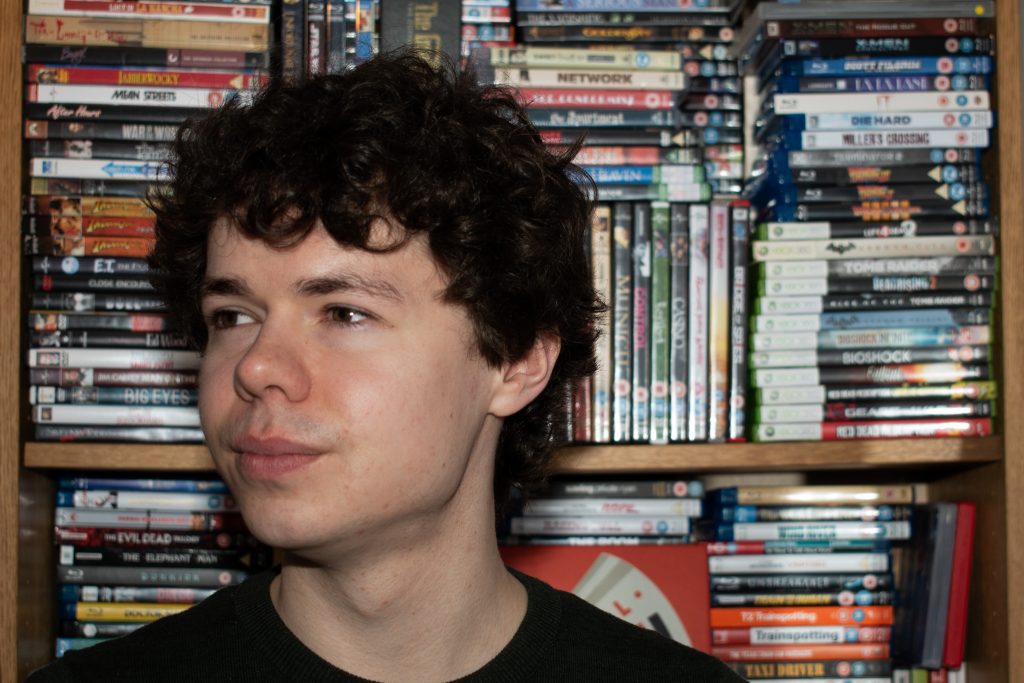
Perhaps it was my own defense mechanism, my own deflected self-awareness at the laughable pretentiousness that the very word holds today, that made me betray my own people, the ones that spend more than they should on Curzon tickets and find the propensity to ache with excitement at a chance to discuss David Lynch’s weather reports. I had forgotten the word enthusiasm in the label ‘film enthusiast’.
‘If cinema can be resurrected,’ Sontag said, ‘It will only be through the birth of a new kind of Cine-love.’ – Whether it is new, or just old in a world that is new, the modern cinephile has risen, and with it revived it’s crusade.
Talking to silent film accompanist Donald Mackenzie about his love for film and organ playing