Investigating the effect of capitalism on the practice of yoga
By Rayhanna Mckinson
Today in society yoga is now easily accessible online to anyone who has a phone, tablet or laptop and yoga classes in a studio are available to anyone who has the disposable income. This is where a divide lies.

The pilates and yoga industry has had a revenue of over £926 million in 2020 which has increased by 6% from the year before (£875 million), and up to 460,000 Brits are taking part in yoga classes each week. I wanted to investigate the difference between a traditional yoga studio and a commercial yoga one, as there has been an enormous increase in the number of people practising yoga since 2020, as a by-product of COVID-19 and multiple lockdowns.
From the moment I stepped through the door of the commercial yoga studio, numerous small business’ products were covering the walls from head to toe.

African print bolsters for £20 on a shelf, polymer clay earrings hanging from a rack and numerous framed drawings of people performing different yoga poses, accompanied with the artist business card neatly tucked in the corner of the frame with their various social media printed on it. Luscious Green overgrown indoor plants could be seen everywhere, some falling from above and others pottered strategically across the yoga studios floor.
The front desk had a welcome sign accompanied by class prices as well as candles, room spray, and protein balls displayed on the desk. The fridge was fully stocked with kombucha, coconut water and a selection of natural protein bars. The top of the fridge beheld a medium size buddha’s head and a spider plant. The yoga studio also sold their own products, some of which included a black tote bag with their logo printed on the front (priced at £6). Behind the desk hung branded oversized t-shirts and loose tank tops and of course there were multiple colours to choose from.
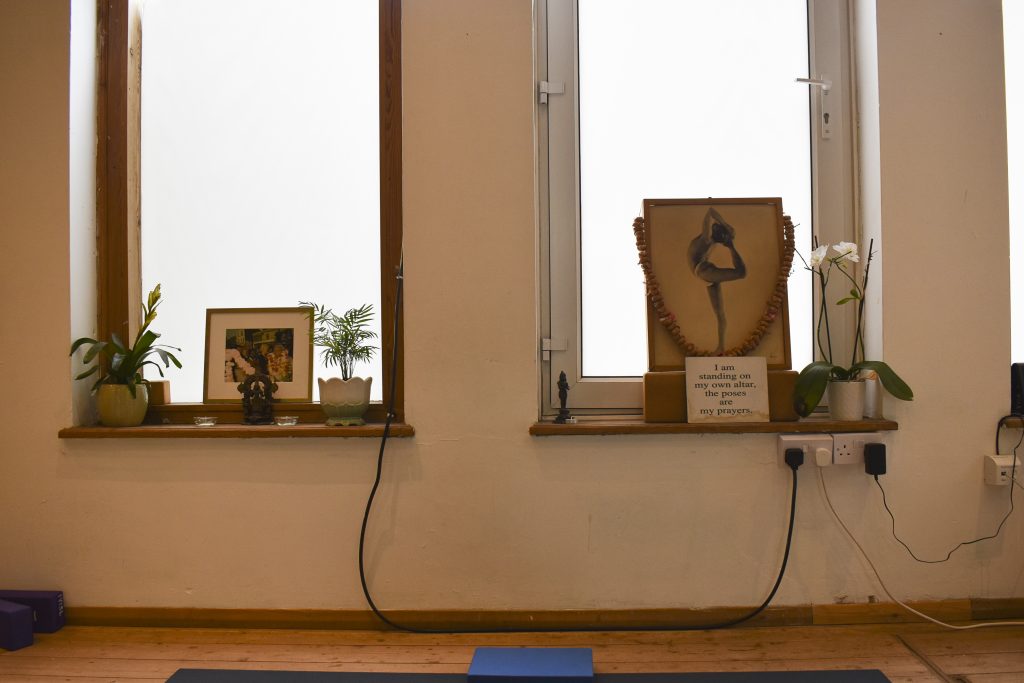
I laughed to myself as earlier that day I had visited a yoga studio that was utterly bare only containing wooden floors and props attached to the wall. I spoke with Marion Sinclair, a yoga teacher for over 20 years and manager of the Iyengar Yoga Institute South London (IYISL). A studio that follows the teaching of the guru Iyengar who brought and established the practice of yoga to the west from India by training teachers whilst remaining true to traditional yoga.

“The Indian view of yoga is not something to be sold, and has a documented history that goes back 2000 years, being passed on from guru to guru”. Meaning that there is a huge accumulated knowledge and understanding surrounding yoga. “Yoga is a spiritual journey and the health benefits achieved by yoga are just a marvellous by-product”. Marion firmly believes being in a yoga class with a teacher properly instructing you is a completely different and greater experience than online, as you can’t learn yoga virtually.
In my interview Marion discusses the practice of ‘real and true’ yoga in the Western consumerist capitalist world we live where people must also make a living.
The IYISL studio does not sell any yoga products; but does recommend a specific website where their students can buy yoga props from. They do however sell bolsters (a bolster is a large supportive cushion used to support, strengthen or prop up your body) that one of the teachers from the studio makes out of old fabrics she buys from Deptford market, where the interior can be lined with old clothes.
In Marion’s opinion it doesn’t matter whether or not people are well informed culturally and/or historically about yoga. As its grounding and helpful benefits for people physically and mentally is superior, and for some people practising yoga becomes part of their lives and who they are.
The depiction of yoga in the media is often of skinny white women overextending on a yoga mat wearing skimpy clothes. Marion believes this is ‘undermining the principles of yoga’. “Yoga isn’t about making money or what you look like. If you really follow yoga, then you become a better person for it. It’s healthy for the body and the mind and has a positive impact on everything around you”. Iyengar’s view was that yoga is ‘a gift to humanity’, Marion ended the interview with the impactful statement that if more people did yoga, they would be happier, healthier and treat each other better making the world a greater place.

Going to both yoga studios and speaking with an insightful yoga teacher was an illuminating experience for me. It leads me to question whether there is some benefit of the practice of yoga entering into capitalism. Perhaps one of the benefits is the accessibility it provides. Individuals can learn yoga online for free, on platforms such as youtube and teachers can get paid for dispersing their knowledge. Although it’s beneficial to learn yoga in class with a qualified teacher, the accessibility to the wealth of knowledge provided outside a yoga studio through sources like the internet can remove economic disparity regarding who has the privilege to reap the many health benefits practising yoga provides.